
Three neighboring rural school districts buy similar student-nutrition supplies, custodial chemicals, and diesel fuel independently, each struggling with small order volumes and limited purchasing staff. Which leadership initiative best addresses these shared challenges?
Select an answer to reveal the explanation.
Short Explanation
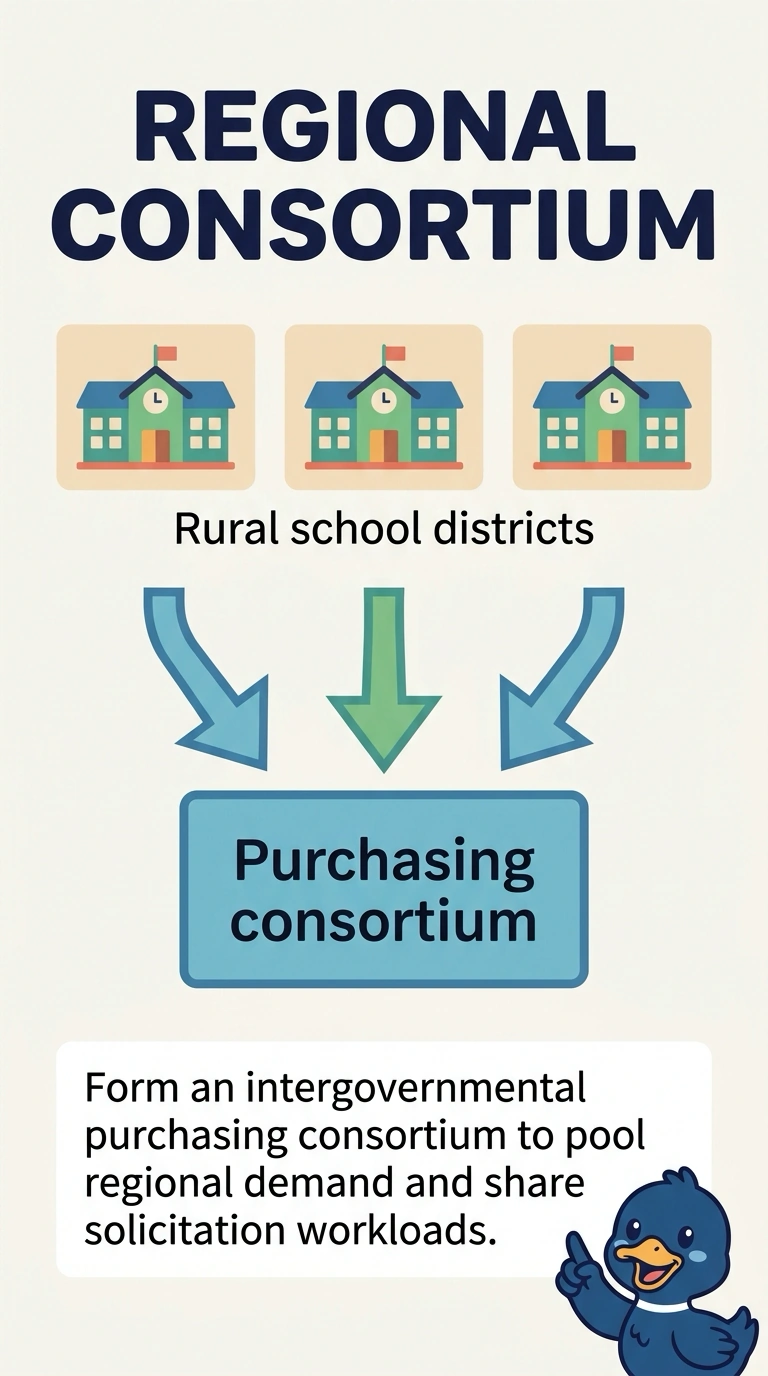
Small agencies buying alone are like neighbors each driving separately to the same wholesale club—you pay more and work harder for the same cart. The trap is either staying siloed or letting a vendor set shared prices without competition. Lead an intergovernmental consortium so your districts pool volume and share solicitation work.
Full Explanation
Collaborative intergovernmental leadership lets small public entities overcome thin staffing and weak buying power without sacrificing competitive integrity. Choosing to Form an intergovernmental purchasing consortium to pool regional demand and share solicitation workloads aggregates volume across all three districts to attract stronger competition, better pricing, and shared administrative effort. By contrast, choosing to Time each district's separate solicitations for the same month so bidders see them together still leaves volumes fragmented and workloads duplicated, since timing alone does not create a combined commitment bidders can price. Opting to Ask a single local distributor to set uniform prices for all three districts bypasses competitive solicitation laws and invites price-fixing concerns rather than true market competition. Deciding to Have one district run its own solicitation and tell the other two districts to buy from the winner informally lacks joint competitive authority and enforceable scope, risking unauthorized piggybacking and audit findings. As a caveat, consortium members must verify statutory joint-powers or cooperative authority under state law and align delivery terms before issuing a joint solicitation. As an operational check, execute an interlocal cooperative agreement defining lead-agency responsibilities, participating-entity volumes, and shared evaluation roles prior to drafting the first joint solicitation.
Prefer to study offline? Printable PDF study book + test engine ($7.50, unofficial). These questions stay free here.