
Several county department directors complain that central procurement rules delay urgent field repairs, while buyers worry that departments want to bypass competitive bidding altogether. Which leadership approach best resolves this tension?
Select an answer to reveal the explanation.
Short Explanation
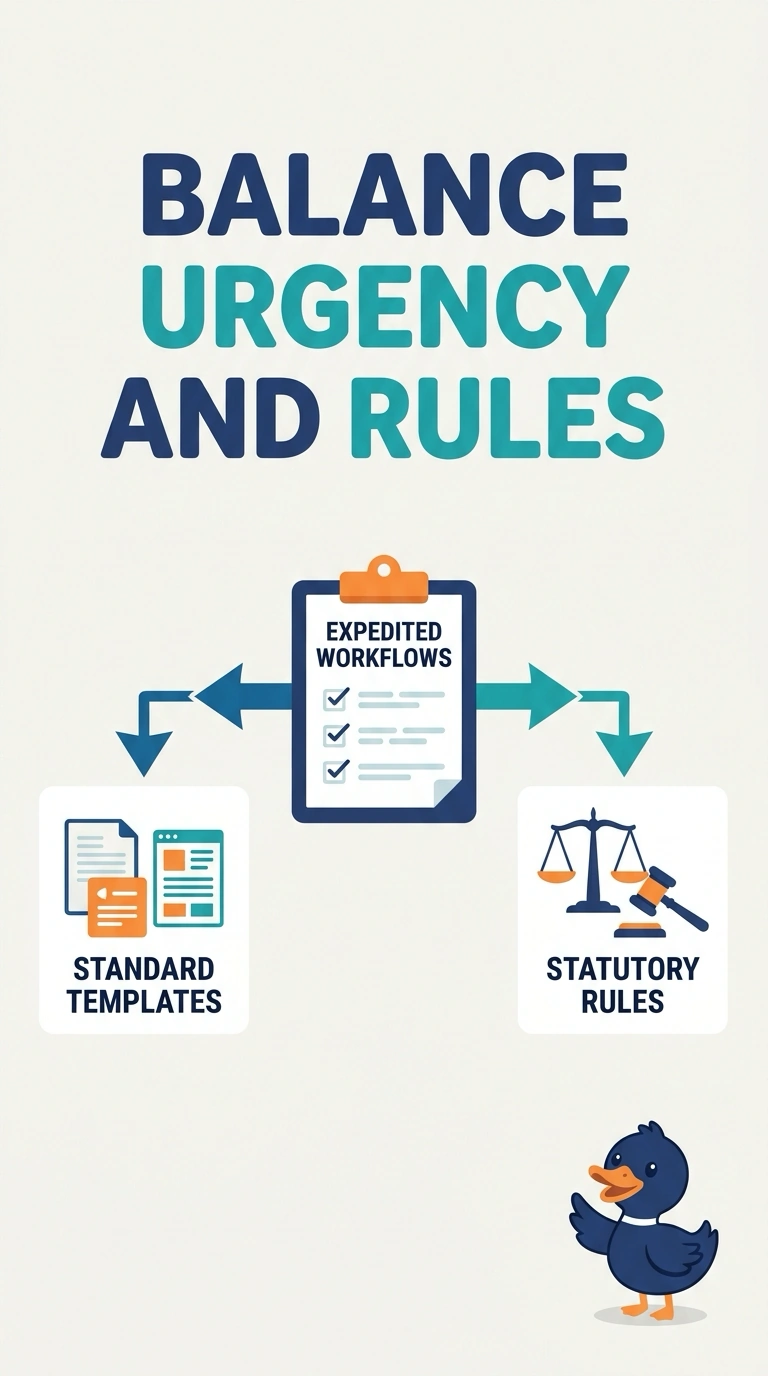
When field teams and buyers clash over speed versus rules, your job is to build a faster highway rather than tearing down the guardrails. Partnering on pre-approved templates gives departments speed while keeping every purchase defensible. The trap is choosing between blind rigidity and abandoning statutory compliance.
Full Explanation
Strong procurement leadership bridges operational urgency and legal compliance by choosing to co-design compliant expedited workflows and standard templates with department leaders to balance urgency and statutory rigor. Collaborative workflow design—such as pre-competed task orders, standardized scope templates, and clear fast-track criteria—removes avoidable friction while preserving transparency and competition. Choosing to waive competitive bidding thresholds whenever a department director declares an operational deadline violates public procurement statutes and exposes the agency to audit findings. Choosing to enforce rigid uniform turnaround rules without reviewing departmental operational schedules deepens stakeholder frustration and encourages off-contract workarounds. Choosing to delegate formal solicitation approvals directly to program staff to eliminate central review undermines segregation of duties and weakens compliance oversight. As a caveat, expedited workflows must still respect statutory advertising periods and formal emergency criteria when true emergencies occur. For an operational check, track cycle-time reductions and compliance error rates jointly with department heads ninety days after launch.
Prefer to study offline? Printable PDF study book + test engine ($7.50, unofficial). These questions stay free here.