
A county procurement director notices that several experienced senior buyers are nearing retirement while newly hired buyers lack confidence handling complex solicitations. Which leadership initiative best builds sustainable long-term capability?
Select an answer to reveal the explanation.
Short Explanation
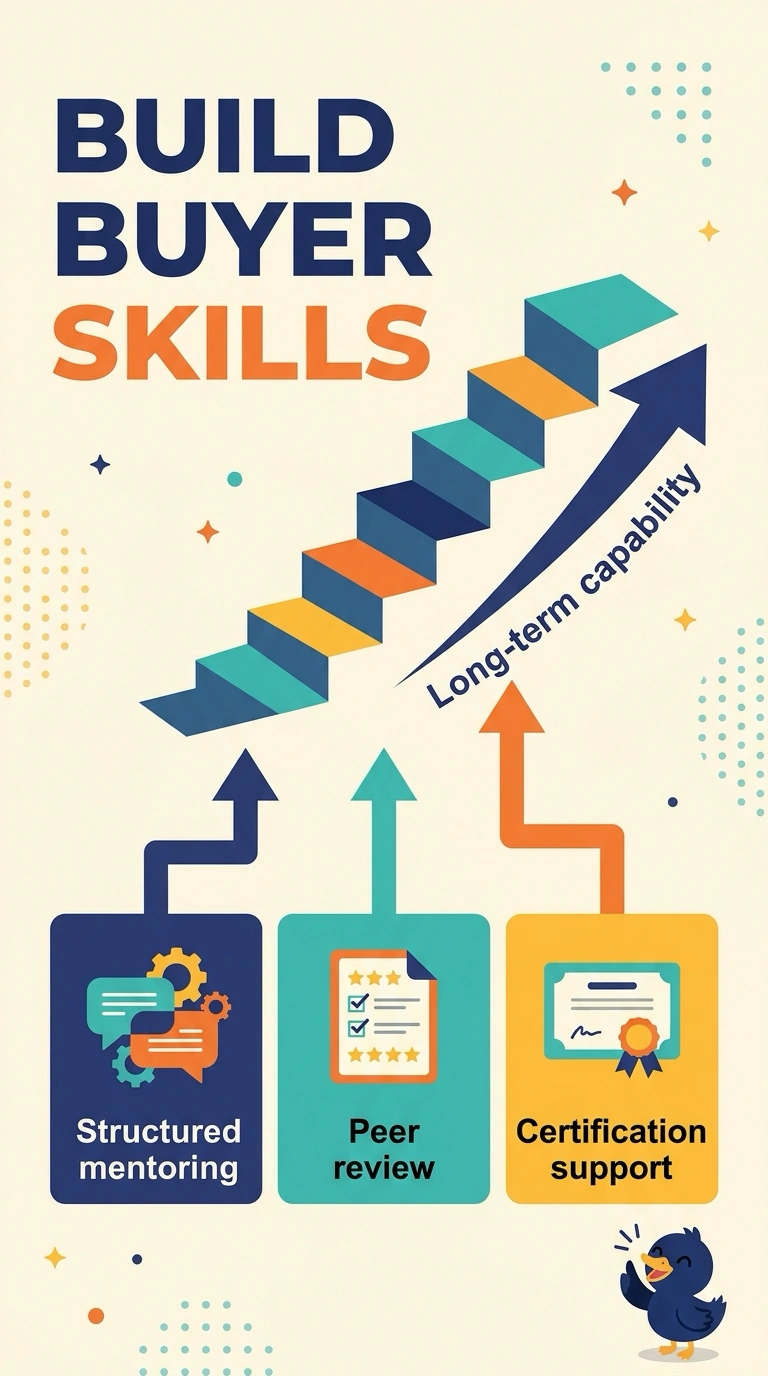
When veteran buyers head toward retirement, you cannot afford to let institutional knowledge walk out the door. Building a mentoring and certification pipeline keeps your team sharp, whereas isolating junior staff or relying on trial and error leaves the agency exposed.
Full Explanation
Choosing to Establish structured mentoring, peer review, and professional certification support transfers institutional knowledge systematically, strengthens compliance judgment, and prepares junior buyers for greater responsibility. Pairing guided real-world practice with professional credentialing builds both technical competence and ethical confidence. Opting to Restrict complex solicitations to senior managers through the next two budget cycles creates a succession bottleneck that leaves the office unprepared when senior staff retire. Opting to Send each junior buyer to one annual conference and rely on that training for complex solicitations offers only occasional training without ongoing coaching, leaving mistakes uncorrected and confidence fragile. Choosing to Keep junior buyers on routine purchase orders for two years walls juniors off complex work and creates a succession gap that leaves no one ready when seniors retire. As a caveat, peer review should coach and verify quality without becoming a rubber-stamp bottleneck that slows routine awards. For an operational check, pair each junior buyer with a senior mentor, track peer-review milestones on complex files, and include professional certification goals in annual development plans.
Prefer to study offline? Printable PDF study book + test engine ($7.50, unofficial). These questions stay free here.