
A county procurement director introduces a new centralized contract-review policy, but several department heads complain that the workflow slows urgent operations and continue bypassing it. Which leadership approach best builds lasting compliance across departments?
Select an answer to reveal the explanation.
Short Explanation
Rolling out a new policy without talking to the people who live with it is like rearranging someone else's kitchen and wondering why they still reach for the old drawer. The trap is thinking stricter memos alone will change habits. When you bring department leaders into the design of realistic service levels, compliance becomes a shared win.
Full Explanation
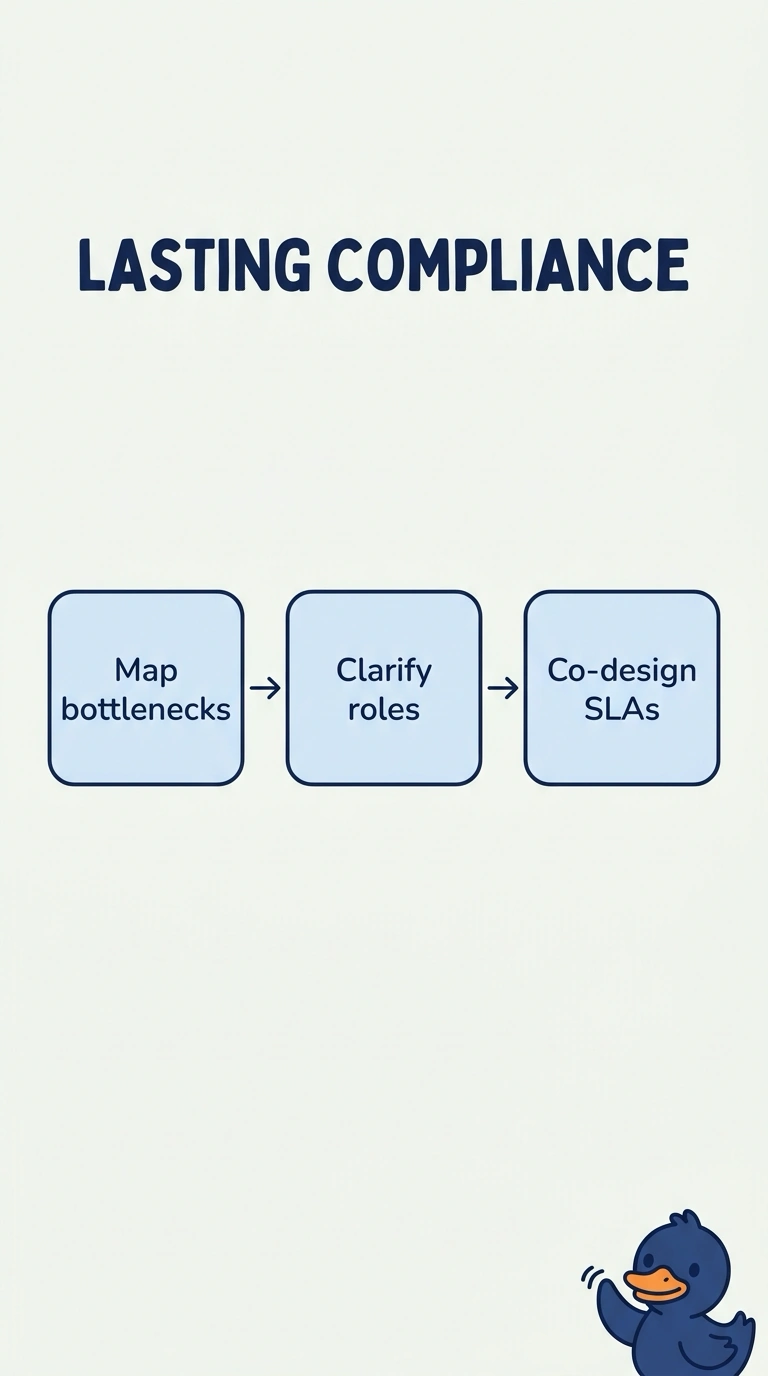
Sustainable policy adoption depends on collaboration and operational realism, so the best leadership response is to Engage department leaders to map bottlenecks, clarify roles, and co-design practical SLAs. Listening to operational pain points uncovers unnecessary handoffs while reinforcing why centralized contract review protects the county from legal and financial risk. Choosing to Issue formal reprimands to department heads who bypass the review step breeds resentment and encourages covert workarounds rather than solving workflow delays. Choosing to Grant six-month exemptions to departments that document same-day operational needs destroys policy consistency, rewards noncompliance, and leaves the county exposed to unvetted contract terms. Choosing to Suspend the new policy until departments agree to central oversight abdicates procurement leadership and allows fragmented, noncompliant contracting to continue. Caveat: collaborative adjustments should streamline review steps without weakening mandatory legal or ethical sign-offs. Operational check: schedule a joint process-mapping workshop with key department managers and publish agreed review turnaround targets.
Prefer to study offline? Printable PDF study book + test engine ($7.50, unofficial). These questions stay free here.