
A county's three-year elevator maintenance contract expires in three weeks, and the replacement Request for Proposals is delayed by technical revisions. Facilities staff ask the incumbent contractor to keep servicing the elevators and promise to pay invoices once the new contract is signed. What should the contract administrator do?
Select an answer to reveal the explanation.
Short Explanation
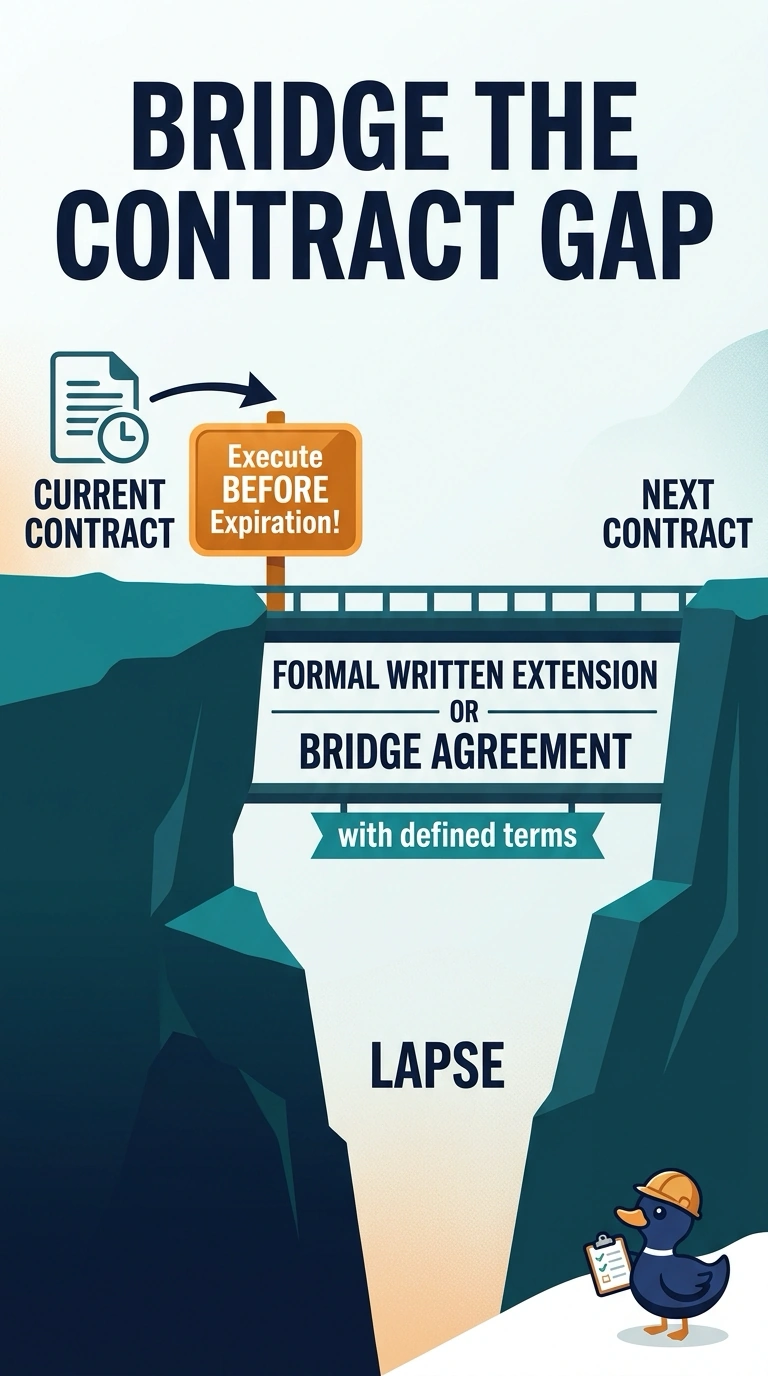
Letting a contract expire while work keeps rolling is like driving with an expired license—sooner or later, an audit or an accident will catch up with you. You need a formal written extension in place before the end date so pricing, insurance, and liability protections stay intact. The trap is relying on informal promises to pay later, which creates unauthorized commitments.
Full Explanation
Allowing a contractor to perform services after a contract expires strips the agency of enforceable terms, insurance coverage, and budget authority. Choosing to Execute a formal written extension or bridge agreement with defined terms before the contract expires maintains uninterrupted legal coverage, locks in pricing, and documents the temporary bridge while the replacement solicitation concludes. Choosing to Allow monthly maintenance to continue informally and pay the vendor through retroactive purchase orders creates an unauthorized commitment and violates internal controls. Choosing to Instruct accounts payable to hold all incoming elevator invoices until the replacement RFP is awarded leaves the vendor unpaid for work performed without an active contract and invites prompt-payment penalties or service suspension. Choosing to Let facilities issue monthly confirming orders to the incumbent at the old rates until the new award creates an indefinite holdover without required approval and bypasses competition and term limits. One caveat is that any bridge extension must be authorized by existing contract option language, emergency or sole-source authority, or governing-board approval as required by local code. As an operational check, confirm fund encumbrance, current insurance certificates, and an explicit end date in the signed amendment before the original term lapses.
Prefer to study offline? Printable PDF study book + test engine ($7.50, unofficial). These questions stay free here.