
A municipal public works department completes a street-resurfacing contract under budget, leaving 18,000 dollars encumbered on the purchase order after all deliverables are accepted and the final invoice is paid. What should the contract administrator do during formal closeout?
Select an answer to reveal the explanation.
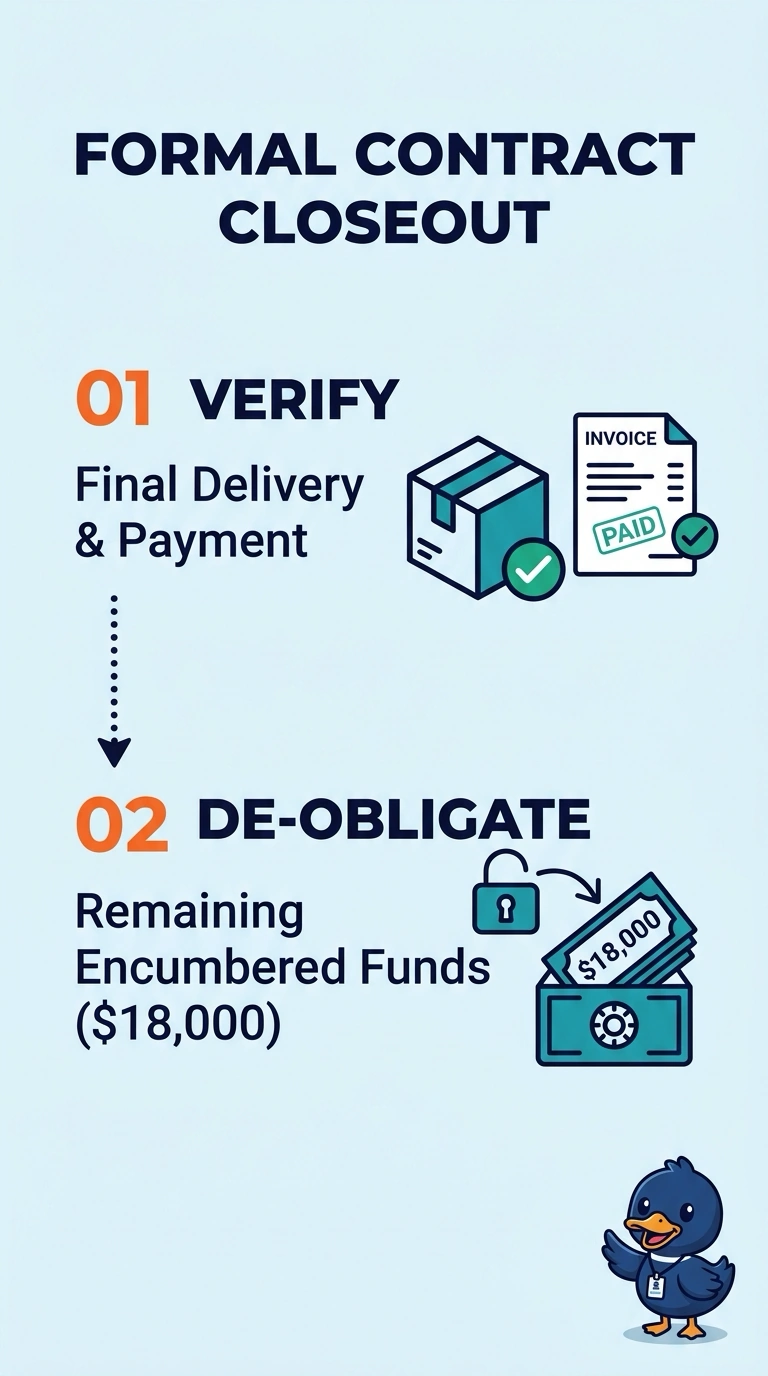
Short Explanation
Closing a contract without releasing leftover funds is like leaving a hotel security deposit on your credit card months after checking out. You want to clear that financial hold so the agency can put those dollars back to work. The trap is treating an expired purchase order like a petty-cash reserve for unrelated future spending.
Full Explanation
During formal contract closeout, the contract administrator must reconcile all deliveries, confirm final payment, and de-obligate the remaining encumbered funds after verifying final delivery and payment. Releasing unspent encumbrances returns unused budget authority to the municipal fund and prevents stale obligations from distorting financial statements. Choosing to leave the unspent balance open indefinitely in case the department orders additional services later violates fiscal controls and invites unauthorized out-of-scope spending on a completed contract. Attempting to transfer the leftover encumbrance directly to another vendor's active purchase order bypasses competitive award rules and appropriation controls, because funds encumbered for one specific contract cannot be reassigned informally. Choosing to issue a unilateral deductive change order to match the vendor's final invoice without finance coordination creates audit discrepancies and fails to complete proper accounting liquidation. As a caveat, retainage or unresolved warranty claims must be settled before final release. For an operational check, verify the zero-balance closeout report with finance before archiving the contract file.
Prefer to study offline? Printable PDF study book + test engine ($7.50, unofficial). These questions stay free here.