
After a state agency exercises a termination-for-convenience clause on a multi-year IT consulting contract due to a legislative budget cut, the contractor submits a closeout claim requesting payment for completed deliverables, demobilization expenses, and unearned profits for the remaining two years. Which settlement approach should the contract administrator apply?
Select an answer to reveal the explanation.
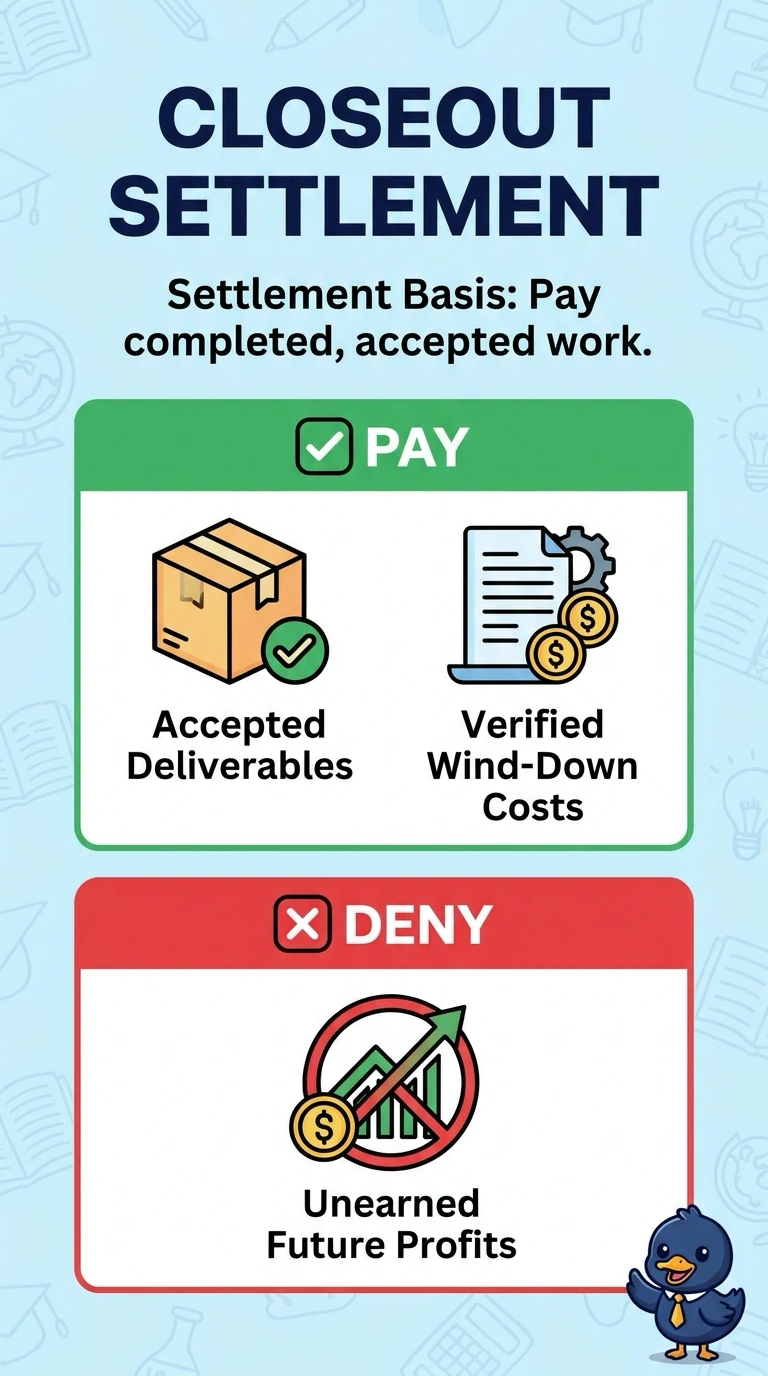
Short Explanation
Think of termination for convenience like canceling a catering order before the event—you pay for the prep already done and reasonable wrap-up costs, not the profit on meals never cooked. When you handle a budget-cut closeout, the trap is either paying out unearned future profits or withholding pay for accepted work, both of which invite costly disputes.
Full Explanation
Paying for accepted deliverables and verified wind-down costs while denying unearned future profits reflects standard public contract termination-for-convenience principles. Because the agency ended the contract for its own budgetary reasons rather than contractor fault, the contractor is entitled to fair compensation for conforming work performed and documented, reasonable demobilization or settlement expenses, but not anticipated profits on unperformed future work. Paying the full remaining multi-year contract balance including unearned profits wastes public funds and pays for services never delivered. Withholding all payment for completed deliverables until a replacement contract is bid breaches the agency's obligation to pay for accepted work and invites prompt-payment penalties or litigation. Reclassifying the termination as a default to collect liquidated damages instead is unlawful when the contractor performed satisfactorily and the termination resulted from an agency funding cut. One caveat is that exact allowable settlement costs depend on the specific termination clause and audit verification of submitted invoices. As an operational check, require itemized closeout documentation and conduct a settlement audit before issuing the final bilateral modification and payment.
Prefer to study offline? Printable PDF study book + test engine ($7.50, unofficial). These questions stay free here.