
A school district receives 200 student desks that meet all structural safety standards, but the laminate finish has minor cosmetic scuffs on twenty units. Replacing them would delay classroom opening by six weeks, and the vendor offers to leave them in service. What should the contract administrator do?
Select an answer to reveal the explanation.
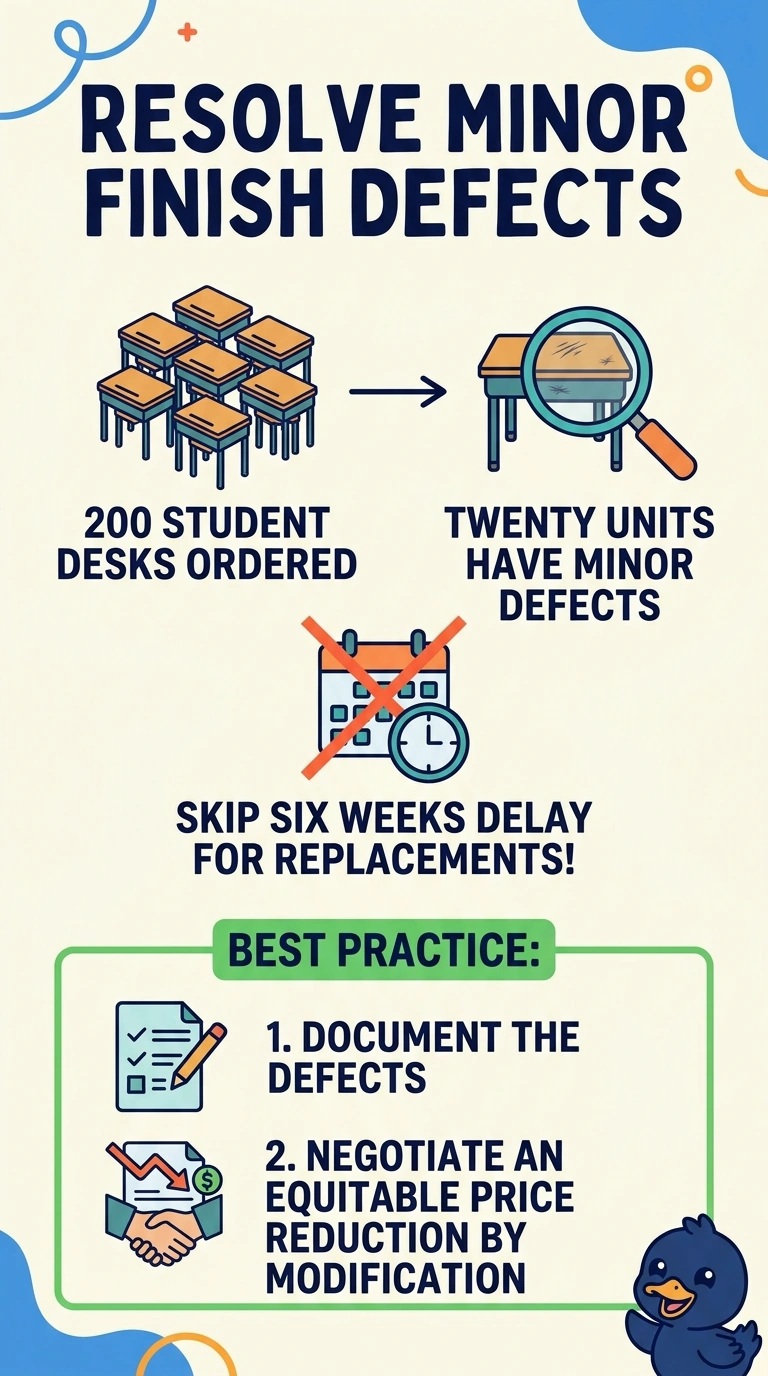
Short Explanation
When delivered goods have minor cosmetic flaws that don't affect safety or function, you don't always have to stall a school opening—you can accept them at a fair discount. The trap is either paying full price with only an informal email as a record or using the desks while withholding payment without a modification.
Full Explanation
Contract administration requires balancing strict specification enforcement with practical needs when nonconformities are minor and non-critical. Choosing to document the defects and negotiate an equitable price reduction by modification protects the district's financial interest, creates a clear written record, and keeps classrooms ready on schedule. Choosing to accept all 200 desks at the contract price and record the scuffs in an informal email to the vendor pays full value for sub-standard quality without an enforceable modification and forfeits contractual remedies. Choosing to withhold payment for the twenty scuffed desks while continuing to use all 200 without a modification uses nonconforming goods without agreed consideration and creates an unauthorized de facto adjustment. Choosing to reject the twenty scuffed desks and require the vendor to replace them before accepting the delivery imposes disproportionate delay for cosmetic flaws and withholds usable desks. Minor-defect acceptance is appropriate only when users confirm safety, warranty, and durability are unaffected. Operationally, photograph the scuffed units and execute a bilateral modification before authorizing payment.
Prefer to study offline? Printable PDF study book + test engine ($7.50, unofficial). These questions stay free here.