
A county awards a three-year grounds-maintenance contract managed day-to-day by a parks supervisor who works outside the procurement office. What contract administration step should the buyer take at award to prevent unauthorized scope changes?
Select an answer to reveal the explanation.
Short Explanation
Handing someone the keys to a truck without telling them the speed limit is asking for a ticket. Your trap is assuming a field supervisor automatically knows where daily oversight stops and formal contract modification begins.
Full Explanation
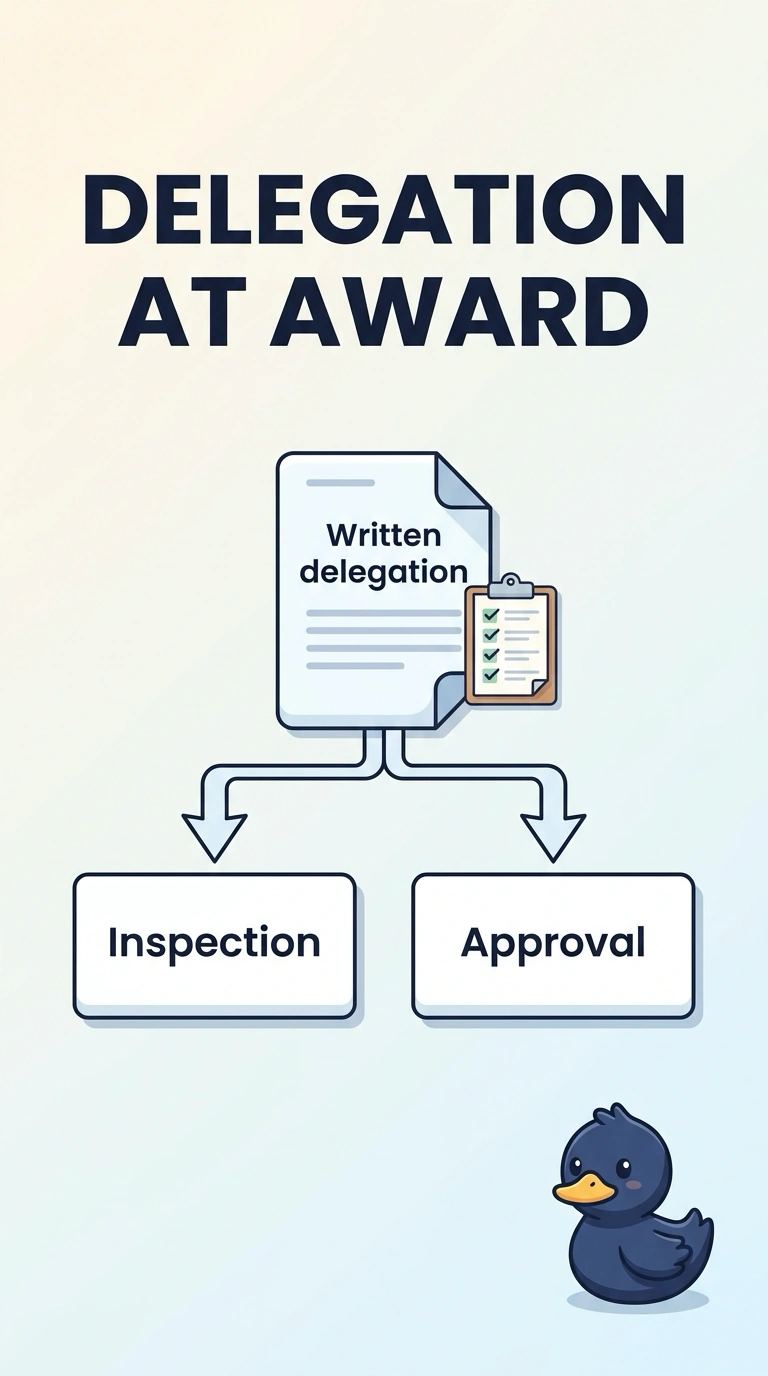
Choosing to Issue a written delegation defining the supervisor's inspection and approval limits establishes clear governance by empowering the parks supervisor to monitor schedules, inspect work, and verify invoices while reserving formal contract amendments and price changes for authorized procurement officials. Choosing to Authorize the parks supervisor verbally to approve minor extra work orders as needed invites scope creep and unauthorized commitments that bypass budget and legal review. Choosing to Prohibit the parks supervisor from communicating directly with the contractor's crew cripples routine operational coordination and delays issue resolution in the field. Choosing to Transfer full contract modification and termination authority to the parks department undermines centralized procurement accountability and risks inconsistent or noncompliant contract changes. As a caveat, a written delegation only works when both the internal administrator and the contractor receive clear notice of who holds binding authority. Operationally, attach the signed delegation memo to the contract file and review those authority boundaries aloud during the post-award kickoff meeting.
Prefer to study offline? Printable PDF study book + test engine ($7.50, unofficial). These questions stay free here.