
A state agency's annual contract review reveals that thirty-five percent of its facilities construction contracts experienced post-award change orders due to incomplete site-condition descriptions. Which procurement business practice best addresses this recurring problem?
Select an answer to reveal the explanation.
Short Explanation
Patching the same pothole every month tells you the road base is failing, not that you need more asphalt. Your trap is treating symptoms with rigid bans or padded budgets instead of fixing the weak specifications that trigger change orders in the first place.
Full Explanation
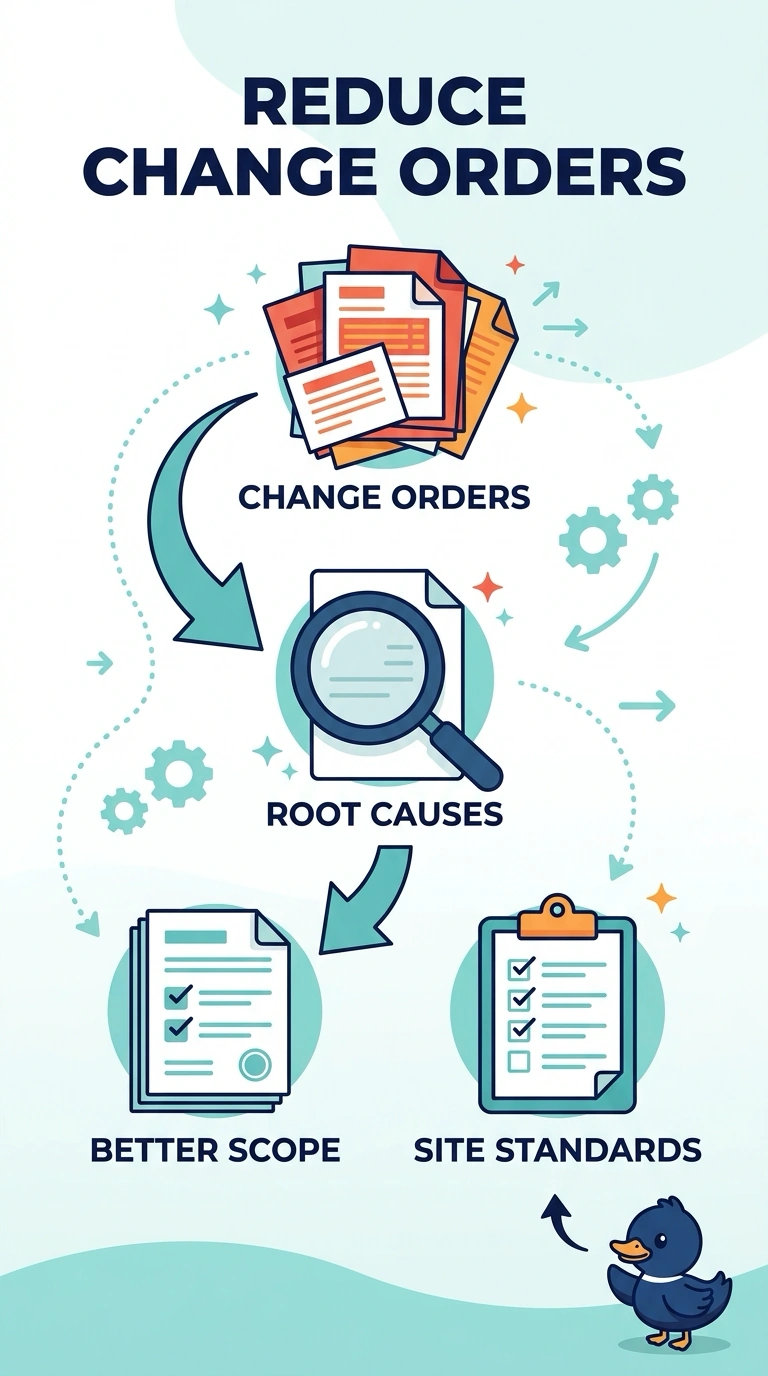
Choosing to Analyze change-order root causes to improve pre-solicitation scope and site standards applies continuous improvement principles by tracing post-award modifications back to gaps in drawings, site investigations, and specification reviews. Choosing to Delete the differing-site-conditions clause so the next bidders carry all latent-condition risk in the base price removes the equitable mechanism for unknown conditions and forces bidders to inflate prices without improving site data. Choosing to Increase every construction contract's contingency budget by thirty-five percent normalizes poor scope definition and ties up scarce capital funds without fixing the underlying process failure. Choosing to Require contractors to absorb all undisclosed site-condition costs without compensation shifts uncontrollable risk onto bidders, causing vendors to pad base bids or refuse to participate. As a caveat, not every change order signals a specification flaw, because genuine owner-directed scope additions and unforeseen emergencies still occur. Operationally, tag every executed modification by reason code—such as design omission, owner request, or unforeseen condition—and review high-frequency categories quarterly with engineering and procurement staff.
Prefer to study offline? Printable PDF study book + test engine ($7.50, unofficial). These questions stay free here.