
A state procurement division wants to move beyond processing isolated departmental requisitions for IT hardware, software licenses, and cloud services, and instead manage these related purchases through a unified multi-year market and supplier strategy. Which procurement business practice best achieves this goal?
Select an answer to reveal the explanation.
Short Explanation
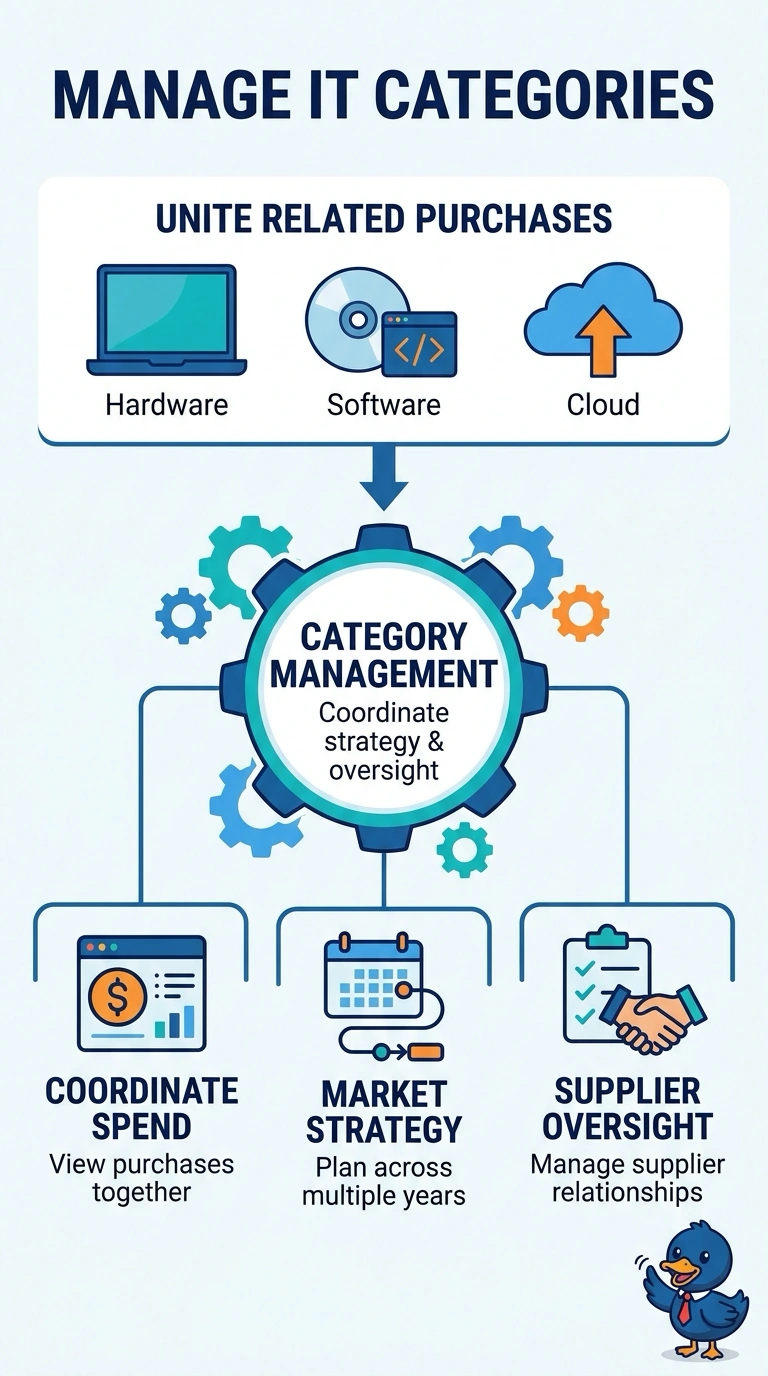
Category management turns scattered one-off buying into a coordinated game plan, letting you see the whole chessboard instead of one square at a time. The trap is thinking decentralization or breaking contracts into tiny monthly orders adds agility, when it actually destroys leverage and visibility.
Full Explanation
Implementing formal category management to coordinate spend, market strategy, and supplier oversight groups related goods and services into strategic portfolios managed with cross-agency data, market intelligence, and standardized contracting approaches. This business practice reduces duplication, strengthens negotiating leverage, aligns supplier performance reviews, and supports long-term technology roadmaps. Decentralizing all technology purchases to individual agency program managers fragments purchasing power, increases off-contract spend, and creates inconsistent security and licensing terms. Converting every multi-year technology contract into monthly purchase orders increases administrative transaction volume, sacrifices volume discounts, and risks service interruptions. Restricting technology solicitations exclusively to local retail distributors artificially narrows fair and open competition and often excludes direct manufacturers or authorized enterprise resellers. One caveat is that category management requires reliable spend data and active participation from technical stakeholders across agencies to succeed. As an operational check, begin with a cross-agency spend and contract expiration baseline for the technology portfolio before designing a unified sourcing calendar.
Prefer to study offline? Printable PDF study book + test engine ($7.50, unofficial). These questions stay free here.