
A state agency's decentralized divisions frequently discover that multi-year service contracts have expired without renewal or re-solicitation, forcing rushed short-term extensions. Which business practice best prevents these lapses?
Select an answer to reveal the explanation.
Short Explanation
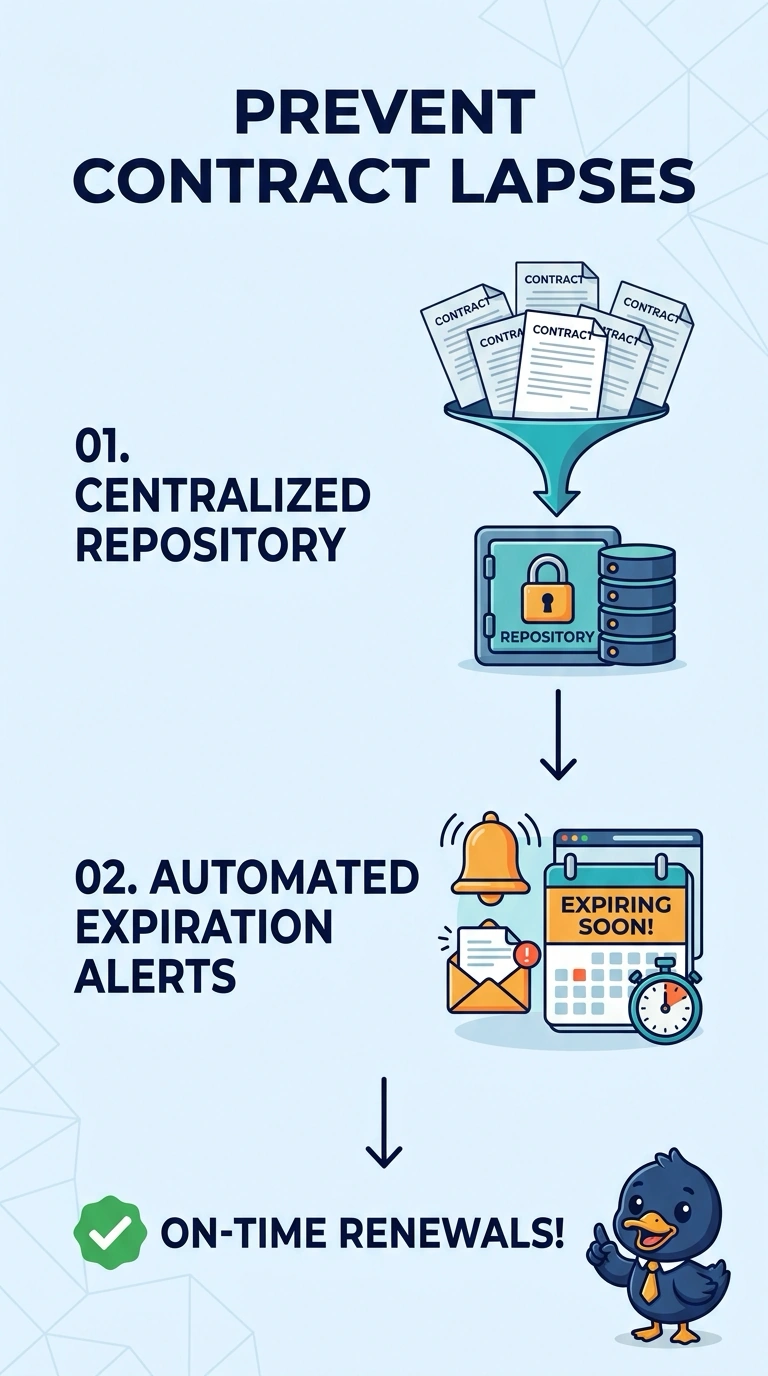
Waiting until a contract expires to think about its replacement is like noticing your fuel light only after the car stalls. You prevent last-minute scrambles by using a central repository that triggers alerts months ahead. The trap is relying on scattered spreadsheets or automatic renewals that bypass competition.
Full Explanation
Unintended contract lapses create compliance gaps, weaken negotiating leverage, and force avoidable non-competitive extensions. Choosing to Deploy a centralized contract repository with automated expiration alerts gives procurement staff and user divisions advance notice—often six to twelve months early—to evaluate performance, confirm budget, and launch timely re-solicitations. Opting to Require each division to track contract end dates on personal spreadsheets leaves visibility fragmented and vulnerable to staff turnover. Choosing to Insert automatic one-year renewals into agency service contracts unless a division objects bypasses market competition and often violates public procurement term limits. Deciding to Ask each division to email the buyer when a contract is within one week of expiration leaves action reactive and fragmented, with far too little lead time to secure funding or complete a competitive re-solicitation. Caveat: automated alerts only work when contract metadata—such as base end date, renewal notice deadlines, and solicitation lead time—are entered accurately at award. Operational check: audit active contracts quarterly to verify alert lead times match realistic solicitation schedules and confirm division owners acknowledge upcoming renewal notices.
Prefer to study offline? Printable PDF study book + test engine ($7.50, unofficial). These questions stay free here.