
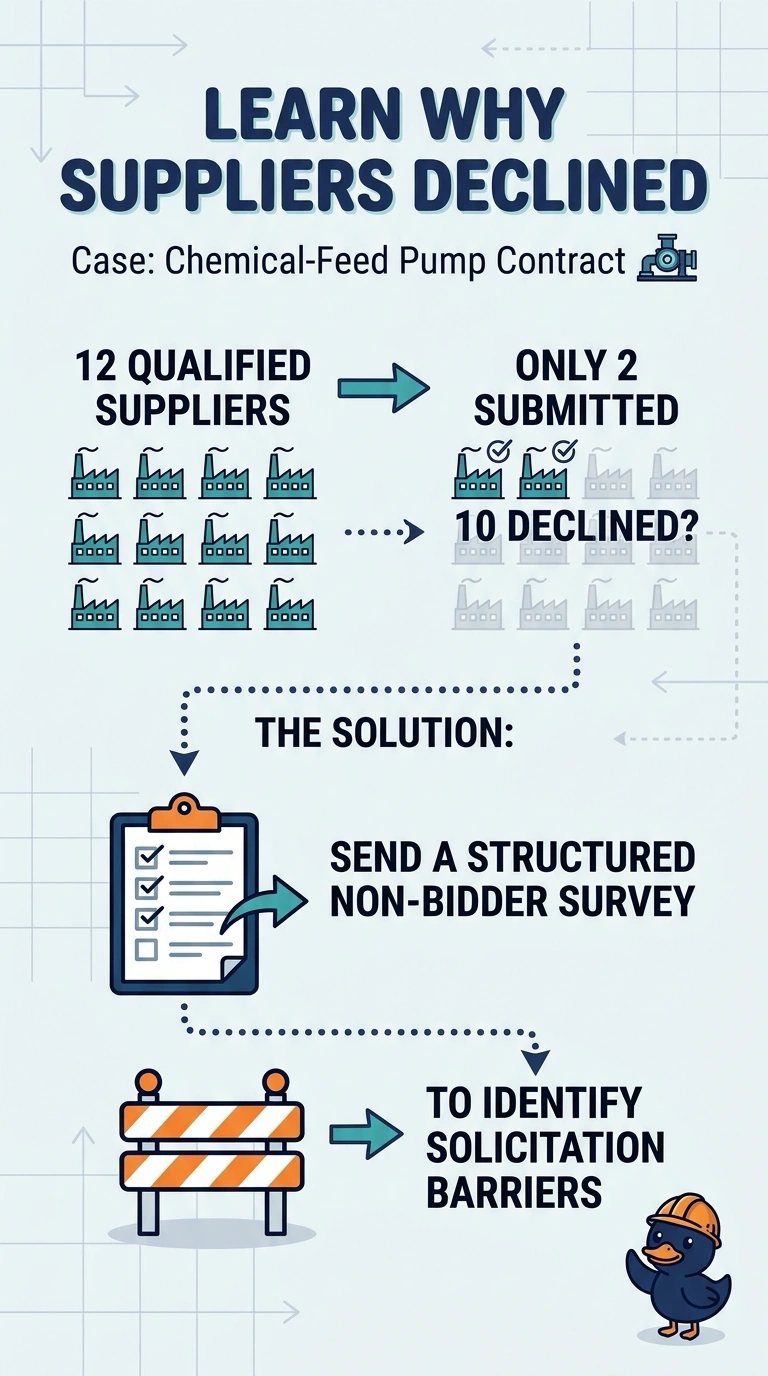
A regional water authority invited twelve qualified suppliers to bid on a chemical-feed pump contract, but only two submitted offers by the closing date. Which business practice best helps the procurement team diagnose why the other suppliers declined to participate?
Select an answer to reveal the explanation.
Short Explanation
Empty bid boxes are telling you a story if you bother to ask! Many buyers blame vendor apathy right away, missing clues that unrealistic delivery windows, excessive bonding, or unclear specifications scared good suppliers off.
Full Explanation
When an open solicitation attracts far fewer responses than expected, the most constructive diagnostic step is to Send a structured non-bidder survey to identify solicitation barriers such as tight lead times, onerous indemnification terms, or restrictive specifications. Collecting neutral feedback turns a disappointing bid count into actionable market intelligence for future procurements. Choosing to Note the ten non-respondents and leave them off the next similar invitation unless they ask to be restored shrinks the competitive pool further and punishes suppliers for rational business decisions. Deciding to Lower the technical performance standards on the next solicitation without consulting users compromises operational safety and functionality based on guesswork. Attempting to Extend the bid deadline retroactively and invite only the non-responding firms to submit violates equal-treatment rules and invalidates the closed competition. Keep in mind that survey responses should be aggregated across vendors so no single supplier dictates future specifications. As an operational check, review non-bidder responses alongside the original solicitation schedule and risk terms before drafting the next cycle's requirements.
Prefer to study offline? Printable PDF study book + test engine ($7.50, unofficial). These questions stay free here.