
A regional public transit authority discovers that ninety percent of its critical bus brake components come from a single overseas manufacturer facing port delays and financial instability. Which procurement business strategy best reduces this supply chain vulnerability?
Select an answer to reveal the explanation.
Short Explanation
Putting all your agency's critical spare parts in one supplier's basket works fine until a port closes or a factory stalls. You want operational resilience that keeps buses rolling, not just paper penalties after a breakdown. The trap is thinking harsher contract fees or a longer sole-source deal will magically create backup parts when the single supplier stops shipping.
Full Explanation
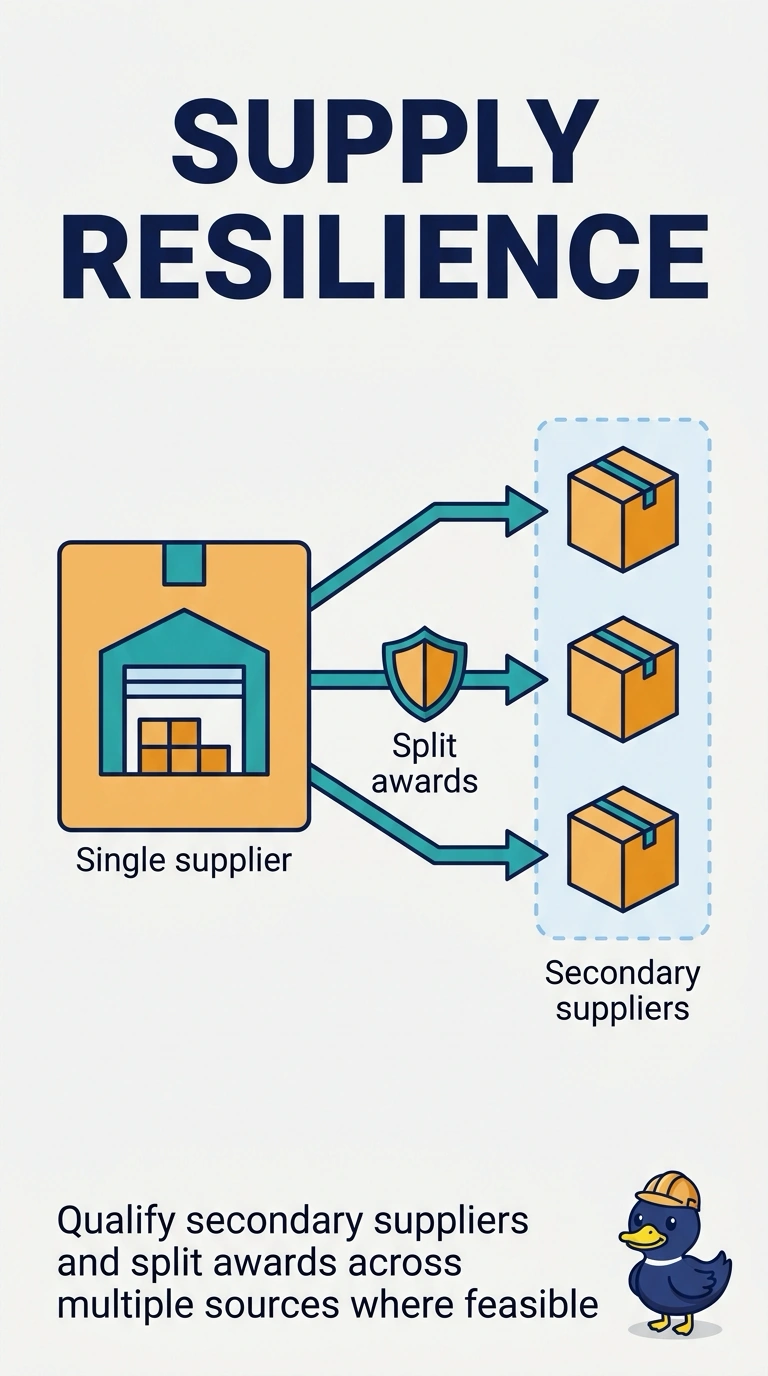
Supply chain risk management requires identifying single points of failure and building redundancy before a disruption halts public services. Choosing to Qualify secondary suppliers and split awards across multiple sources where feasible diversifies geographic and vendor dependency while preserving competitive leverage. Attempting to Eliminate competitive bidding and lock in a ten-year sole-source agreement with the incumbent deepens dependency on a troubled vendor and violates competitive procurement principles. Deciding to Raise the reorder point for brake parts and keep the single overseas manufacturer as the only qualified source only adds inventory cushion without removing the single point of failure, so a prolonged port closure or supplier failure still stops supply once the buffer is consumed. Choosing to Require the single manufacturer to pay daily late fees for late deliveries provides financial recourse only after buses are sidelined and does not restore physical parts availability. Keep in mind that dual-sourcing or multiple-award structures must be authorized in the solicitation and aligned with applicable procurement rules. As an operational check, map tier-one suppliers for mission-critical categories annually and verify that qualified backup sources can meet technical specifications and lead times.
Prefer to study offline? Printable PDF study book + test engine ($7.50, unofficial). These questions stay free here.