
A city procurement office is leading a multi-department ERP replacement solicitation involving IT, finance, and legal reviewers, and previous complex acquisitions stalled because technical reviews slipped past target dates. Which project management practice best keeps the solicitation on schedule?
Select an answer to reveal the explanation.
Short Explanation
Think of a complex solicitation like a relay race: if nobody tracks the handoff zones, the baton hits the track. When you manage cross-functional reviews, a shared schedule keeps departments accountable instead of letting technical tasks drift. The trap is treating legal or finance input as an afterthought until specifications are already late.
Full Explanation
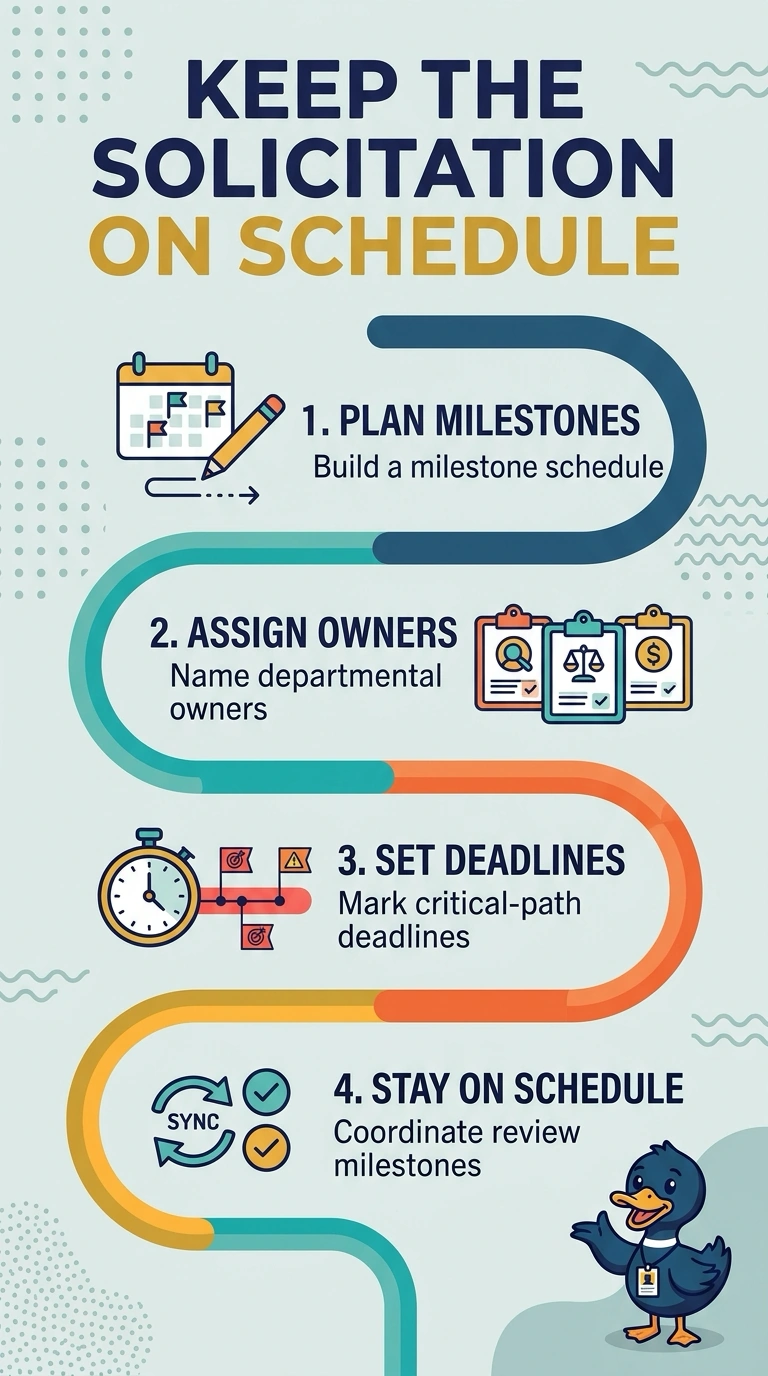
Complex public acquisitions depend on coordinated input across procurement, technical, financial, and legal stakeholders. Establishing a milestone schedule with assigned departmental owners and critical-path deadlines creates visibility into task dependencies, sets clear accountability for each review gate, and alerts the buyer early when a deliverable threatens the target award date. Waiting until all technical specifications are finalized before notifying legal counsel of the upcoming review compresses legal review time and forces last-minute rework when statutory terms conflict with technical drafts. Assigning one junior buyer to draft all technical, legal, and financial requirements independently fails because a single buyer lacks the specialized domain expertise needed for enterprise systems and legal risk allocation. Issuing the solicitation without a target award date removes schedule discipline, frustrates proposers, and risks expired vendor pricing. As a caveat, milestone dates should reflect realistic internal review capacities rather than arbitrary targets. As an operational check, review upcoming critical-path due dates with departmental leads during weekly status huddles.
Prefer to study offline? Printable PDF study book + test engine ($7.50, unofficial). These questions stay free here.