
A coastal municipal water utility wants to strengthen its readiness for hurricanes and flooding without sacrificing competitive pricing or compliance during a crisis. Which proactive business practice best prepares the utility?
Select an answer to reveal the explanation.
Short Explanation
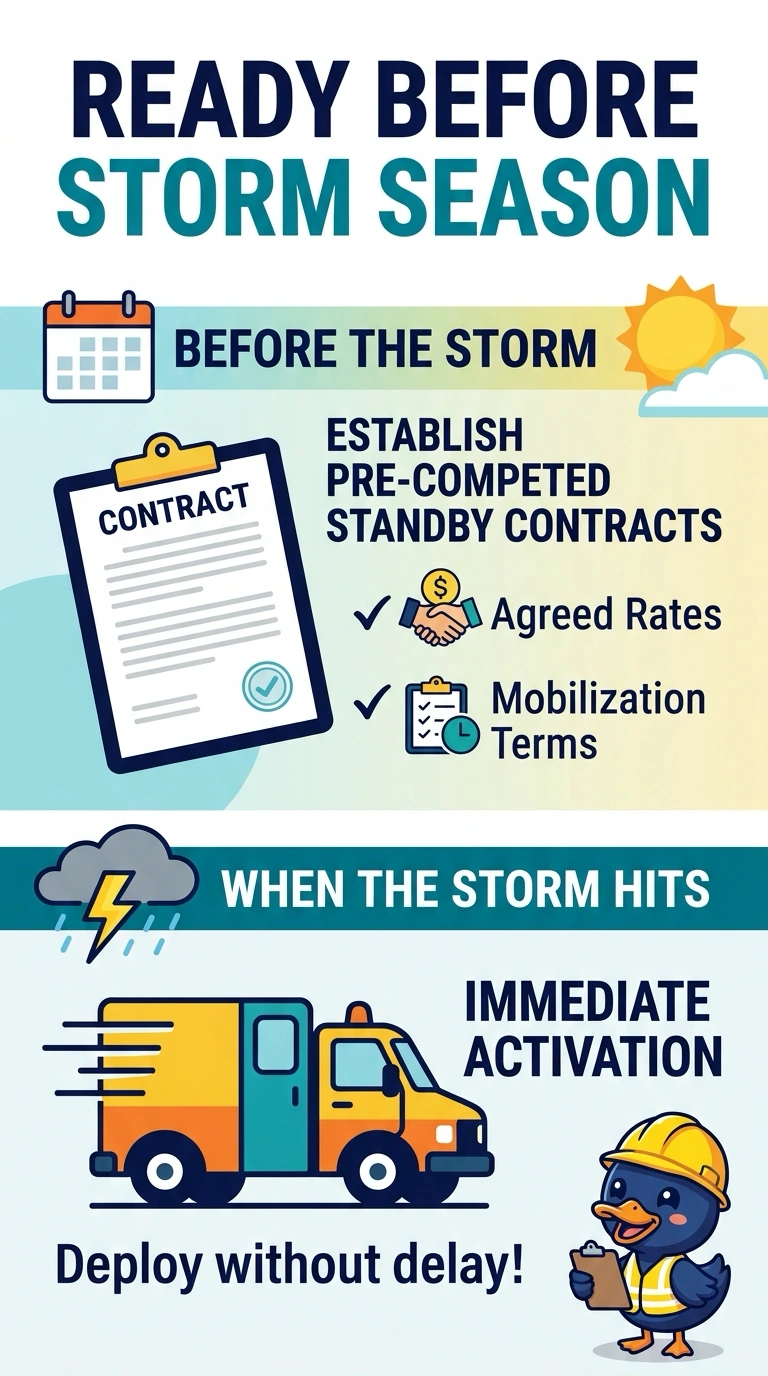
The worst time to negotiate generator rates is when floodwaters are already rising outside your plant. By locking in standby contracts ahead of time, you get emergency speed without paying crisis markups or skipping competition.
Full Explanation
Continuity of operations in public procurement depends on planning emergency capacity under normal competitive conditions. Choosing to Establish pre-competed standby contracts with agreed rates and mobilization terms before storm season gives the utility vetted suppliers, locked-in pricing, and enforceable response times while meeting competitive and grant-reimbursement standards. If the utility were to Wait until a disaster is declared and rely exclusively on non-competitive emergency waivers, it would face supply shortages, inflated spot-market pricing, and heightened audit scrutiny. Choosing to Maintain a petty cash reserve to buy generators and fuel directly from local retail stores cannot scale to utility-grade equipment and bypasses essential procurement controls. Relying on a plan to Ask current maintenance vendors to verbally promise priority service during severe storms creates no enforceable obligation, rate protection, or insurance coverage when competing emergencies arise. As a caveat, standby contracts must be reviewed periodically so vendor contacts, insurance certificates, and mobilization zones stay current. Operationally, competitively solicit multi-award contingency agreements for debris removal, generators, and fuel, and test vendor activation contacts during annual tabletop drills.
Prefer to study offline? Printable PDF study book + test engine ($7.50, unofficial). These questions stay free here.