
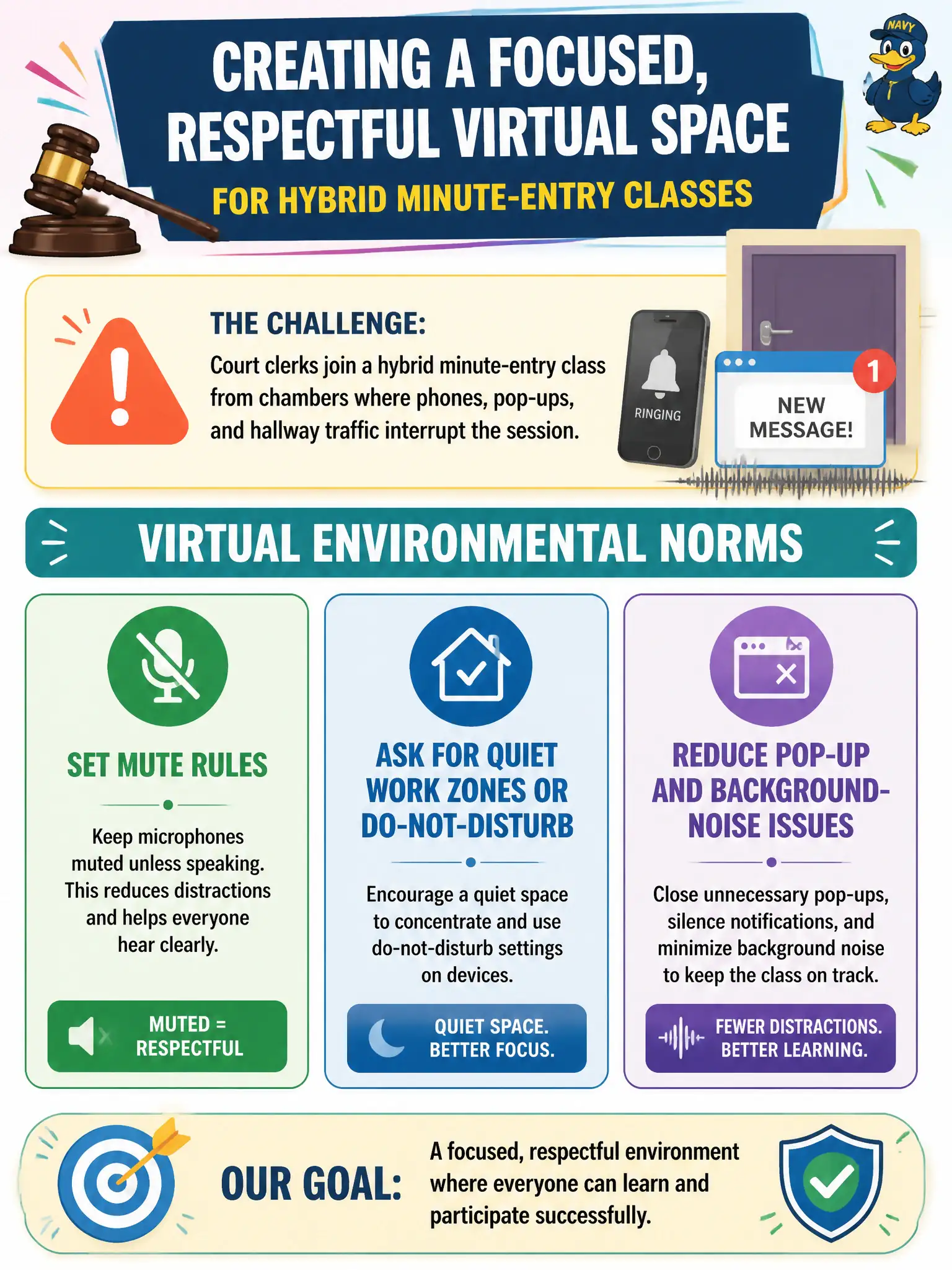
Court clerks join a hybrid minute-entry class from chambers where phones, pop-ups, and hallway traffic interrupt the session. What virtual environmental norms should the instructor set?
Select an answer to reveal the explanation.
Short Explanation
Chambers during the workday are like studying next to a blender. Mute rules, a quiet-work or do-not-disturb zone, and fewer pop-ups give the virtual room the same courtesy a classroom door would.
Full Explanation
Hybrid learners in noisy civic spaces need environmental norms. Court clerks joining a hybrid minute-entry class from chambers with phones, pop-ups, and hallway traffic should receive mute rules, quiet-work-zone or do-not-disturb expectations, and guidance to reduce pop-ups and background noise. Requiring cameras off so noise is “no longer the instructor’s concern” hides distraction without fixing audio chaos. Ignoring chambers distractions because hybrid learners are “expected to multitask” accepts an environment that defeats minute-entry practice. Moving the entire class to a recorded lecture so live audio quality does not matter abandons interactive hybrid design. Exam caveat: CTT+ virtual environment management includes norms that make remote sites instructional, not merely connected. Operational check: state mute and DND norms at open, ask clerks to close unrelated pop-ups, test remote audio, and pause if hallway noise makes practice unsafe for learning. Chambers are workplace theaters: phones, litigants, and hallway traffic will interrupt unless norms are set. Mute rules and quiet-zone requests make hybrid minute-entry possible. CTT+ virtual environment management includes remote-site discipline. Offer a headset recommendation and a “step out to hallway only on mute” rule so clerks can handle unavoidable court traffic without wrecking audio for peers.