
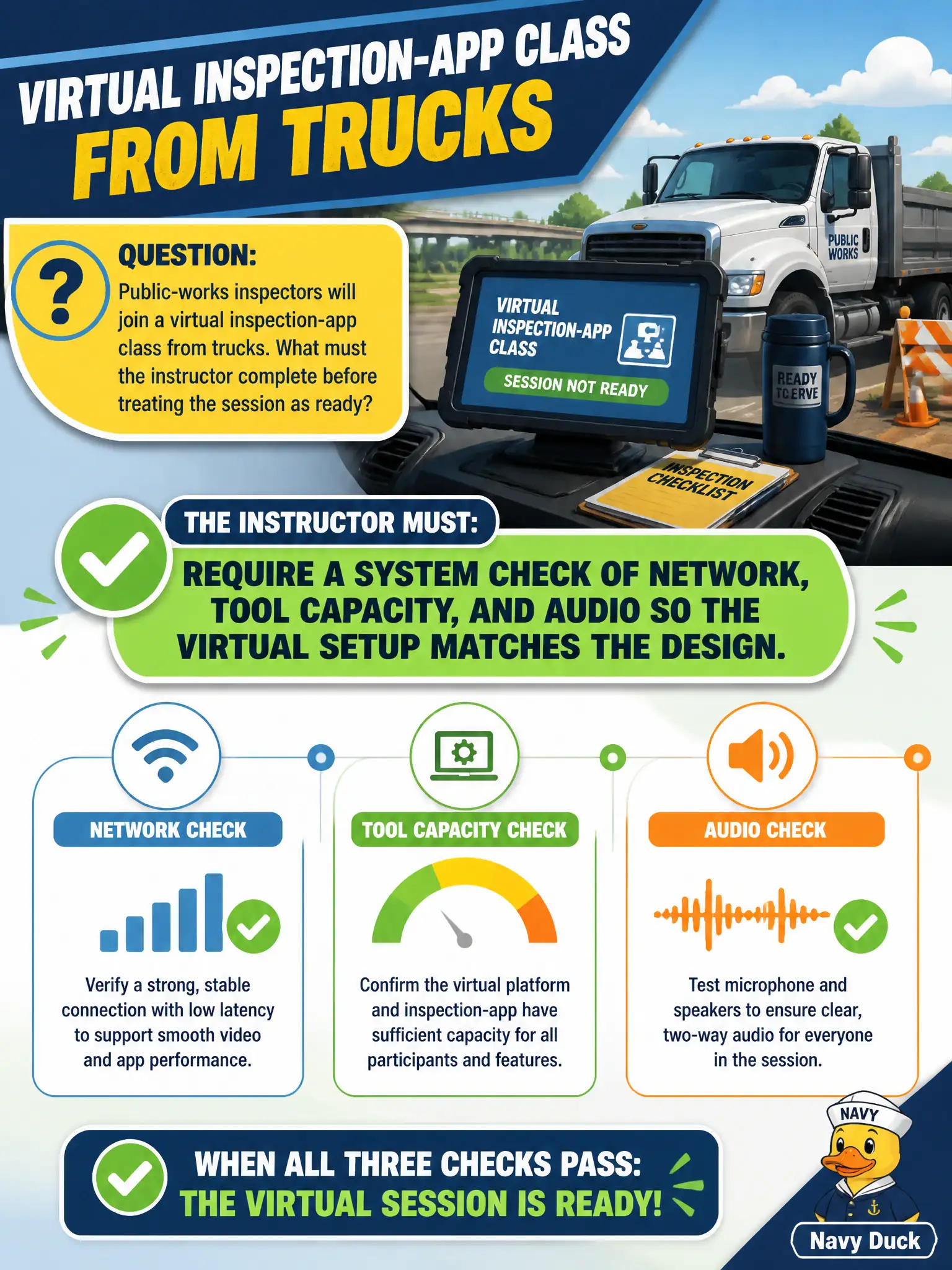
Public-works inspectors will join a virtual inspection-app class from trucks. What must the instructor complete before treating the session as ready?
Select an answer to reveal the explanation.
Short Explanation
Teaching from a truck is not the same as teaching from a quiet office—the room is the network, the tool, and the microphone. A system check before class is the virtual equivalent of walking the classroom: if the pipe, seats, or speakers are bad, the design never had a chance.
Full Explanation
Virtual readiness for field staff requires a system check, not hope. Public-works inspectors joining an inspection-app class from trucks need the instructor to require a network, tool-capacity, and audio check so the virtual setup matches the design before treating the session as ready. Assuming truck LTE is adequate because staff use radios every day confuses radio coverage with data and VoIP capacity. Converting to a slide lecture so connectivity never has to be tested abandons designed hands-on practice. Starting and troubleshooting each inspector’s audio only after the first activity fails burns the practice window. Exam caveat: CTT+ virtual environment validation is a pre-session duty, especially for mobile civic workers. Operational check: publish a short system-check checklist, require completion before class, verify a sample truck can open the inspection app share, and document fallback (phone audio or garage Wi-Fi) for failed checks. Truck-based virtual learning fails on captive portals, weak LTE, and headset conflicts with radios. A required system check surfaces those limits before the inspection-app objective is at risk. CTT+ treats tool and network validation as setup, not mid-activity heroics. Gate admission on completed checks and publish the garage Wi-Fi fallback for failed truck links.