
A water-plant lab has power strips across a walkway for a SCADA class. What should the instructor do before operators arrive?
Select an answer to reveal the explanation.
Short Explanation
A power strip in the aisle is a lawsuit wearing a surge protector. Tape it down, reroute it, or lose it before anyone walks in. Safety setup is planning, not a later announcement.
Full Explanation
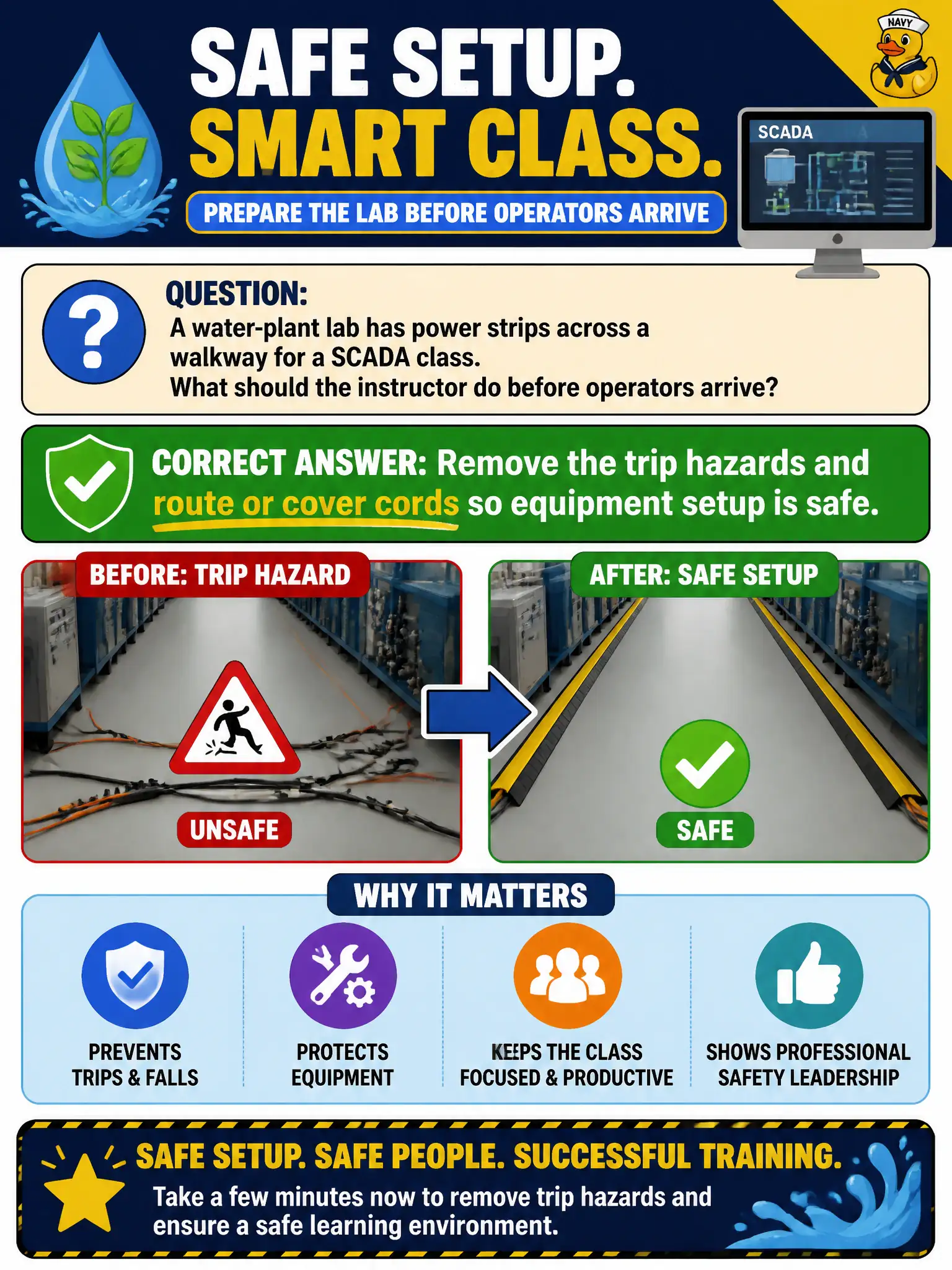
Safe equipment setup is part of the learning environment. When a water-plant lab has power strips across a walkway for a SCADA class, the instructor must remove trip hazards and route or cover cords before operators arrive. Leaving cords because plant staff are “used to” hazards normalizes preventable injury. Starting on time and mentioning cords at the first break delays mitigation until after exposure. Asking operators to sign a waiver so layout need not change substitutes paperwork for hazard control. Exam caveat: CTT+ environment responsibilities include physical safety before instruction begins. Operational check: walk the lab path operators will use, relocate strips, cover necessary cords, verify emergency egress remains clear, and only then open the room. Trip hazards in industrial training spaces are instructor-owned until mitigated, even when plant culture shrugs. Safe setup precedes SCADA learning. CTT+ environment safety items expect hazard removal, not waivers. After routing cords, walk the egress path in work boots the operators will wear and fix anything that still catches a toe. Maintain that civic standard in the session file so auditors and future instructors can see how design integrity was preserved under real municipal constraints.