
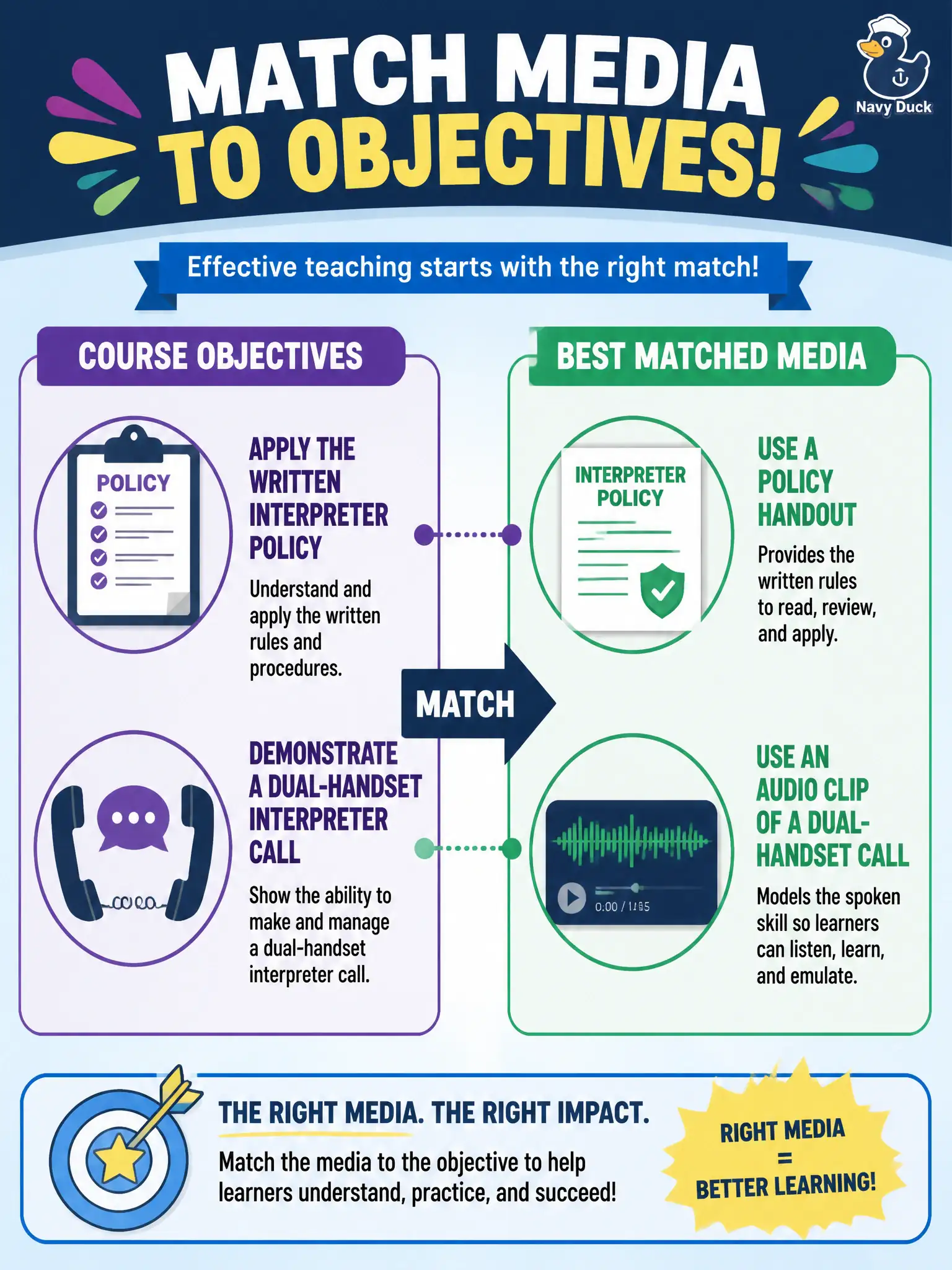
A municipal language-access course has two objectives: apply the written interpreter policy, and demonstrate a dual-handset interpreter call. How should the instructor match media to those objectives?
Select an answer to reveal the explanation.
Short Explanation
One medium rarely carries two different jobs. Policy lives well on paper; a dual-handset call lives in sound. Pair the handout with the audio clip so each objective has a medium that can actually hold it.
Full Explanation
A variety of media should be matched to distinct objectives and learner needs rather than forced into one default format. In a municipal language-access course, applying written interpreter policy is document-based, while demonstrating a dual-handset interpreter call is auditory and procedural. Using a policy handout for the written rules and an audio clip of a dual-handset call for the spoken skill gives each objective a medium capable of carrying it. That pairing is the instructional media decision CTT+ expects.
Lecture-only delivery fails by concept because a single spoken channel cannot adequately present the written policy artifact or let learners hear the dual-handset interaction. Using only the audio clip assumes listening covers the written policy, which fails when clerks must apply document rules, not just recognize sounds. A single branded logo slide for both objectives fails as branding theater: a logo does not teach policy text or call procedure.
Exam caveat: when a stem lists two different objective types, expect two appropriately matched media. One medium for everything is a common distractor.
Operational check: map each language-access objective to its medium before class; confirm handouts include the policy steps clerks must apply; play the dual-handset clip and have clerks identify call cues; do not rely on a logo or lecture alone for either objective.