
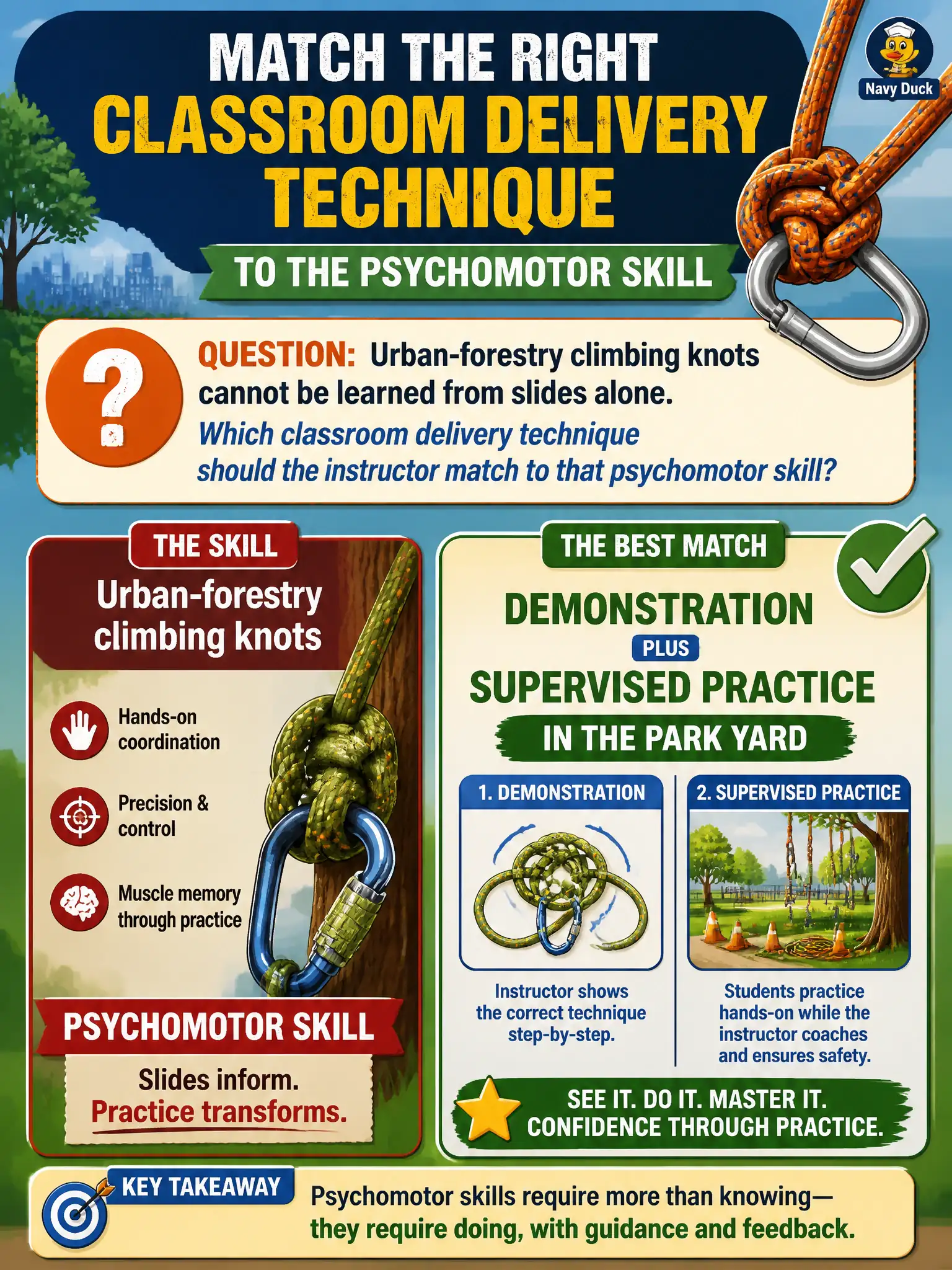
Urban-forestry climbing knots cannot be learned from slides alone. Which classroom delivery technique should the instructor match to that psychomotor skill?
Select an answer to reveal the explanation.
Short Explanation
Knots live in hands, not in slide 14. Show the hitch in the park yard, then watch people tie it. Photos and glossaries name the knot; they do not make it hold.
Full Explanation
Psychomotor skills need demonstration plus supervised practice. Urban-forestry climbing knots that cannot be learned from slides alone should be taught with demonstration and supervised practice in the park yard. A slide deck of knot photos with no yard time provides recognition without skill. A written glossary for later self-study delays coaching and feedback. A debate on which vendor sells the best rope changes the objective to procurement opinion. Exam caveat: CTT+ method selection for psychomotor outdoor skills privileges demo-and-practice over cognitive-only media. Operational check: demo each knot, have crews tie under supervision with safety checks, and assess finished knots against a performance checklist before leaving the yard. Climbing knots are life-safety psychomotor skills; yard demo and supervised practice are non-negotiable. Slides and glossaries may support names but cannot certify ties. CTT+ method matching for psychomotor outdoor tasks is strict. Use a dual-check sign-off—learner and instructor—before any trainee climbs on that knot. Maintain that civic standard in the session file so auditors and future instructors can see how design integrity was preserved under real municipal constraints.