
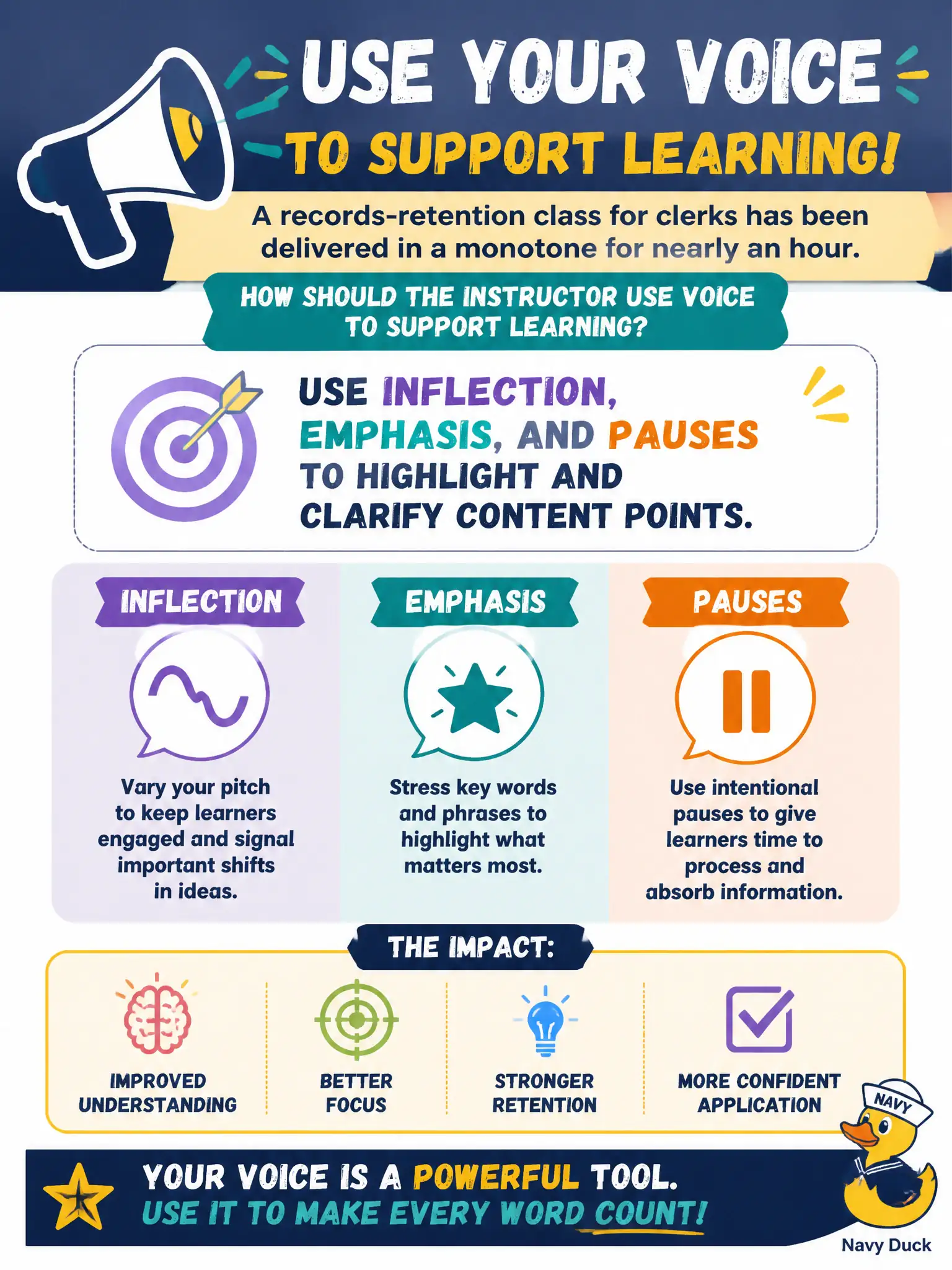
A records-retention class for clerks has been delivered in a monotone for nearly an hour. How should the instructor use voice to support learning?
Select an answer to reveal the explanation.
Short Explanation
A flat hour on retention is a lullaby, not a briefing. Change pitch, hit the key words, and pause where the rule actually matters. Voice is a highlighter, not a foghorn for fun.
Full Explanation
Voice is an instructional tool: inflection, emphasis, and pauses highlight and clarify content points. A records-retention class delivered in a near-hour monotone underuses that tool and makes key municipal retention rules harder to distinguish from surrounding detail. Using intentional vocal variety to mark structure and critical points supports learning without turning the hour into entertainment noise or random volume spikes.
Keeping the monotone so the topic “feels serious” fails by concept: seriousness does not require flat delivery that buries distinctions clerks must apply. Raising volume at random for entertainment fails because volume without content purpose distracts rather than clarifies retention rules. Speeding up only to finish early fails by sacrificing comprehension for schedule optics in a compliance-relevant municipal topic.
Exam caveat: CTT+ vocal-quality items reward purposeful inflection and pauses tied to content, not random theatrics or flat endurance reading.
Operational check: mark two retention rules and one exception in the facilitator notes for vocal emphasis; pause after each; ask a quick check question to confirm clerks heard the distinction before moving on.