
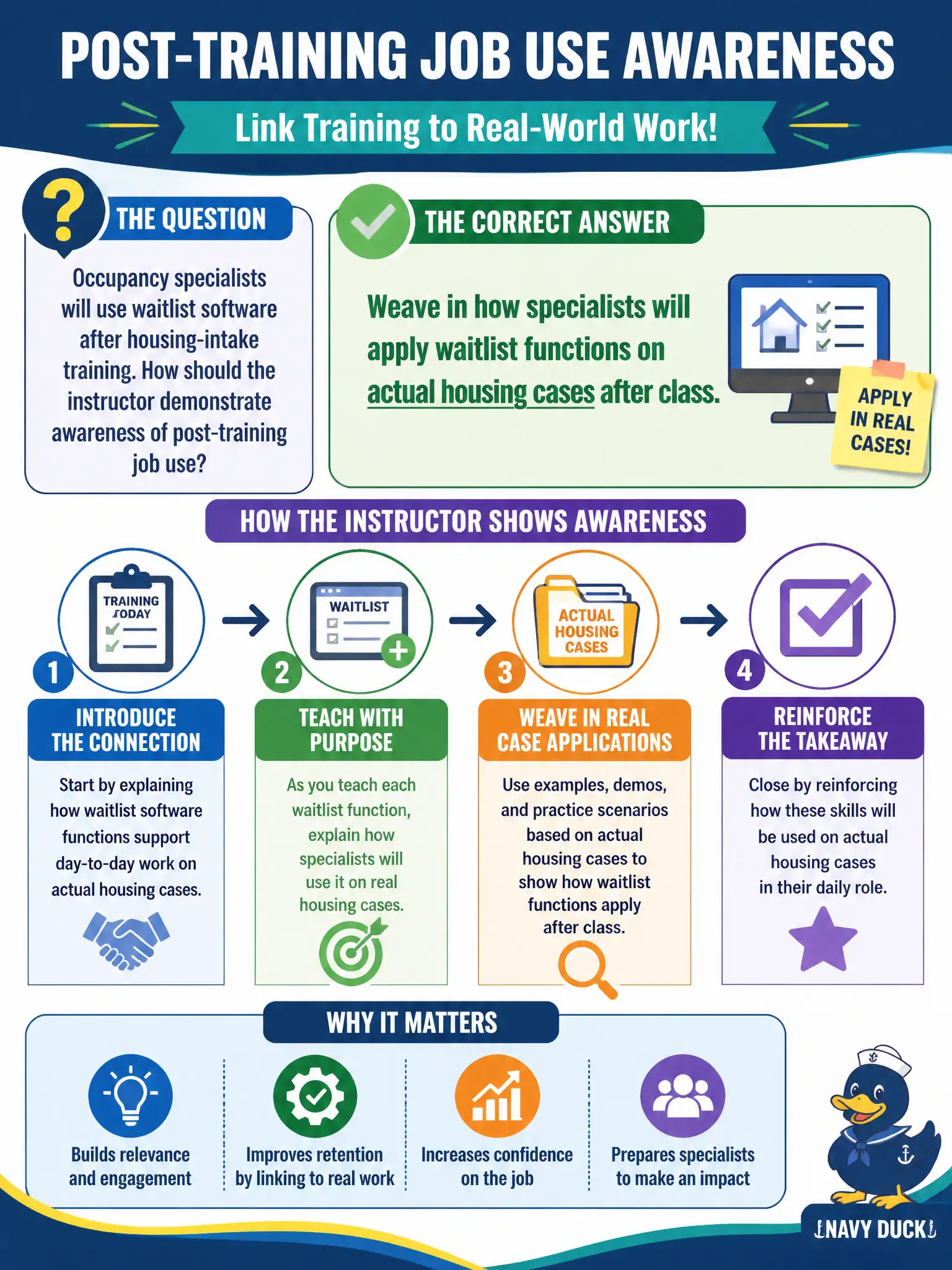
Occupancy specialists will use waitlist software after housing-intake training. How should the instructor demonstrate awareness of post-training job use?
Select an answer to reveal the explanation.
Short Explanation
If the class never mentions the waitlist they will work tomorrow, the software is just a tour. Weave in the real housing-case uses while teaching the clicks. Expertise includes knowing where the skill lives after class.
Full Explanation
Instructors demonstrate awareness of how learners will use skills after training by weaving workplace application into delivery. Occupancy specialists will work waitlist software on actual housing cases; teaching with those post-training job uses in view keeps municipal training job-relevant. Connecting waitlist functions to real case handling is how the instructor shows that awareness during the session, not merely by finishing a click path in the lab.
Teaching only the login screen and skipping how waitlists are worked on cases fails by concept: login is access, not the job skill occupancy staff must perform for residents. Spending the hour on software history fails because historical narrative is not post-training task performance on municipal cases. Treating on-the-job use as solely the supervisor’s problem fails by ignoring the instructor’s duty to connect class skills to housing work before learners leave the room.
Exam caveat: CTT+ “awareness of how training is used” items look for explicit job-use weaving, not generic clicks or history lectures.
Operational check: for each waitlist function taught, pair one real housing-case example; ask specialists when they will next use that function; confirm examples match occupancy workflows before leaving the module.