
During a bloodborne-pathogens class for parks staff, the instructor considers using humor. What standard should guide that choice?
Select an answer to reveal the explanation.
Short Explanation
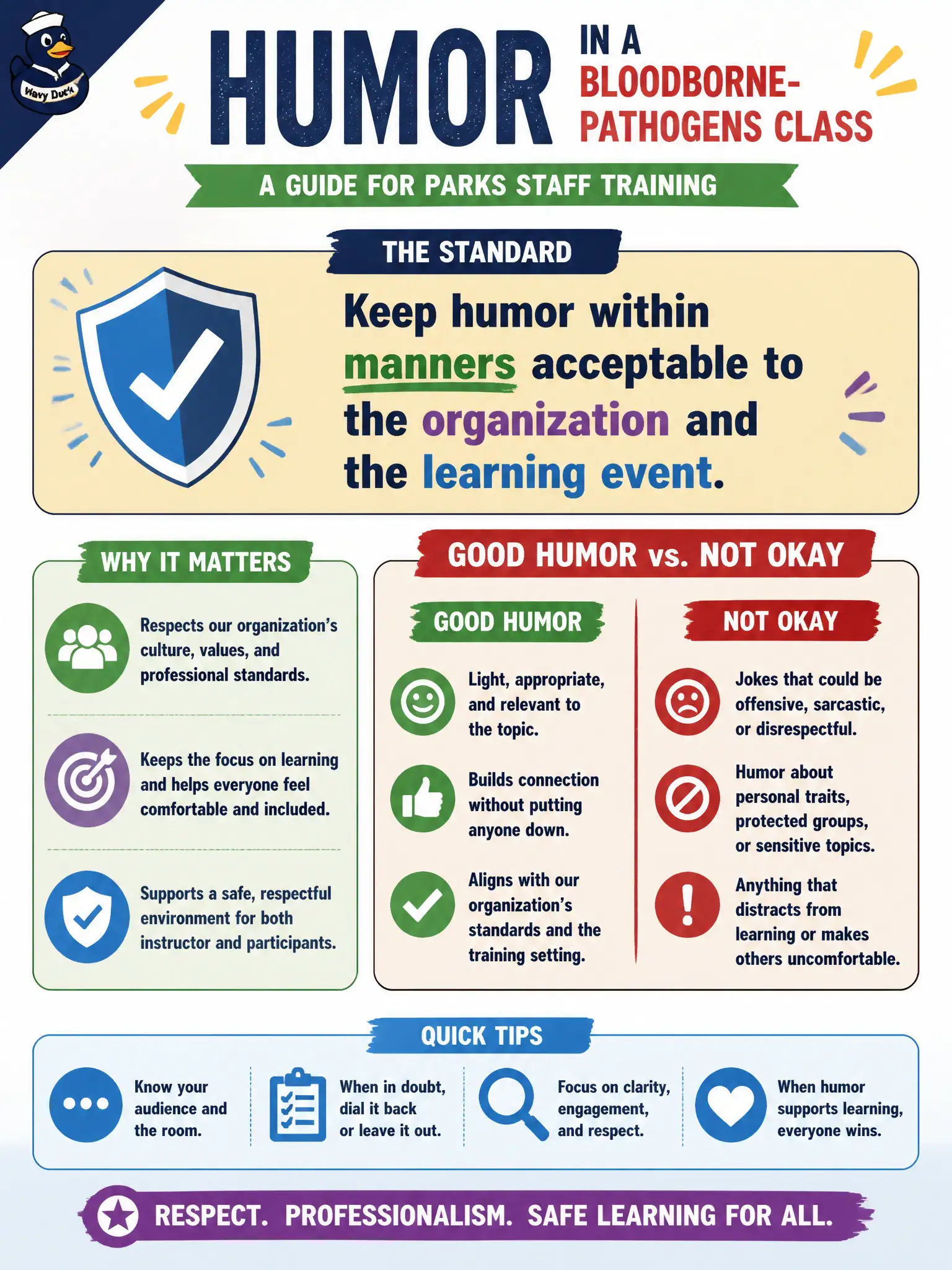
Bloodborne-pathogens class is not an open-mic night. If the joke would fail the city's manners test, it does not belong in the room. Humor can help, but only inside the event's professional bounds.
Full Explanation
Humor, if used, must stay within manners acceptable to the organization and the learning event. In a bloodborne-pathogens class for parks staff, graphic, shock, or mocking humor can trivialize risk, alienate learners, and violate municipal professional norms. Keeping humor within acceptable manners—or omitting it when the topic does not support it—protects both climate and content seriousness for a safety-critical civic topic.
Graphic jokes to make risk “memorable” fail by concept when they cross organizational manners and can desensitize rather than teach safe practice. Shock humor to keep seasonal hires awake fails as coercion-by-discomfort and is not a valid engagement strategy for BBP content. Mocking learners who look uncomfortable fails by attacking individuals and destroying psychological safety.
Exam caveat: CTT+ does not ban humor; it bounds humor by organizational acceptability and event appropriateness. Safety topics in municipal settings are a frequent boundary test.
Operational check: preview any planned BBP humor against city training conduct norms; if unsure, teach without jokes; watch learner faces—if discomfort rises, drop humor and return to procedure and PPE practice.