
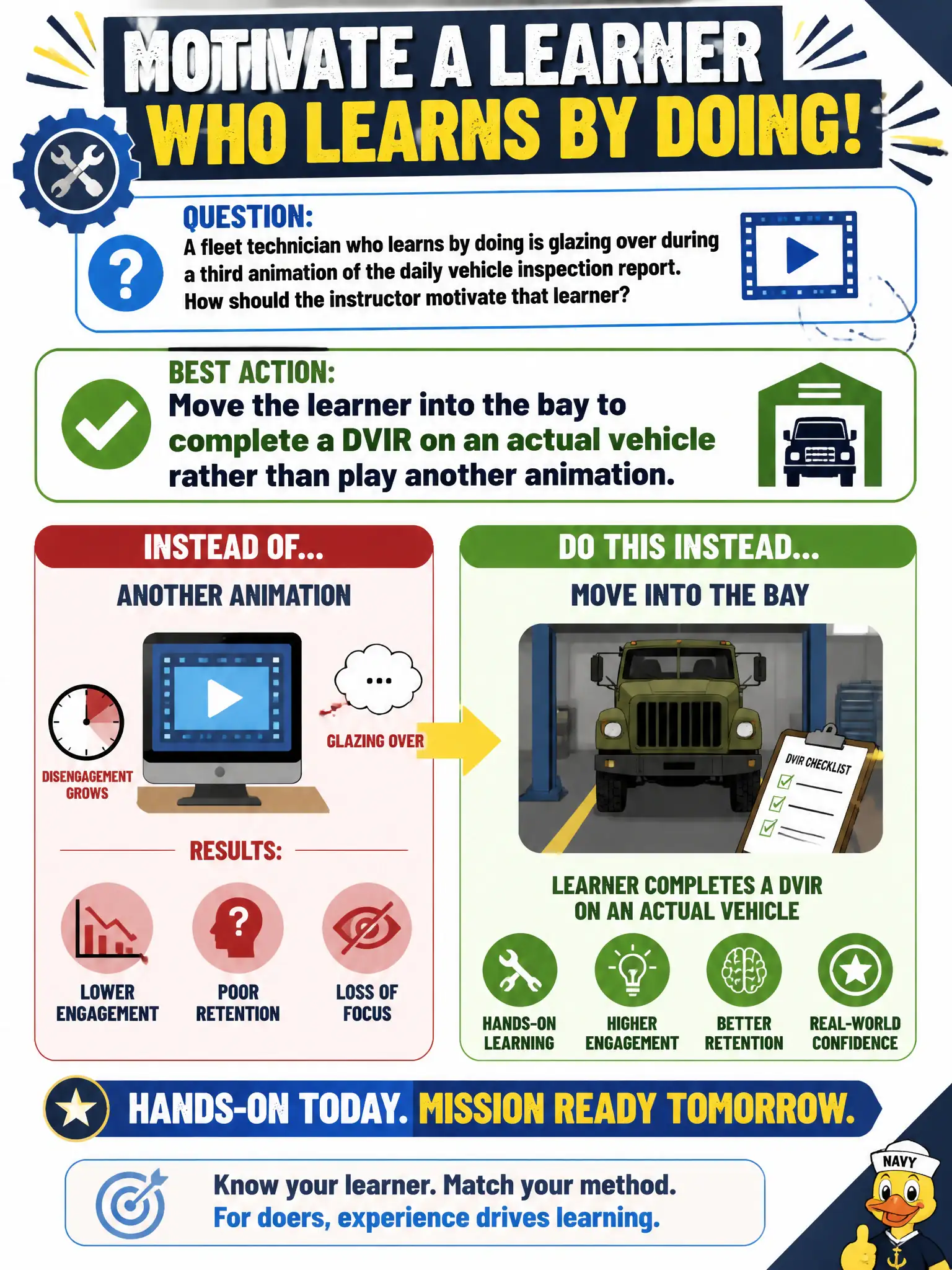
A fleet technician who learns by doing is glazing over during a third animation of the daily vehicle inspection report. How should the instructor motivate that learner?
Select an answer to reveal the explanation.
Short Explanation
A hands-on tech staring at another cartoon inspection is a mechanic locked out of the shop. Motivation here is the bay — clipboards, tires, actual lights. One real DVIR beats a prettier animation every time.
Full Explanation
A fleet technician who learns by doing and is glazing over during a third animation of the daily vehicle inspection report should be moved into the bay to complete a DVIR on an actual vehicle. Matching motivational strategy to learning preference restores engagement and advances the inspection skill the garage needs. Playing a fourth brighter animation fails the modality-fit concept: more of the failing channel is not motivation. Assigning a written essay on why inspections matter fails both hands-on preference and performance practice; essays do not operate lights and tires. Returning to the slide deck to read each item aloud again fails active learning by doubling down on passive reception the technician has already tuned out. Exam caveat: when a learner's style is kinesthetic, supervised performance is the motivator and the method. Operational check: hand the technician a DVIR clipboard beside a vehicle, coach each inspection item to standard, and confirm the completed report matches garage requirements before any further animation time. Fleet DVIR accuracy protects drivers and the public on city streets, so moving a hands-on technician into the bay is both motivational fit and operational risk control—not a detour from the lesson.