
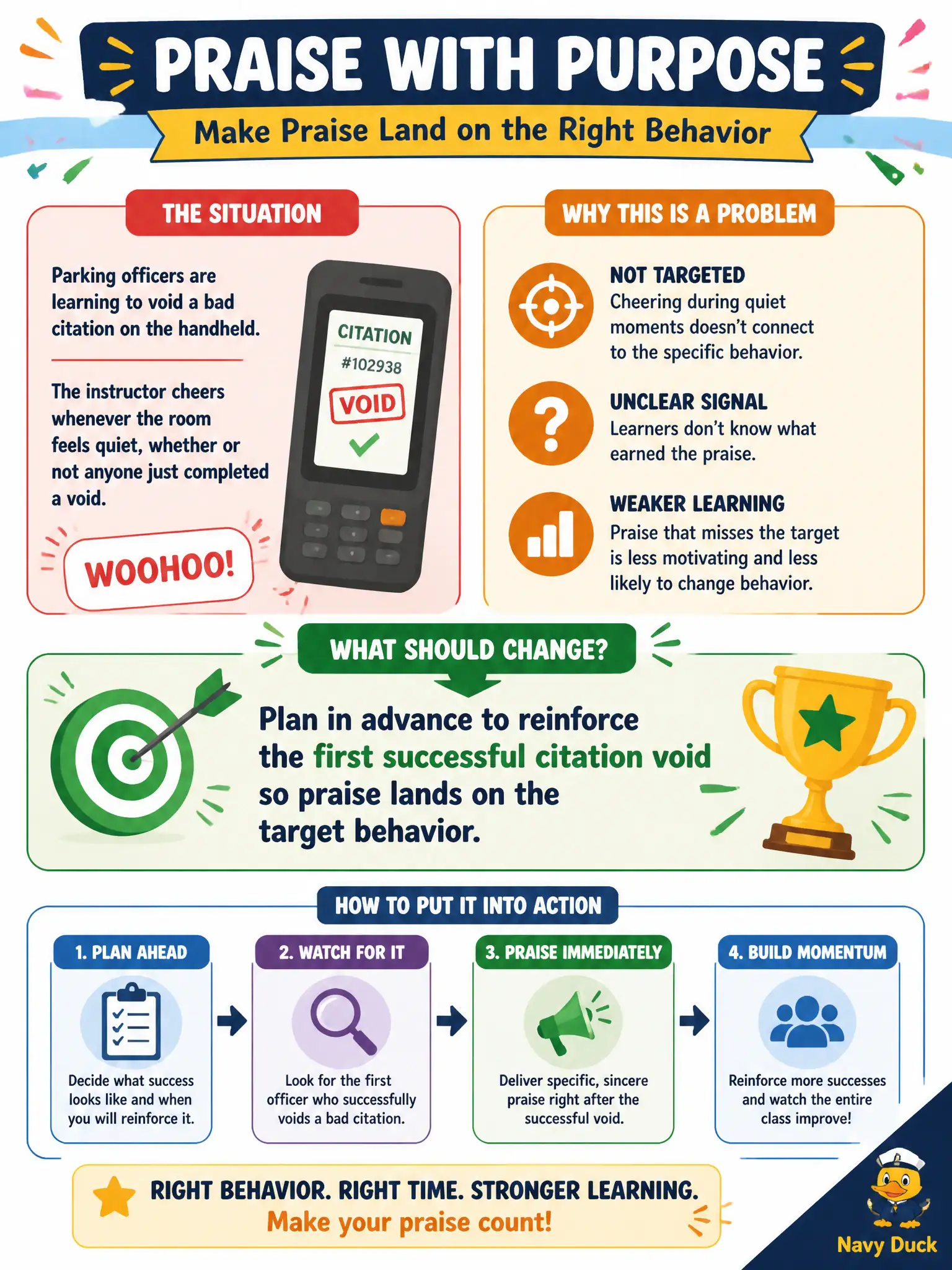
Parking officers are learning to void a bad citation on the handheld. The instructor cheers whenever the room feels quiet, whether or not anyone just completed a void. What should change?
Select an answer to reveal the explanation.
Short Explanation
Random cheering is like a car horn in a parking garage — loud, and nobody knows what they did. Decide before class that the first clean citation void gets the call-out. Then the praise is a spotlight on the move the city actually needs.
Full Explanation
When parking officers learning to void a bad citation hear cheers whenever the room feels quiet—whether or not anyone just completed a void—the instructor must plan in advance to reinforce the first successful citation void so praise lands on the target behavior. Contingent reinforcement ties recognition to the municipal skill; random energy noise does not teach which action counted. Cheering even more often regardless of what learners did fails the contingency concept by flooding the room with non-contingent noise that teaches nothing about voiding. Saving all comments for tomorrow's after-action email fails the immediacy concept: delayed generic mail does not mark the successful handheld action in the moment. Commenting only on mistakes so praise "does not inflate anyone" fails the positive-reinforcement concept by creating a climate where only errors earn attention. Exam caveat: decide before class which correct performance earns the call-out; volume of cheering is not a substitute for contingency. Operational check: pre-brief that the first clean citation void gets specific recognition, watch for that performance, name the void steps done correctly immediately, and verify subsequent officers attempt the same handheld sequence rather than waiting for random applause.