
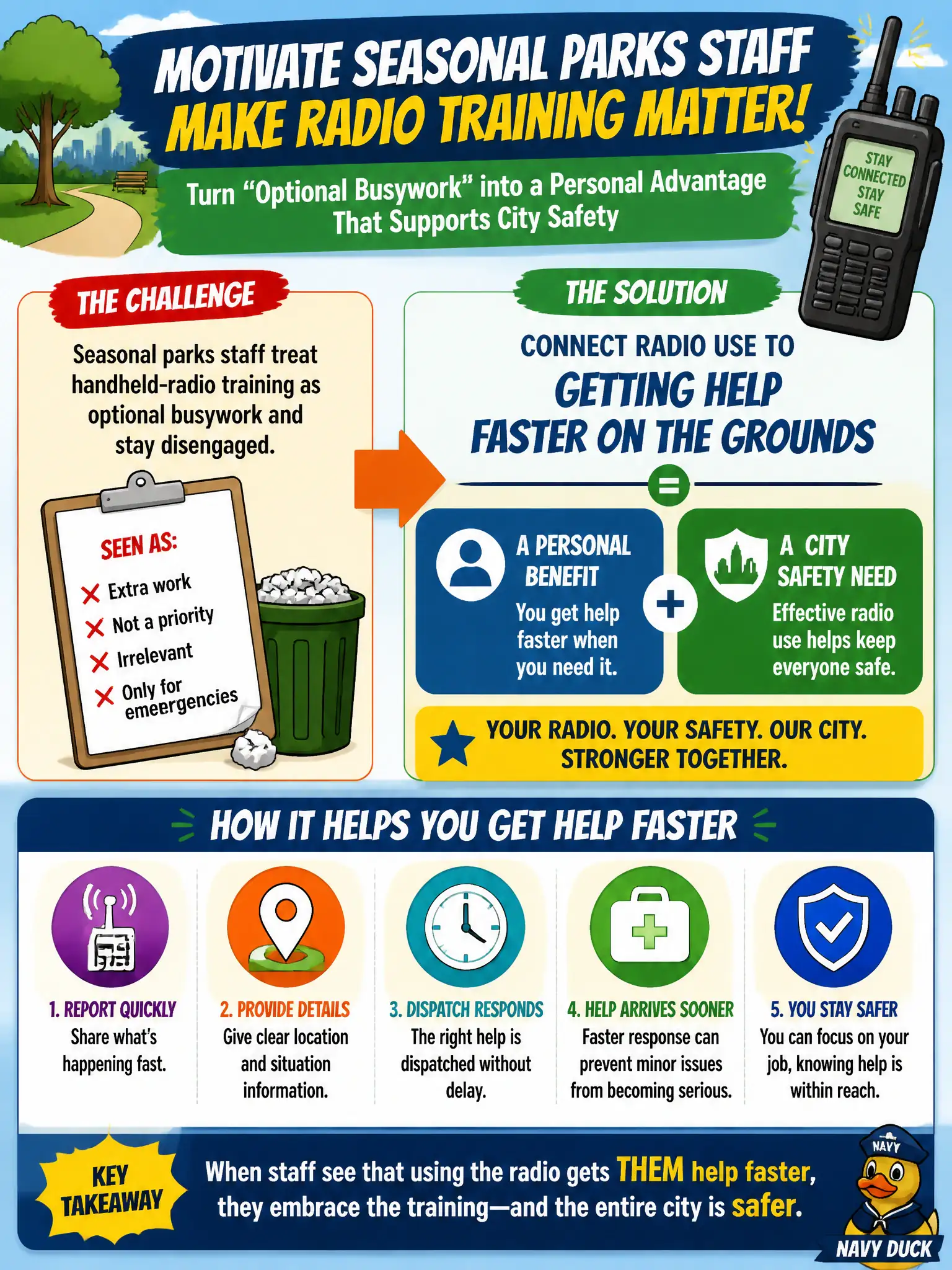
Seasonal parks staff treat handheld-radio training as optional busywork and stay disengaged. How should the instructor motivate them?
Select an answer to reveal the explanation.
Short Explanation
Seasonal crews do not light up for a policy paragraph. Tell them the radio is how help reaches them faster when something goes sideways on the grounds. That is a personal payoff and the city's safety reason sitting in the same sentence.
Full Explanation
Seasonal parks staff who treat handheld-radio training as optional busywork re-engage when the instructor connects radio use to getting help faster on the grounds—a personal benefit that also serves the city's safety need. Motivation that links learner self-interest to organizational risk reduction beats abstract compliance talk for temporary crews. Reminding them that policy requires certification and continuing the lecture fails the relevance concept; policy alone rarely lights a seasonal room. Threatening to cut remaining seasonal hours fails the fear-versus-motive concept and can destroy trust needed for safety reporting. Excusing seasonal staff from practice because they leave after summer fails the duty-of-care concept: short tenure does not remove the need to call for help safely while employed. Exam caveat: personal benefit plus city safety need is a valid motivational pairing; threats and exemptions are not substitutes for connecting the radio to real grounds work. Operational check: run a timed "request assistance" radio drill on a realistic grounds scenario, name how minutes saved protect the worker and the public, and confirm each seasonal employee can complete a clear radio call to standard.