
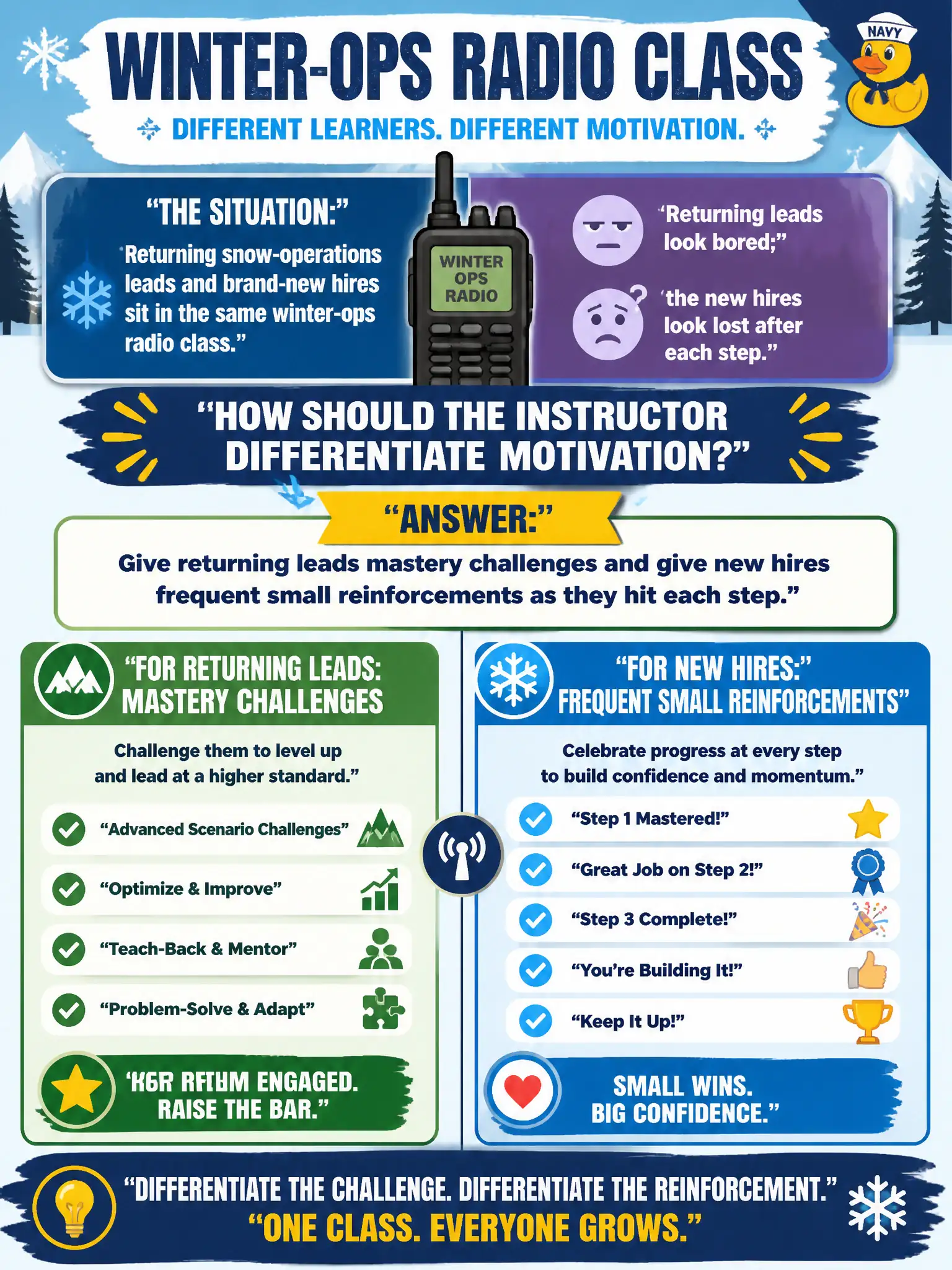
Returning snow-operations leads and brand-new hires sit in the same winter-ops radio class. The leads look bored; the new hires look lost after each step. How should the instructor differentiate motivation?
Select an answer to reveal the explanation.
Short Explanation
A veteran plow lead and a first-week hire are not the same engine. The lead needs a harder hill; the new hire needs a pat after each successful radio check. Same candy for both just means one person is starving and the other is stuffed.
Full Explanation
Returning snow-operations leads and brand-new hires in the same winter-ops radio class need differentiated motivation: mastery challenges for the leads and frequent small reinforcements for new hires as they hit each step. Personal characteristics and experience levels change what sustains effort on the same radio objective. Handing everyone the same candy after every radio check fails differentiation by treating unequal readiness as identical appetite. Letting new hires sit unused while leads run the exercise fails inclusion and novice support; unused learners do not acquire radio skill. Keeping leads only on beginner drills all day fails mastery motivation and wastes experienced capacity that could deepen practice without abandoning novices. Exam caveat: identical rewards are not automatically fair; fair instruction matches challenge and reinforcement density to the learner while protecting the shared objective. Operational check: give leads a multi-unit coordination radio scenario and give new hires a checklist with recognition after each successful transmission; observe whether leads stay challenged and novices keep attempting steps without freezing. Winter operations radio discipline protects plow crews and the traveling public; differentiating mastery challenges from step-by-step reinforcement keeps both veterans and new hires ready for the same storm night.