
Municipal GIS technicians signed up for a new permit-map class because they wanted to drive the tool. After ninety minutes of slides they are checking phones. How should the instructor use motivation to serve the practice objective?
Select an answer to reveal the explanation.
Short Explanation
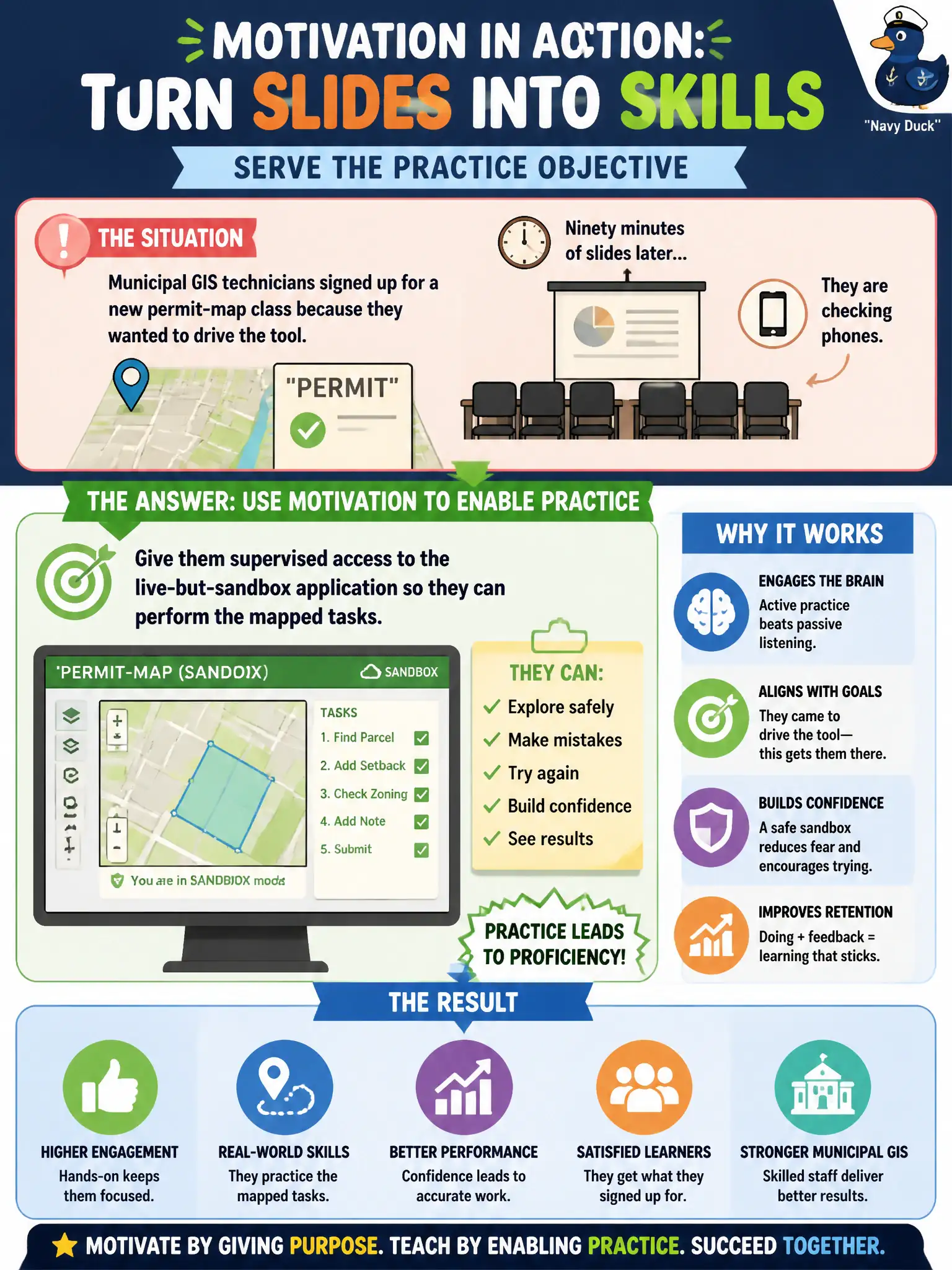
These techs came to drive, not to watch a slide show about driving. Handing them the sandbox is the carrot and the lesson at the same time — like letting a new plow operator actually sit in the cab. Motivation that serves the objective beats another hour of looking at pictures of the map.
Full Explanation
Municipal GIS technicians enrolled to drive the permit-map tool, so motivation that serves the practice objective means giving supervised sandbox access where they can perform the mapped tasks. Access to the live-but-sandbox application is both the carrot and the instruction: it restores agency, keeps attention on the city workflow, and advances the skill the county paid for. Holding them on slides while promising tool time only if they stay quiet fails the relevance concept by treating silence as the goal and delaying the motivating practice that matches enrollment intent. Replacing remaining time with a vendor marketing roadmap video fails the objective-alignment concept; product promotion is not supervised performance of permit-map tasks. Holding sandbox logins until a written quiz next month fails the timely-practice concept by separating motivation from the current event and converting today's engagement problem into deferred gatekeeping. Exam caveat: CTT+ treats application access as a legitimate motivational strategy when it advances the learning objective, not as a reward for patience after irrelevant content. Operational check: open the sandbox, assign a concrete permit-map task tied to the objective, coach while technicians click, and confirm they complete the mapped steps before returning to any remaining clarification slides.