
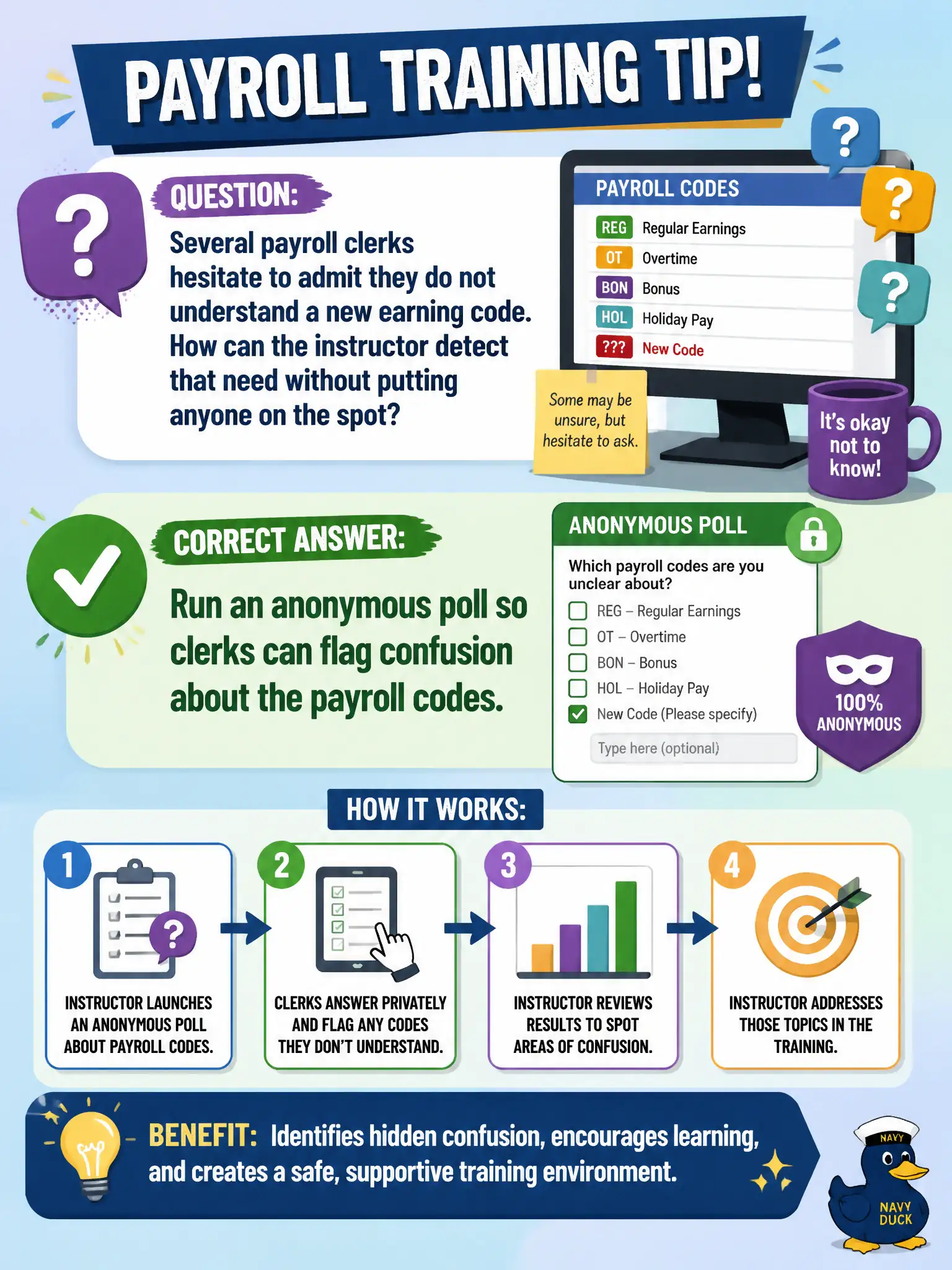
Several payroll clerks hesitate to admit they do not understand a new earning code. How can the instructor detect that need without putting anyone on the spot?
Select an answer to reveal the explanation.
Short Explanation
Nobody wants to be the clerk who admits overtime code 14 is a mystery in front of payroll. An anonymous poll is a trapdoor they can use. Safety first, then reteach from the real numbers.
Full Explanation
Payroll earning codes affect employee pay and public employer compliance; clerks may fear admitting confusion. Running an anonymous poll so clerks can flag confusion about the codes detects the need without putting anyone on the spot. Psychological safety tools reveal hidden gaps in civic technical training.
Cold-calling in seating order until someone explains fails by concept: forced public admission can silence the room and yield fake confidence. Requiring each clerk to stand and rate knowledge aloud similarly spotlights vulnerability. Skipping detection and assigning blanket extra homework burdens everyone without locating the real confusion.
Exam caveat: anonymous or low-threat checks (polls, one-word chat, minute papers) are appropriate when stigma is high. After detecting the gap, reteach to the group or offer optional breakouts.
Operational check: launch an anonymous poll on earning-code confidence or item accuracy, reteach the codes with high miss rates, then re-poll or run a sandbox entry to verify improvement. Payroll code confusion left unspoken becomes paycheck errors. Anonymous polls lower the social cost of honesty in front of peers and supervisors. Act on the data with targeted reteaching, then verify with a non-anonymous performance task once the threat of admission is no longer the blocker.