
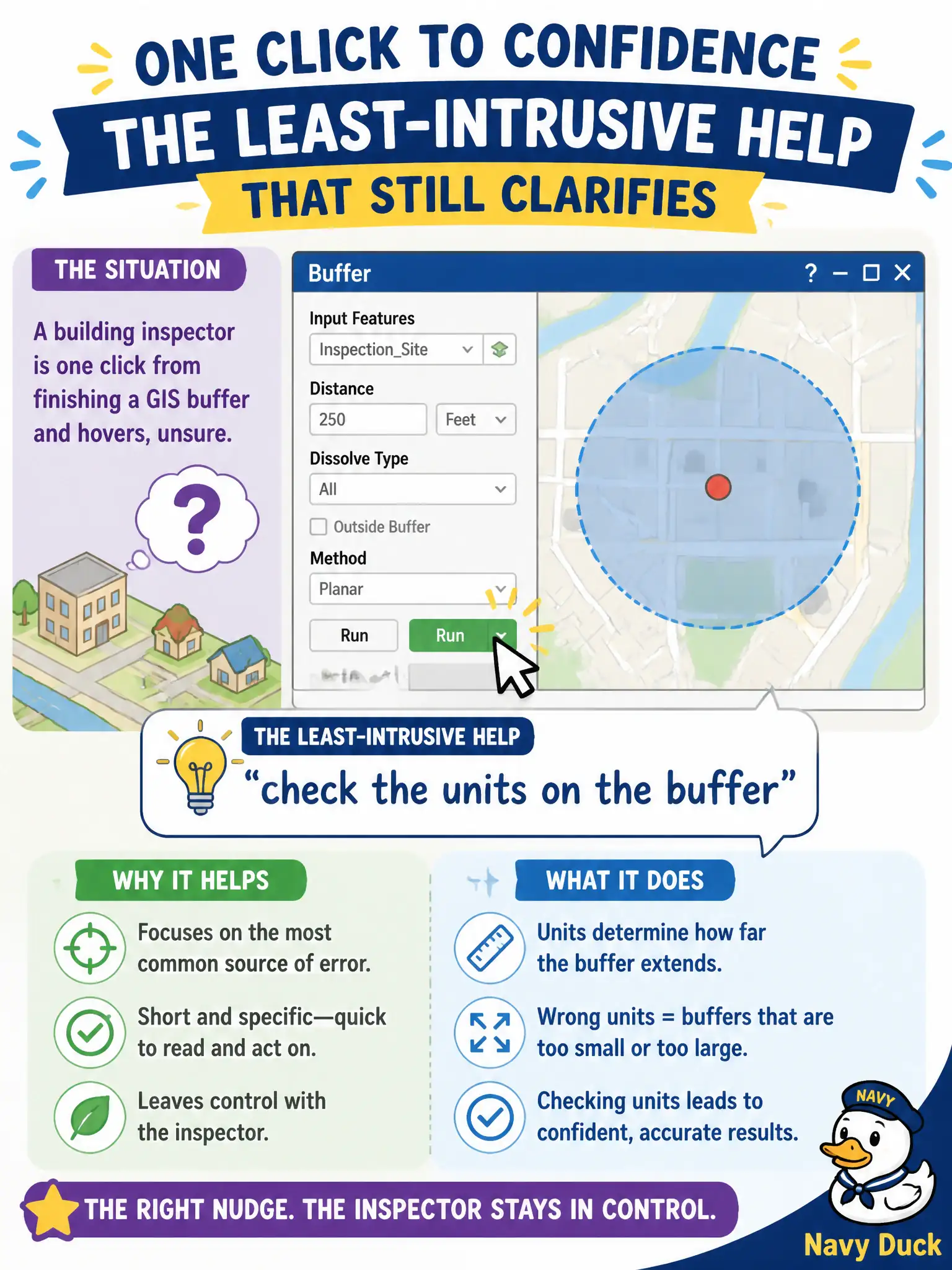
A building inspector is one click from finishing a GIS buffer and hovers, unsure. What is the least-intrusive help that still clarifies?
Select an answer to reveal the explanation.
Short Explanation
Almost there is not the moment to grab the wheel. A prompt is a nudge, not a takeover. “Check the units” lets the inspector finish the map and keep the learning.
Full Explanation
Building inspectors' GIS buffers inform setback and site decisions with public consequences. When an inspector is one click from finishing and hesitates, give a short prompt such as checking the units on the buffer and leave the mouse with them—the least-intrusive help that still clarifies. Prompts preserve learner control while reducing a narrow uncertainty.
Taking the mouse and completing the buffer fails by concept: takeover removes the final learning moment when success is nearest. Restarting the entire GIS module from slide one is excessive for a near-complete task. Telling them to watch and try next quarter denies timely practice and feedback.
Exam caveat: calibrate help to how close the learner is—near success favors prompts; early confusion may need a mini-demo; safety errors may need intervention. Least intrusive effective help is the guiding idea.
Operational check: deliver the units prompt, step back, watch them finish the buffer correctly, and only increase help if the prompt does not unlock the last click. Near-success moments are high-value learning if the inspector keeps the mouse. Short prompts preserve agency while removing a narrow blocker such as units. Escalate help only if the prompt fails, and always end with the inspector completing a correct buffer independently so the last memory is their performance, not your takeover.