
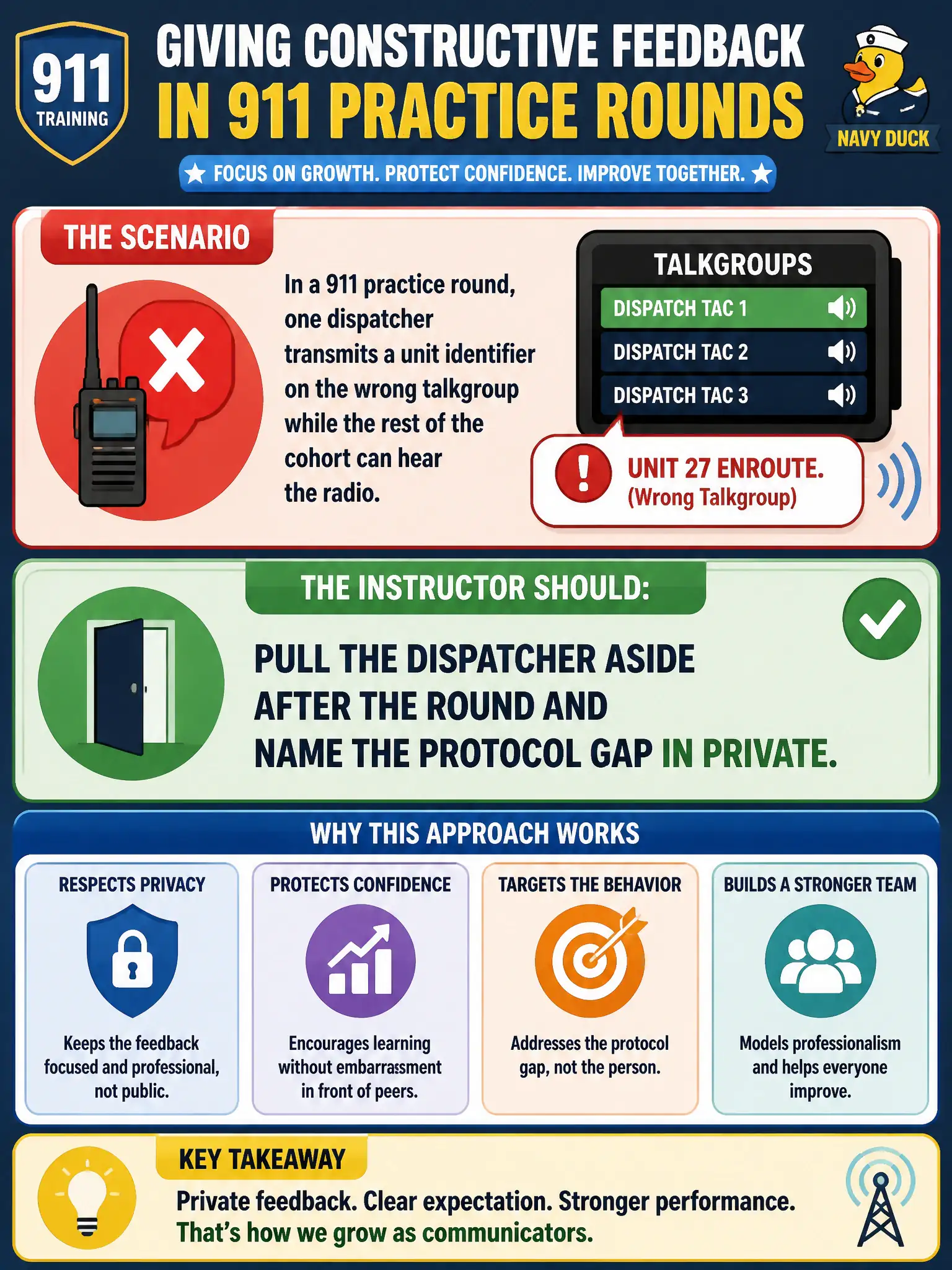
In a 911 practice round, one dispatcher transmits a unit identifier on the wrong talkgroup while the rest of the cohort can hear the radio. How should the instructor give constructive feedback?
Select an answer to reveal the explanation.
Short Explanation
A radio bust in front of peers is already embarrassing. Public replay turns training into a roast. Pull the dispatcher aside, name the talkgroup rule, and let them try again without an audience.
Full Explanation
911 radio discipline protects emergency response coordination for the public. When a dispatcher transmits a unit identifier on the wrong talkgroup while the cohort can hear, pull them aside after the round and name the protocol gap in private—constructive feedback that corrects without public humiliation. Timing and privacy matter for mistakes that are already audible but should not become a spectacle.
Replaying the mistake on classroom speakers for group critique fails by concept: it shames and can freeze learning rather than build protocol skill. Posting the call sign on the board as who failed personalizes the error as identity rather than behavior. Waiting only for a post-course evaluation delays correction of a safety-critical radio habit.
Exam caveat: constructive feedback is timely, private when appropriate, specific to the protocol, and followed by a chance to perform correctly. Public correction may be required for ongoing unsafe acts; for a completed round error, private is usually better.
Operational check: after the round, privately name the wrong-talkgroup error, state the correct talkgroup rule, have the dispatcher transmit a correct identifier on the proper talkgroup, and confirm before the next round.