
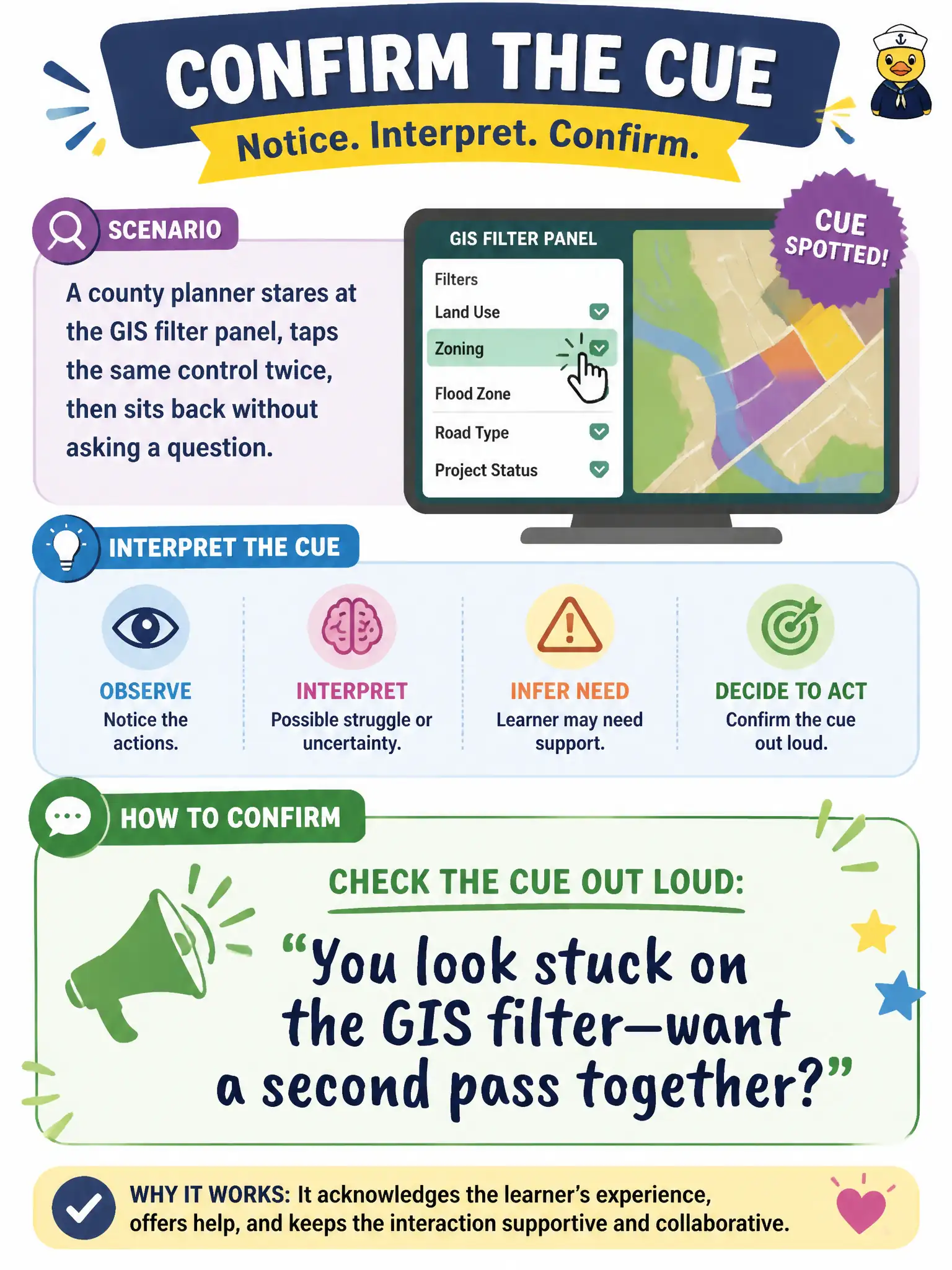
A county planner stares at the GIS filter panel, taps the same control twice, then sits back without asking a question. How should the instructor confirm that cue?
Select an answer to reveal the explanation.
Short Explanation
A frozen stare is a yellow light, not a verdict. Ask before pouncing. “You look stuck—want a second pass?” confirms the cue without putting the planner on trial.
Full Explanation
County GIS filter skills affect planning analyses used in public hearings and land-use decisions. When a planner stares, taps the same control twice, then sits back without asking, the instructor should check the cue out loud—for example, noting they look stuck on the GIS filter and offering a second pass together. Confirming nonverbal cues turns ambiguous body language into an actionable clarification offer.
Assuming understanding and skipping ahead fails by concept: the stalled behavior suggests the opposite of mastery. Announcing to the whole room that someone is lost may embarrass the planner and reduce future help-seeking. Rewriting the official module overnight because one quiet learner struggles is an overreaction; first confirm and reteach the filter step.
Exam caveat: check out the cue—do not diagnose motive from afar, and prefer discreet or respectful wording. Body language invites inquiry, not public labeling.
Operational check: use the suggested check-in line, if they accept help re-demo the filter once, have them reproduce it, and only escalate to curriculum redesign if many learners show the same stuck pattern after reteaching. Quiet struggle on GIS filters can silently produce wrong planning analyses for public decisions. Checking the cue respectfully invites help-seeking without a room-wide announcement. If they accept, reteach the filter, confirm reproduction, and scan whether others were stuck the same way—using one learner’s cue as a possible group diagnostic.