
A housing-voucher class just watched a demo. The room is quiet after the instructor asks whether there are any questions. How should the instructor check who needs help?
Select an answer to reveal the explanation.
Short Explanation
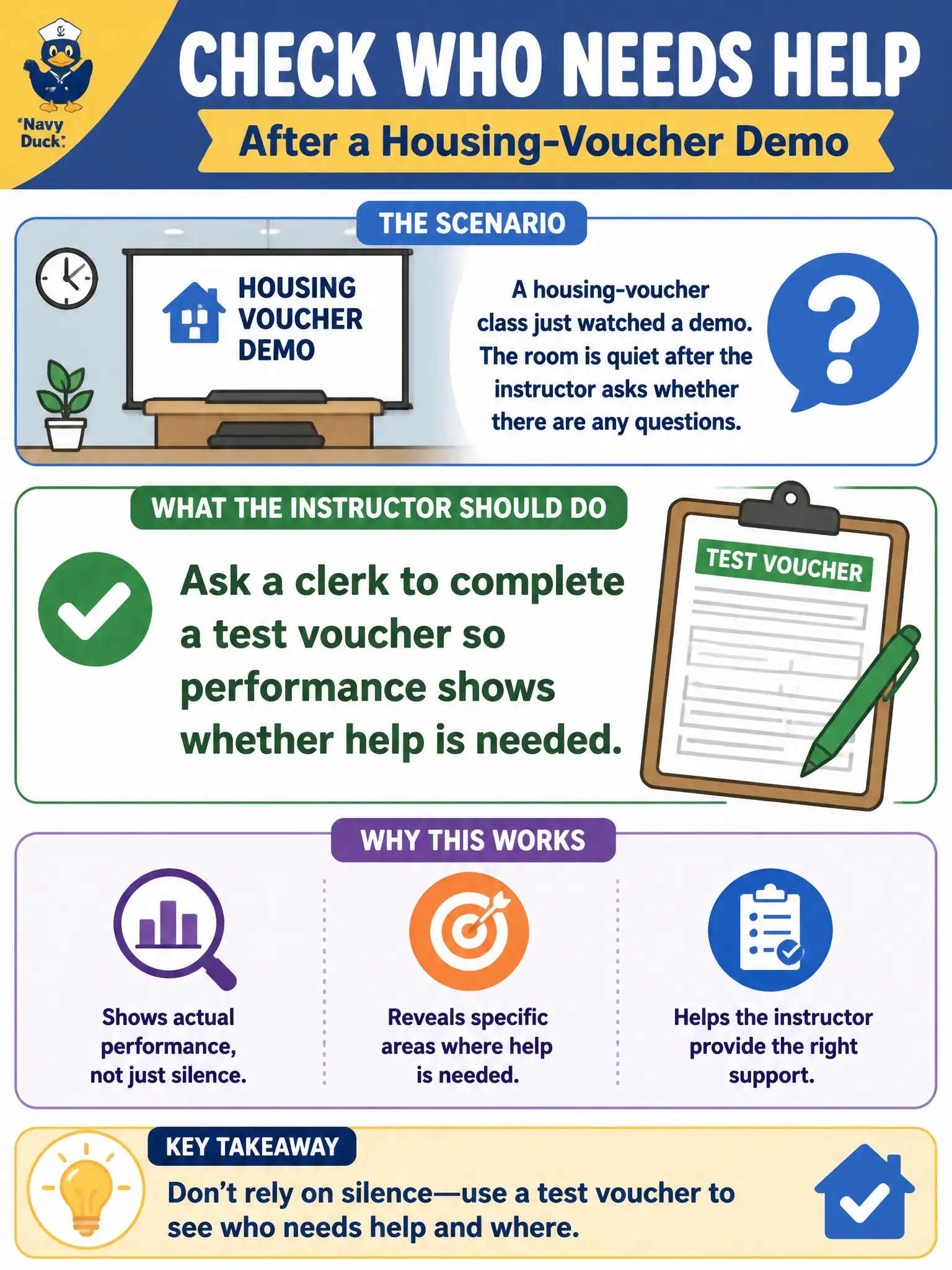
Any questions is a trap door. Quiet rooms are full of people who do not want to look lost. A test voucher is the truth serum.
Full Explanation
Housing-voucher processing affects residents' housing stability; quiet rooms after 'any questions?' are weak evidence of mastery. Asking a clerk to complete a test voucher so performance shows whether help is needed converts a passive prompt into an active monitor. Performance checks reveal needs that polite silence hides.
Repeating 'any questions' more loudly fails by concept: volume does not create psychological safety or diagnostic power. Assuming silence means mastery risks releasing clerks who cannot process vouchers. Handing out a satisfaction smiley sheet measures mood, not skill.
Exam caveat: 'Any questions?' is often insufficient; use directed tasks, samples, or specific probes. Silence is ambiguous—design better checks.
Operational check: select a test voucher case, have a clerk complete it while others compare on their screens, and use errors to target immediate help before closing the module. Housing-voucher accuracy can determine whether a family remains housed. Silence after ‘any questions?’ is not evidence those clerks can complete a voucher. Replace the prompt with a performance probe on a test case, coach errors in the open against the checklist, and only then decide the module is ready to close.