
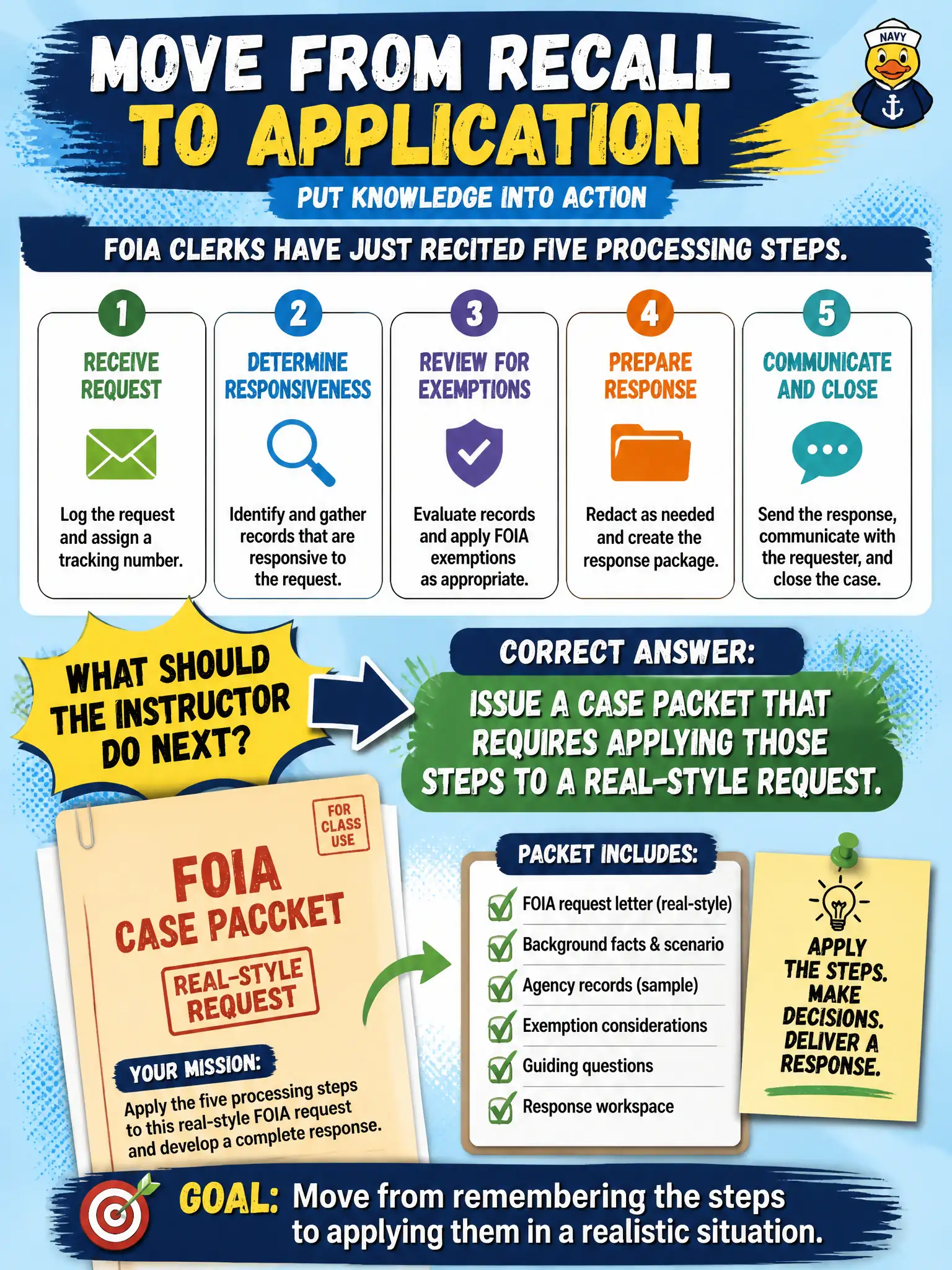
FOIA clerks have just recited five processing steps. What should the instructor do next so questions move from recall to application?
Select an answer to reveal the explanation.
Short Explanation
Reciting a recipe is not the same as cooking the meal. After the five FOIA steps come out of memory, hand over a case packet and make clerks use them. Chanting, walking out, or changing the subject leaves the skill in the chant.
Full Explanation
FOIA processing steps exist to serve lawful public access; reciting them is only the first layer of readiness. After clerks recite five processing steps, the instructor should issue a case packet that requires applying those steps to a real-style request—moving from recall to application. CTT+ sequencing uses questions and tasks that escalate cognitive demand after knowledge is established.
Repeating the list until everyone chants in unison fails by concept: rehearsal of recall is not application to a resident request. Ending class because recitation 'proves' readiness confuses memory with job performance. Switching to an unrelated retention lecture abandons the moment when application practice would stick.
Exam caveat: recall has a place—especially right after teaching steps—but the exam expects instructors to progress learners into application, analysis, or job simulations. Do not stop at chanting.
Operational check: hand out a sample FOIA request and require clerks to mark which of the five steps apply and in what order, then perform the first two on the training system. Score against a checklist tied to the recited steps. FOIA case packets convert civic procedure from memory into service for requesters. Application tasks should include messy real-world elements—unclear scope, multiple record types, or partial exemptions—so clerks practice judgment, not chanting. Score the packet with a checklist aligned to the five steps, require a brief requester-facing status note, and remediate any step skipped before calling the objective met.