
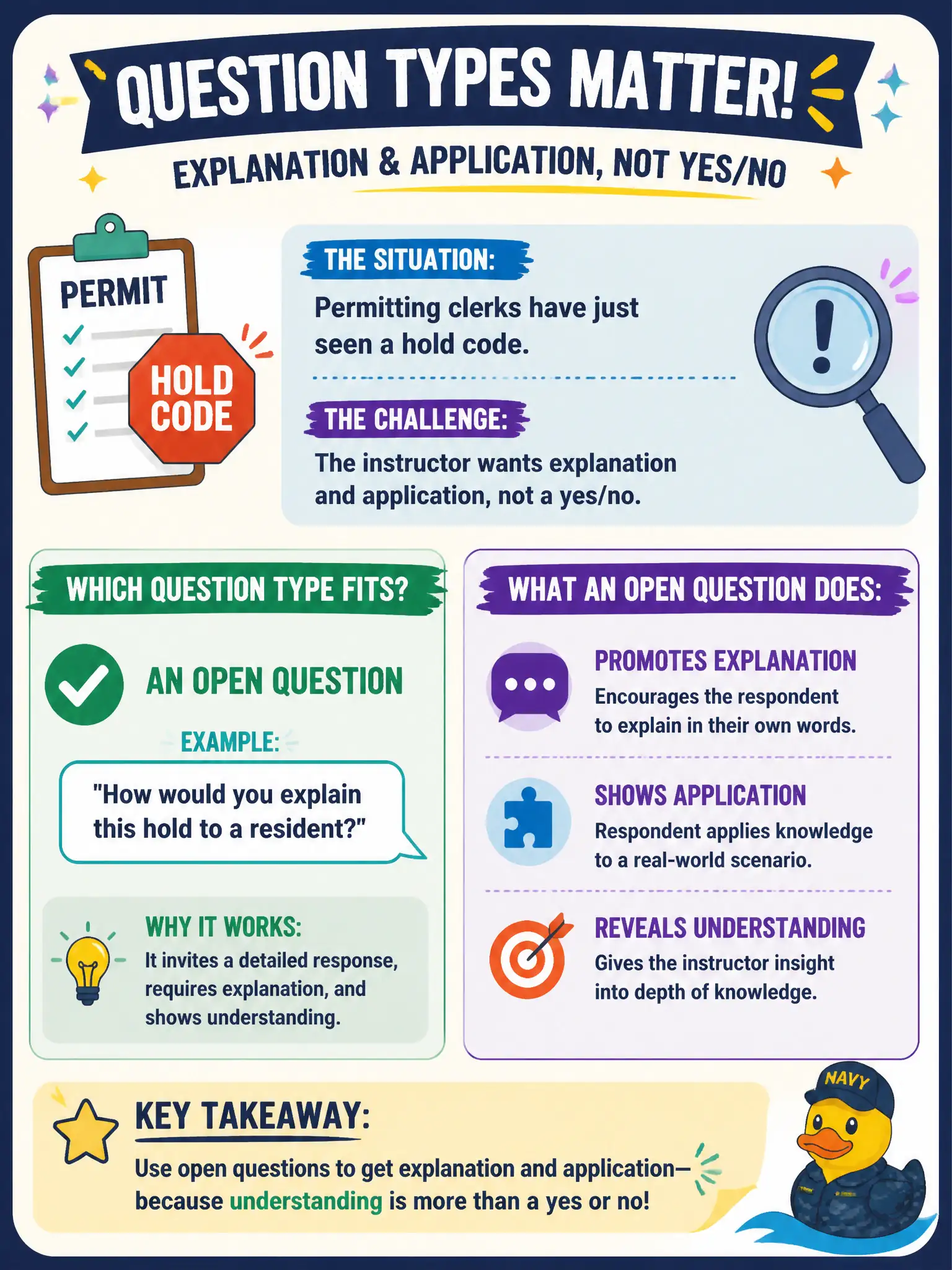
Permitting clerks have just seen a hold code. The instructor wants explanation and application, not a yes/no. Which question type fits?
Select an answer to reveal the explanation.
Short Explanation
Yes/no is a light switch. Asking how they would explain the hold to a resident is a teach-back at the counter. That open prompt pulls explanation and application, not a nod or a color-name.
Full Explanation
Permitting clerks explain hold codes to residents who need transparent reasons for delays. An open question such as 'How would you explain this hold to a resident?' fits when the instructor wants explanation and application rather than a yes/no. Open questions pull reasoning and customer-facing language that closed checks cannot reveal.
A closed check such as whether the hold code is visible only confirms perception, not explanation skill. A raise-your-hand poll on who has seen a hold before measures exposure, not the ability to apply or teach the hold. A recall item about icon color stays at trivia and never reaches resident communication.
Exam caveat: match question type to purpose—closed for quick facts, open for explanation/application. After a new concept, open teach-back questions often reveal misconceptions closed polls hide.
Operational check: after the hold-code demo, require two clerks to give a resident-facing explanation; coach jargon into plain language before releasing the lab. If answers only restate the code name, probe for what the resident should do next. Hold codes delay permits that residents and builders are watching; open teach-backs force clerks to practice the transparency the public expects at the counter. After hearing explanations, compare them to the official hold-reason language in the procedure and correct any speculative or blaming phrasing. A strong operational finish is a paired role-play: one clerk as resident, one as permitting staff, with a third checking that the hold explanation matches policy.