
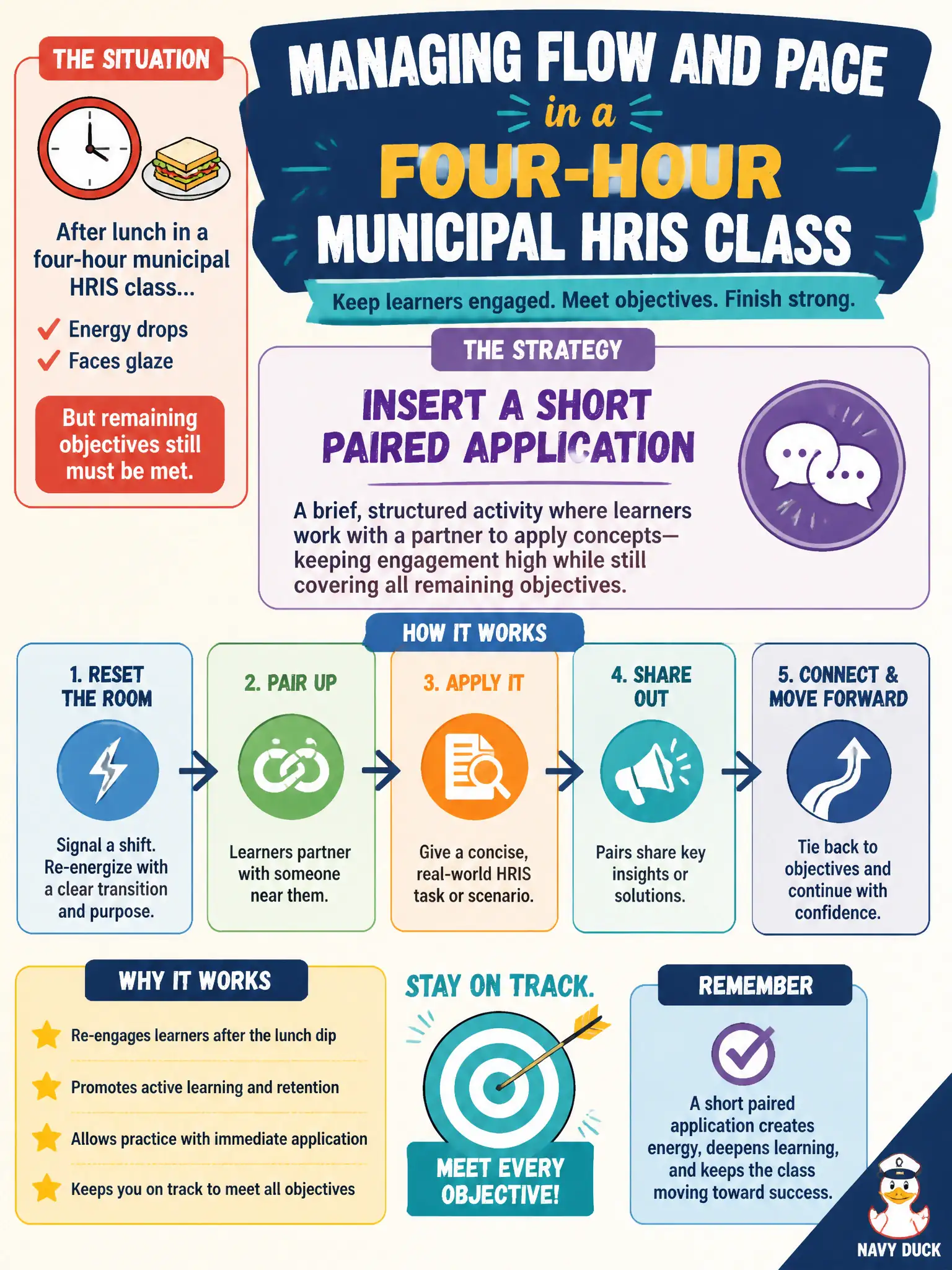
After lunch in a four-hour municipal HRIS class, energy drops and faces glaze, but remaining objectives still must be met. How should the instructor manage flow and pace?
Select an answer to reveal the explanation.
Short Explanation
Post-lunch glaze is a dashboard light, not a personality flaw. A short paired HRIS task gets hands moving and still covers the remaining objectives. More lecture, a cancel-and-email, or a random pep video just hide the stall.
Full Explanation
After energy drops, instructors manage flow and pace with short application activities that still cover remaining objectives. In a four-hour municipal HRIS class after lunch, inserting a short paired application that advances remaining HRIS objectives restores energy without abandoning outcomes. Active practice is a pacing tool, not a break from the curriculum.
Pushing through two more lecture modules at original speed so the deck finishes on time fails by concept: finishing slides while faces glaze does not equal learning. Dismissing early and emailing remaining objectives as optional reading fails by dropping required municipal outcomes. Playing an unrelated motivational video then skipping practice labs fails by substituting entertainment for objective-aligned application.
Exam caveat: CTT+ pacing items after energy dips reward short, on-objective activities—not deck-racing, dismissal, or off-topic videos.
Operational check: launch a five-to-ten-minute paired HRIS task tied to the next objective; circulate; debrief one success and one error; then continue with renewed pace rather than raw lecture. In civic public-training settings, that judgment protects both learner dignity and the municipality’s duty to leave staff actually able to perform the job after class—not merely to finish slides or keep a schedule looking tidy.