
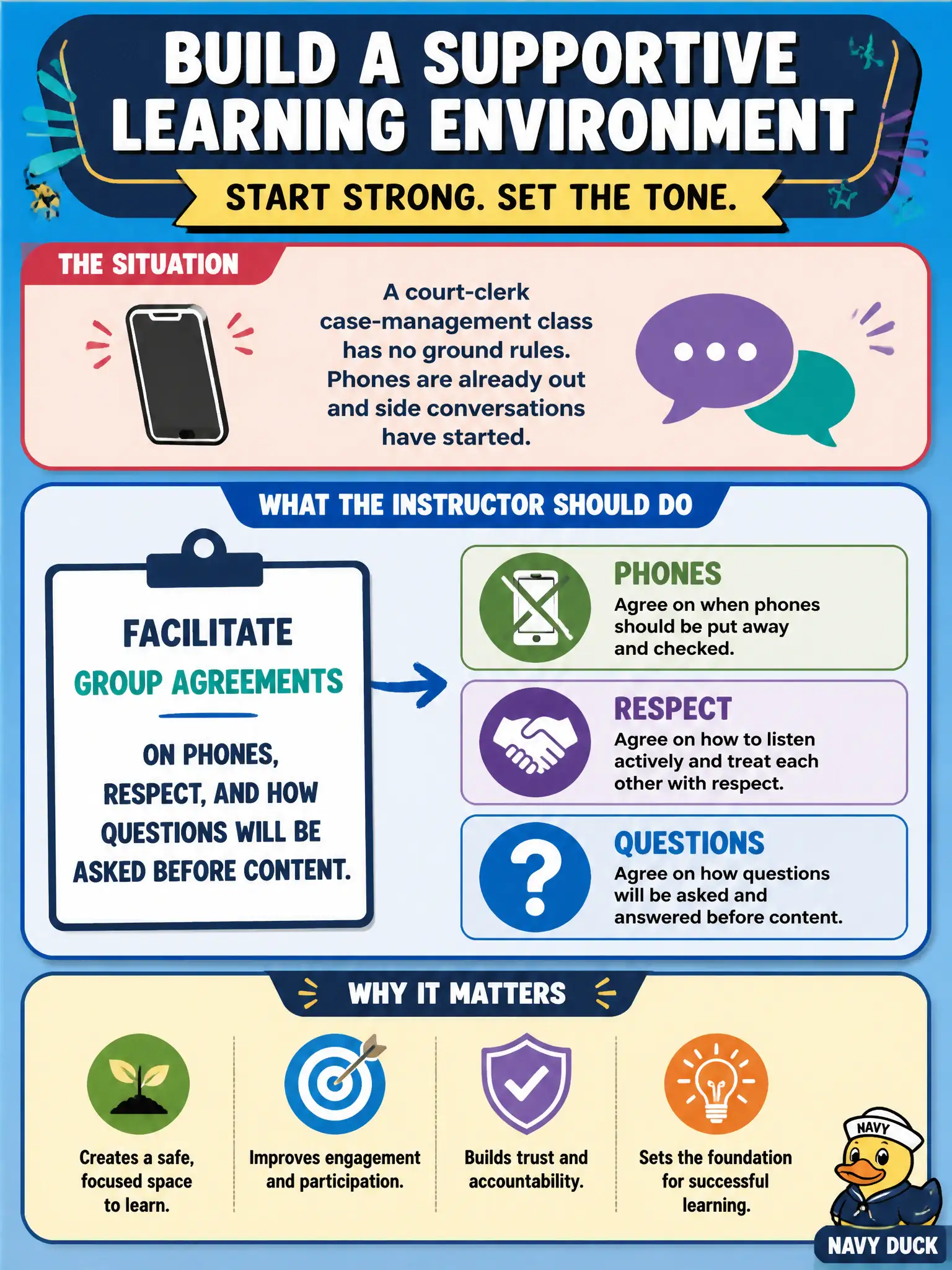
A court-clerk case-management class has no ground rules. Phones are already out and side conversations have started. What should the instructor do at the beginning to establish a supportive environment?
Select an answer to reveal the explanation.
Short Explanation
A courtroom without a docket is just noise. Agree on phones, respect, and how questions work before the case-management screens appear. Norms up front beat a later scolding that nobody signed up for.
Full Explanation
Supportive environments begin with facilitated group agreements on norms such as phones, respect, and how questions will be asked. In a court-clerk case-management class where phones are out and side talk has started, establishing those agreements at the beginning prevents chaos better than later lectures about professionalism. Shared norms make expectations mutual rather than punitive surprises.
Waiting until chaos peaks, then lecturing about professionalism without agreeing on norms, fails by concept: after-the-fact scolding without co-owned rules rarely resets climate. Confiscating phones as a punitive surprise after the first module fails as authoritarian escalation that skips agreement-building. Posting a legal citation that silence is required and refusing all questions fails by creating a fear climate incompatible with supportive adult learning.
Exam caveat: CTT+ climate items favor early facilitated agreements over delayed punishment or absolute silence rules.
Operational check: pause content; facilitate three agreements (phones, respect, questions); post them; apply one immediately when a phone appears; then start case-management content. In civic public-training settings, that judgment protects both learner dignity and the municipality’s duty to leave staff actually able to perform the job after class—not merely to finish slides or keep a schedule looking tidy.