
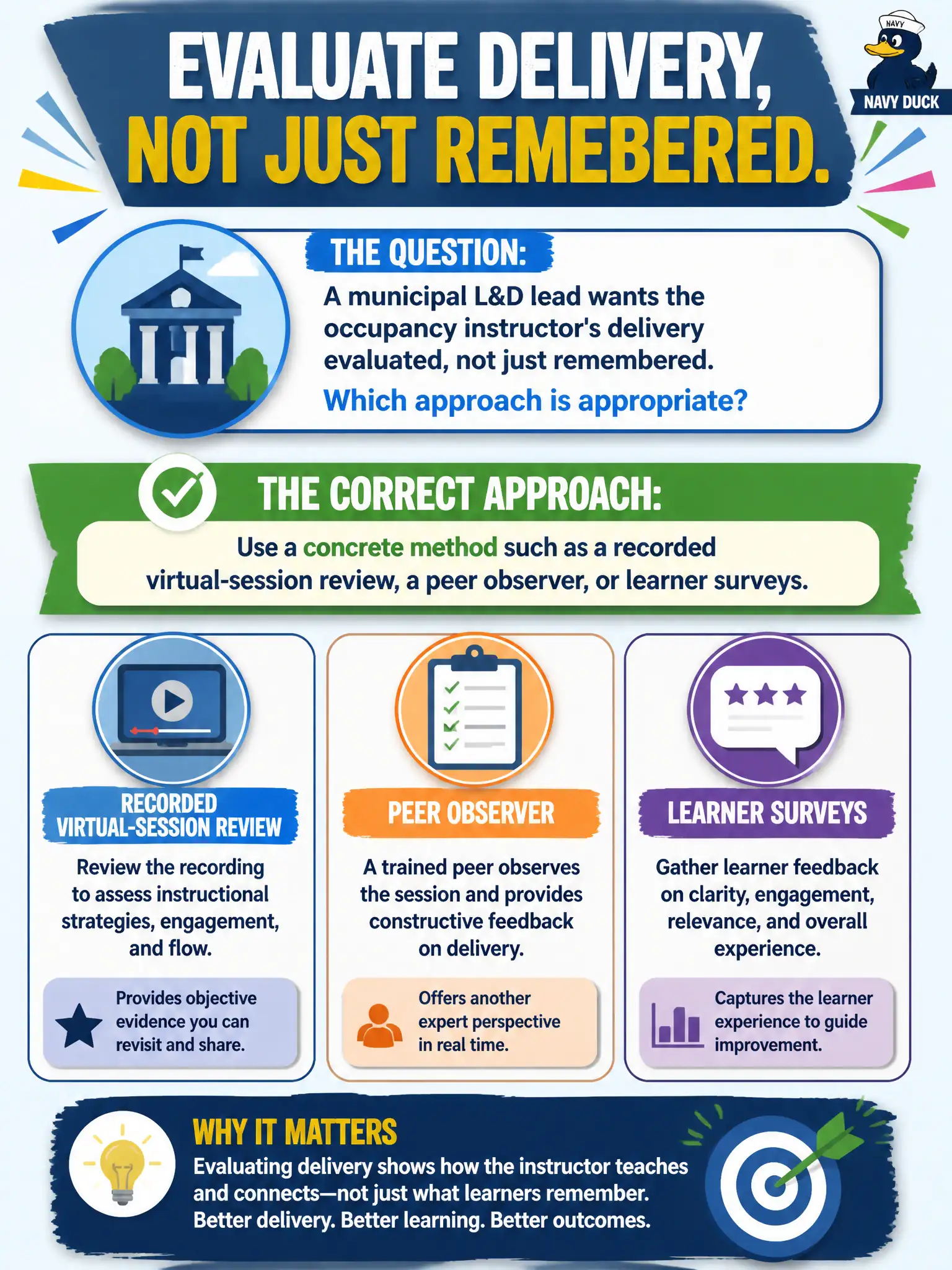
A municipal L&D lead wants the occupancy instructor's delivery evaluated, not just remembered. Which approach is appropriate?
Select an answer to reveal the explanation.
Short Explanation
Memory is a fuzzy camera. Delivery evaluation needs a method — a recording, a peer in the back, or a real survey. 'We finished early' is not a delivery score.
Full Explanation
When a municipal L&D lead wants the occupancy instructor’s delivery evaluated—not just remembered—an appropriate approach is a concrete method such as a recorded virtual-session review, a peer observer, or learner surveys. Delivery evaluation needs systematic evidence about facilitation, not nostalgia. Relying on the instructor’s memory of a pretty good day fails objectivity. Skipping evaluation because CTT+ trainers are "not observed" misstates professional practice. Grading delivery solely by how quickly the class ended measures speed, not instructional quality. Exam caveat: pick an observable method and apply it deliberately. Operational check: schedule a peer observer or record the virtual session with notice, collect brief learner delivery surveys, review questioning and pacing against a checklist, and store the delivery evaluation with the offering’s file for L&D. Keep the published objective visible on every rubric and report so raters do not drift into convenience metrics. Confirm with a second reviewer when stakes are high that the evidence matches the objective rather than a proxy such as speed, smiles, or familiarity. Store artifacts under the city’s retention schedule and brief only those with a need to know.