
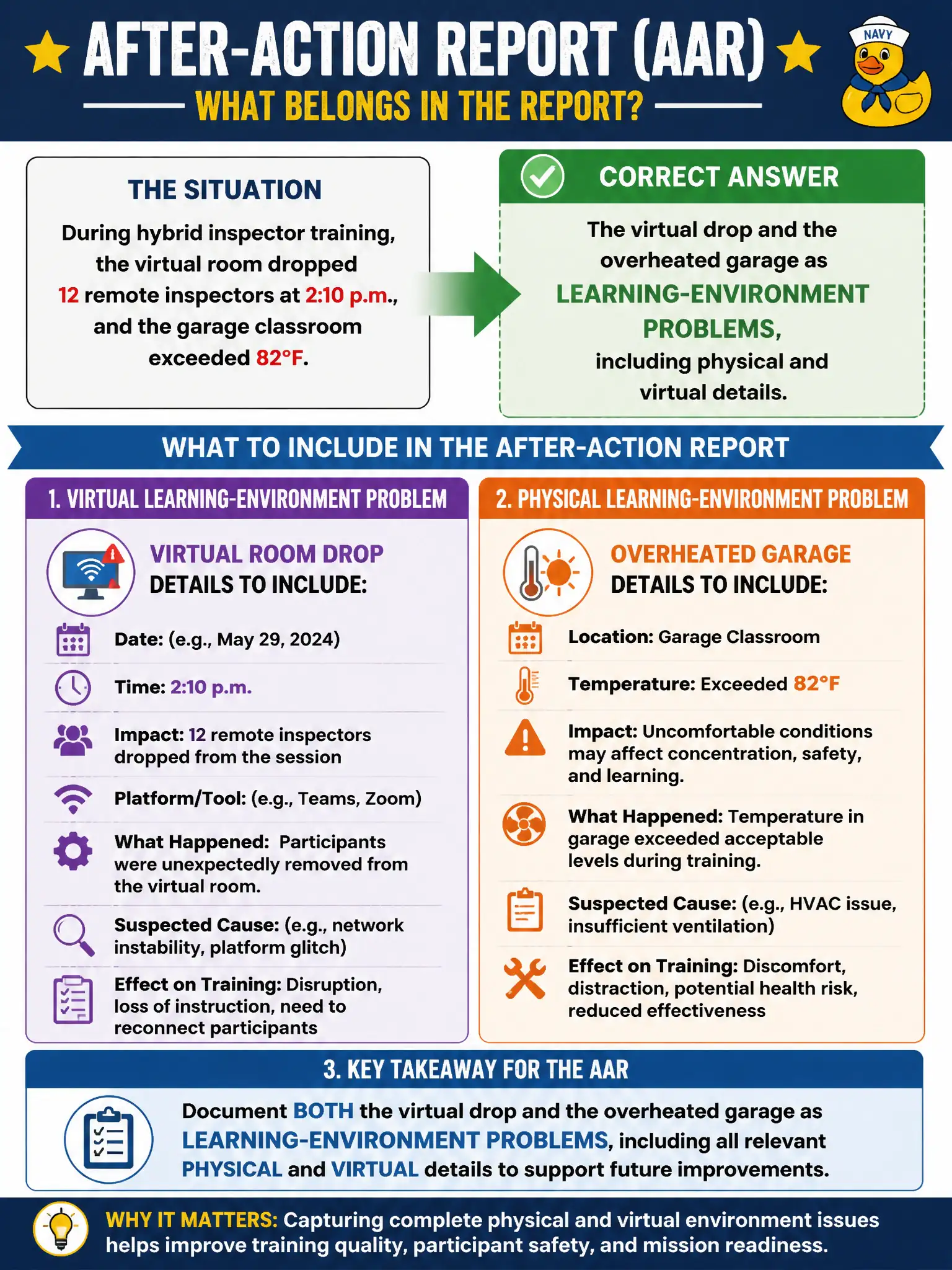
During hybrid inspector training, the virtual room dropped 12 remote inspectors at 2:10 p.m., and the garage classroom exceeded 82°F. What belongs in the after-action report?
Select an answer to reveal the explanation.
Short Explanation
If the virtual room dumped a dozen inspectors and the garage felt like a furnace, write that down. Scores without the room story mislead the next planner. Environment — physical and virtual — is part of the after-action.
Full Explanation
During hybrid inspector training, when the virtual room dropped 12 remote inspectors at 2:10 p.m. and the garage classroom exceeded 82°F, the after-action report should include the virtual drop and the overheated garage as learning-environment problems, including physical and virtual details. Environment evaluation covers both rooms when the city runs hybrid events. Reporting only test scores because environment is "never reported" omits causes that explain performance and logistics failures. Complaining that inspectors should have used personal hotspots with no temperature note blames learners and ignores the garage heat problem. A marketing blurb that the hybrid room was world class falsifies the evaluation record. Exam caveat: document physical and virtual environment issues with enough detail to drive fixes. Operational check: log the drop time, affected headcount, garage temperature reading, and mitigation attempted; place those facts in the environment section; and assign follow-ups for platform stability and cooling before the next hybrid inspector class. Keep the published objective visible on every rubric and report so raters do not drift into convenience metrics. Retain scored artifacts with the course file per city retention rules and brief only stakeholders with a need to know.