
The city must retain records for a confined-space safety class. What record-keeping meets the instructor's duty?
Select an answer to reveal the explanation.
Short Explanation
Safety class records are per person, not a doodle of how many chairs were filled. Attendance, what each learner did, and how they performed have to live in a file the city can keep. Photos and memory do not substitute.
Full Explanation
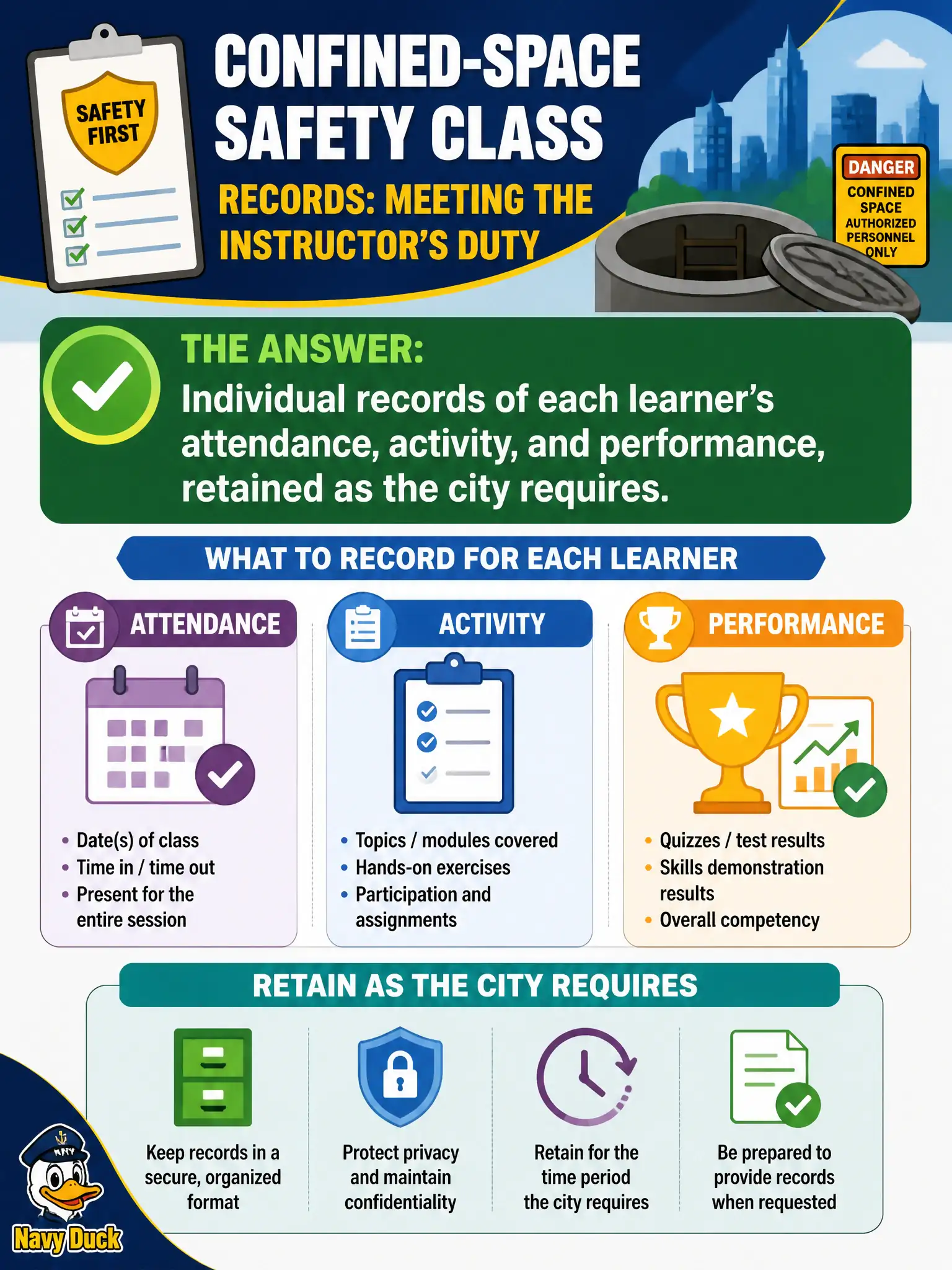
For a confined-space safety class, the instructor’s record-keeping duty is met by individual records of each learner’s attendance, activity, and performance, retained as the city requires. Safety training records support compliance, accountability, and later verification of who demonstrated which skills. A single group headcount on a sticky note discarded after class fails individual accountability and retention. Only a class photo because faces "prove" presence fails identifiable performance documentation and is a weak attendance record. Relying on the instructor’s memory of who seemed engaged with no written file fails durability and auditability. Exam caveat: keep per-learner attendance, activity, and performance records for the city’s retention period. Operational check: complete individual rosters and skill checklists during class, store them in the required repository the same day, verify confined-space performance entries exist for each name, and confirm retention settings match city policy before closing the event file. Keep the published objective visible on every rubric and report so raters do not drift into convenience metrics. Confirm with a second reviewer when stakes are high that the evidence matches the objective rather than a proxy such as speed, smiles, or familiarity.