
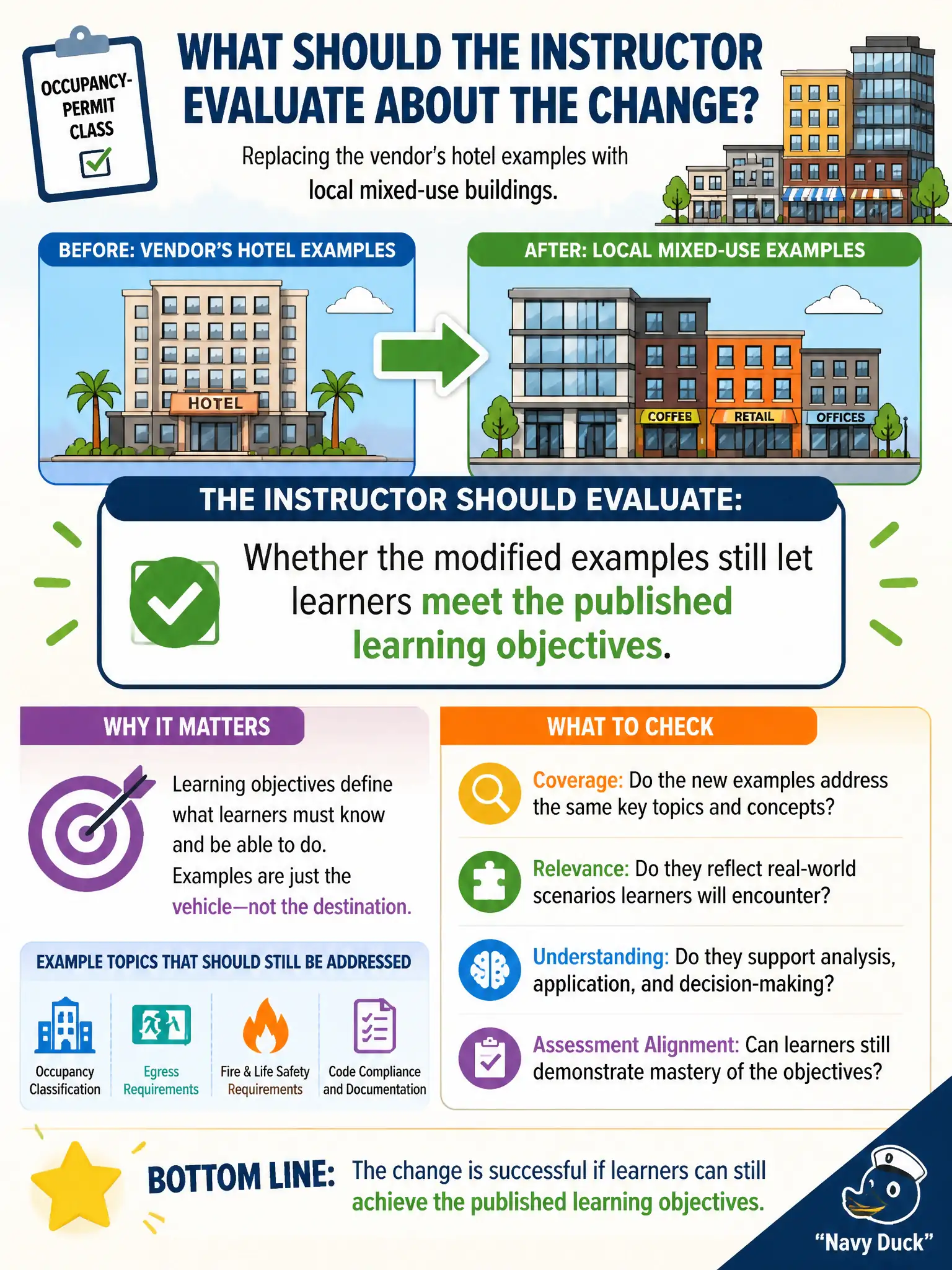
During a city occupancy-permit class, the instructor replaced the vendor's hotel examples with local mixed-use buildings. What should the instructor evaluate about that change?
Select an answer to reveal the explanation.
Short Explanation
Swapping in city buildings is fine — as long as clerks can still hit the occupancy objective. Pretty photos, a director's taste, and a slightly shorter hour do not answer that. Judge the in-flight change against the published outcomes.
Full Explanation
During a city occupancy-permit class, when the instructor replaced the vendor’s hotel examples with local mixed-use buildings, evaluation of that change should ask whether the modified examples still let learners meet the published learning objectives. Midstream content adaptation is judged by objective attainment, not aesthetics or executive taste. Asking whether the vendor’s hotel photos were prettier fails instructional evaluation criteria. Asking whether the housing director personally liked the new stories substitutes preference for learning evidence. Asking whether the class ran five minutes shorter after the swap measures clock time, not mastery of occupancy permitting. Exam caveat: judge in-flight modifications by whether learners can still meet the published objectives. Operational check: compare post-change practice or assessment results to the occupancy objectives, confirm local mixed-use examples still exercise the same decision rules as the vendor hotels, record the modification and its learning impact in the after-action notes, and keep the local examples only if objective performance holds for municipal staff. Keep the published objective visible on every rubric and report so raters do not drift into convenience metrics.