
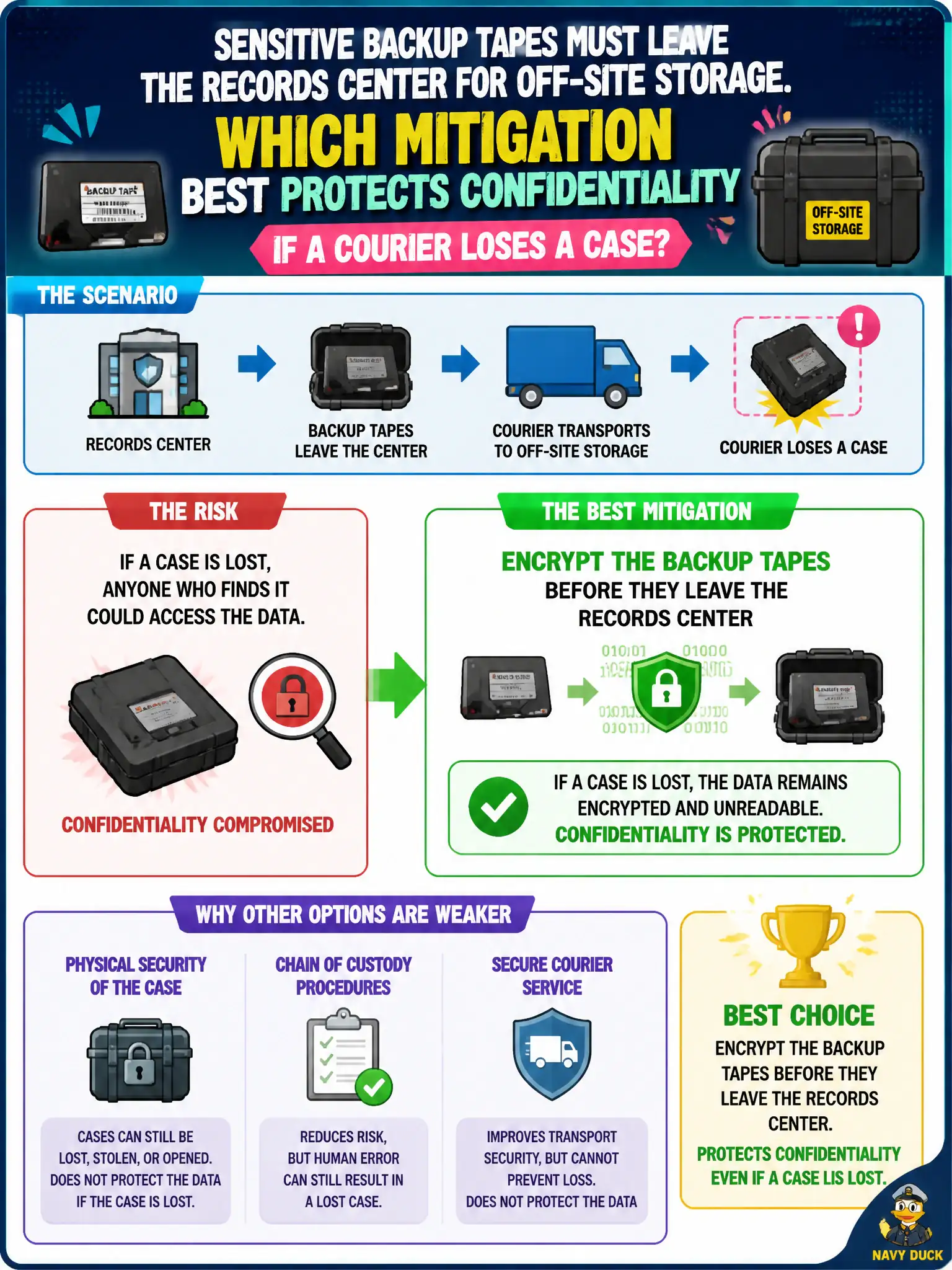
Sensitive backup tapes must leave the records center for off-site storage. Which mitigation best protects confidentiality if a courier loses a case?
Select an answer to reveal the explanation.
Short Explanation
If the tape case grows legs, encryption is what keeps the secrets boring. Lock the data itself—not just the truck—before those backups roll out of the records center.
Full Explanation
Encrypting sensitive backup media before it leaves the records center protects confidentiality if physical custody is lost in transit. Courier loss of municipal backup tapes is a classic physical-theft-or-loss scenario where encryption is the control that keeps constituent and case data unreadable. Chain-of-custody paperwork still matters, but encryption is what renders the bits non-exploitable when a case goes missing.
Shipping tapes unlabeled in clear plastic so staff can read titles quickly advertises contents and can reveal sensitive system names without adding cryptographic protection. Relying only on the courier’s locked truck without encrypting media confuses physical lockup with cryptographic confidentiality—locks fail, trucks are stolen, and cases are misdelivered. Printing full constituent SSNs on exterior shipping labels for inventory creates an additional PII disclosure channel on the package itself.
Exam caveat: encryption of backups at rest and in transit is the expected answer when stems involve off-site media loss; physical security alone is insufficient on the exam. Labeling distractors often add privacy failures on purpose.
Operational check: encrypt tapes or use encrypted backup appliances before pickup, dual-control handoff with receipts, avoid sensitive identifiers on exterior labels, verify courier contracts include security requirements, and test key escrow so the city can restore after disaster without the courier’s involvement.