
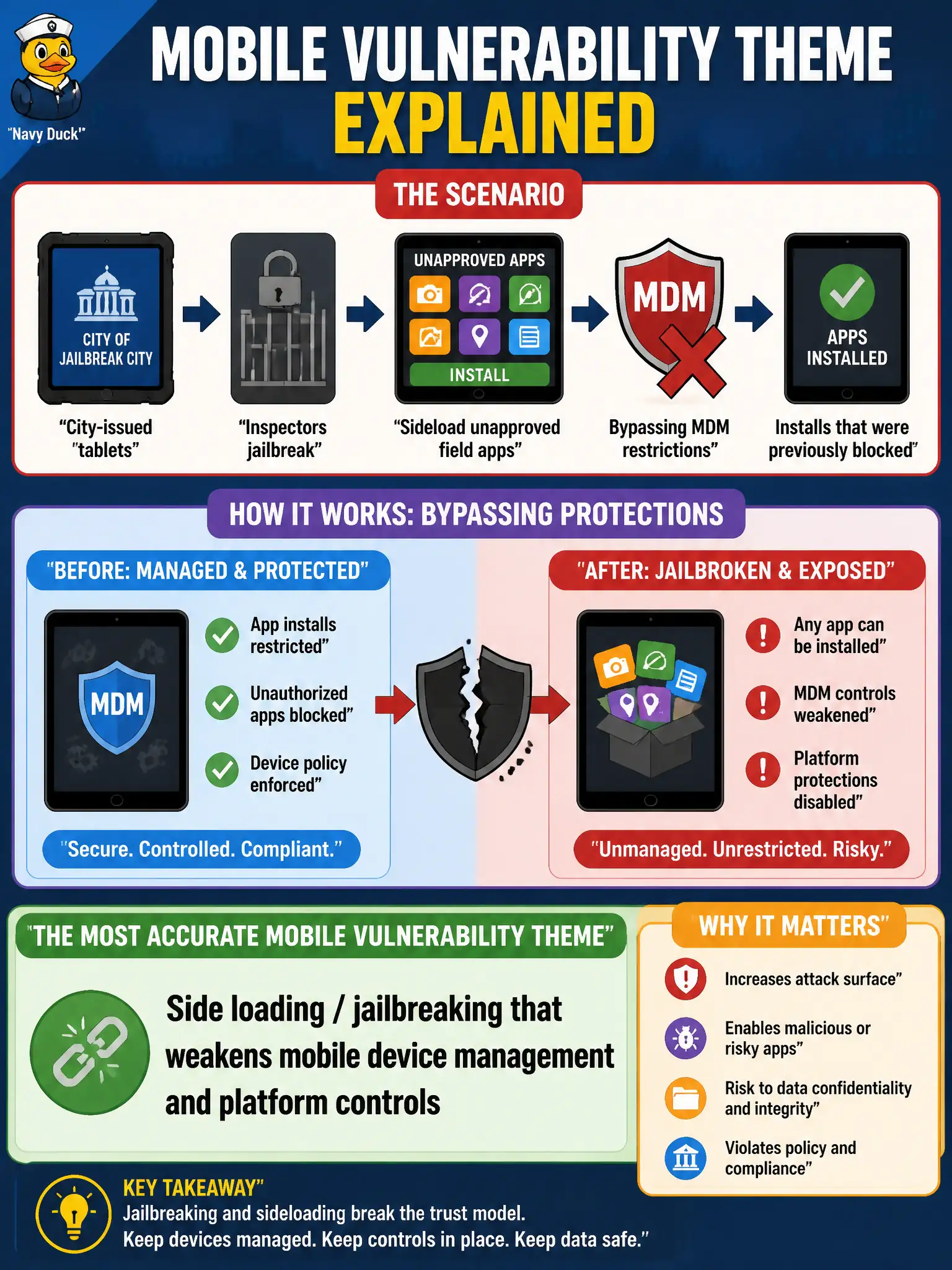
Inspectors jailbreak city-issued tablets and sideload unapproved field apps, bypassing MDM restrictions that blocked those installs. Which mobile vulnerability theme is most accurate?
Select an answer to reveal the explanation.
Short Explanation
Jailbreaking and sideloading yank the MDM seatbelts off city tablets — unapproved apps walk right in. That is a mobile control bypass, not SQLi or an EOL firewall. Keep managed devices enrolled, non-jailbroken, and limited to approved stores.
Full Explanation
Sideloading and jailbreaking weaken mobile device management and platform controls. Inspectors who jailbreak city-issued tablets and install unapproved field apps bypass MDM restrictions that blocked those installs, stripping policy enforcement, encryption assumptions, and app allowlisting. The mobile vulnerability theme is control bypass on managed devices, expanding risk of data leakage and malware on civic field hardware.
SQL injection concatenating input into permit-database queries is a web/database input flaw. It does not describe MDM bypass on tablets.
EOL firewall appliances that no longer receive patches are legacy network-edge lifecycle risks, unrelated to jailbroken mobile endpoints.
Watering-hole malware on a municipal procurement forum infects browsers visiting a compromised site. Jailbreak/sideload is a deliberate local bypass of mobile management.
Exam caveat: Jailbreaking/rooting removes OS integrity constraints; sideloading installs apps outside approved stores/MDM. Security+ groups these as mobile vulnerabilities that undermine enterprise management. Managed municipal devices should be non-jailbroken by policy and technical compliance.
Operational check: enforce MDM compliance gates that quarantine jailbroken devices, disable developer modes, restrict app installs to managed catalogs, monitor for configuration profile removal, and educate field inspectors why unmanaged apps threaten resident data. Replace chronically jailbroken units and hold supervisors accountable for civic device integrity.