
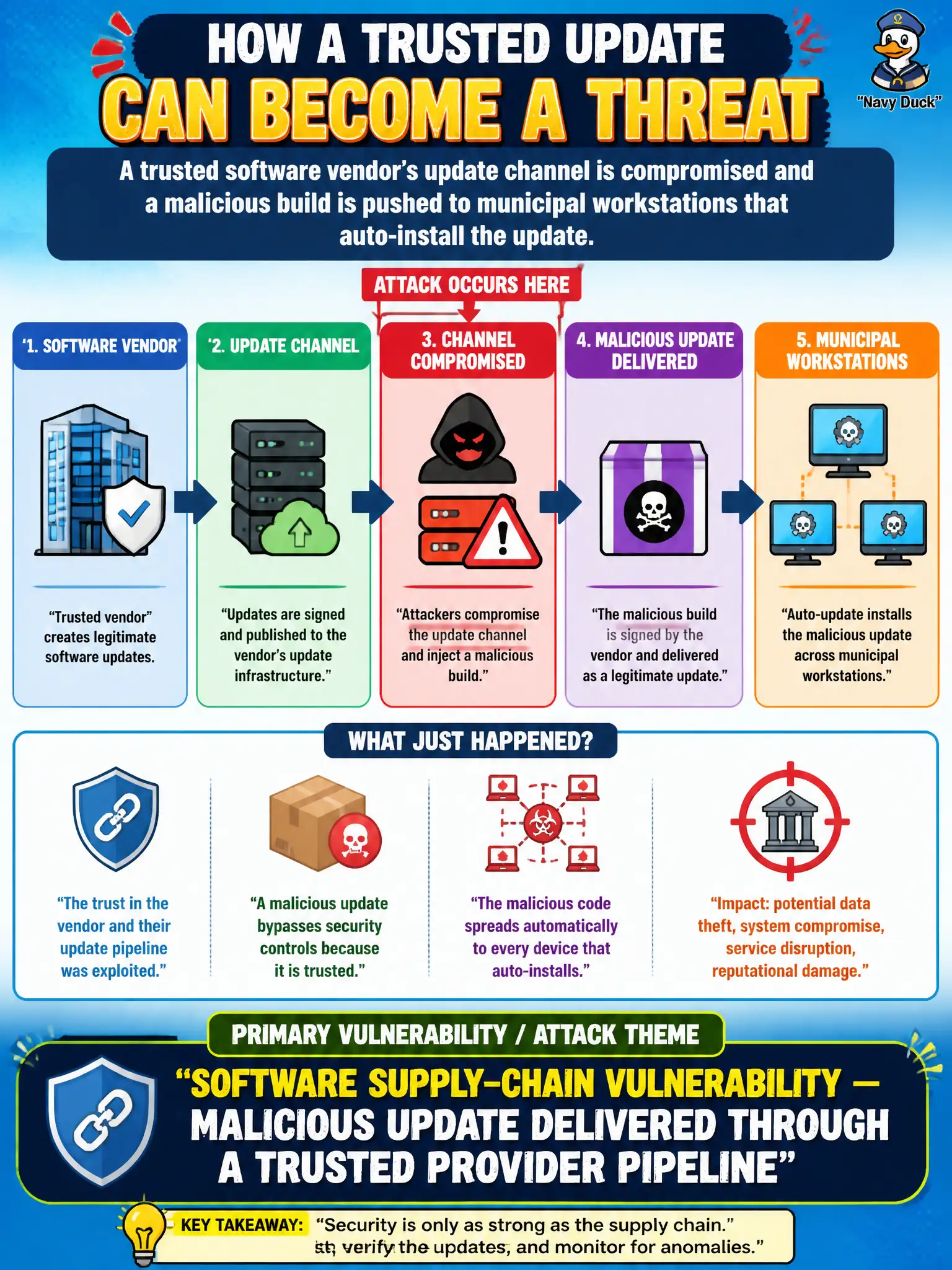
A trusted software vendor’s update channel is compromised and a malicious build is pushed to municipal workstations that auto-install the update. Which vulnerability / attack theme does this primarily represent?
Select an answer to reveal the explanation.
Short Explanation
When the vendor’s "trusted" update is the malware dropper, you are in software supply-chain territory — the pipeline itself was poisoned. Guest Wi-Fi bridging and XSS are different stories. Verify update integrity and monitor what municipal endpoints actually install.
Full Explanation
Software supply-chain vulnerability covers malicious updates delivered through a trusted provider pipeline. When a trusted vendor’s update channel is compromised and municipal workstations auto-install the malicious build, trust in the distribution mechanism becomes the attack. Endpoints correctly believing they are patching themselves instead install attacker code—high impact because allowlists and user suspicion often exempt "official" updates.
Open guest wireless bridged into staff file-share VLANs is network segmentation failure. It is not a poisoned vendor update path.
Cross-site scripting stealing cookies from a citizen portal is a web application output flaw. Auto-installed malicious vendor builds are supply-chain delivery, not XSS.
Default RDP credentials on a public-facing jump host are exposure and credential issues on a municipal host, not compromise of a software vendor’s update channel.
Exam caveat: Supply chain includes poisoned builds, compromised update servers, and malicious dependencies. Auto-update increases blast radius. Distinguish vendor-pipeline compromise from MSP remote-support compromise (also supply-chain flavored but different channel) when the stem specifies software updates.
Operational check: verify update integrity (signatures, hashes), stage deployments to a pilot ring, monitor what endpoints actually install, maintain ability to pause auto-updates during vendor incidents, and prefer vendors with transparent build provenance. Municipal SOCs should watch for mass identical binary changes across the fleet after an upstream advisory.