
During awareness month, HR wants staff warned that outsiders might recruit or pressure employees for access—without encouraging casual accusations against coworkers. What should the module emphasize?
Select an answer to reveal the explanation.
Short Explanation
Insider-threat training is a smoke detector, not a witch hunt—learn the warning signs and the quiet hotline, not hallway trials.
Full Explanation
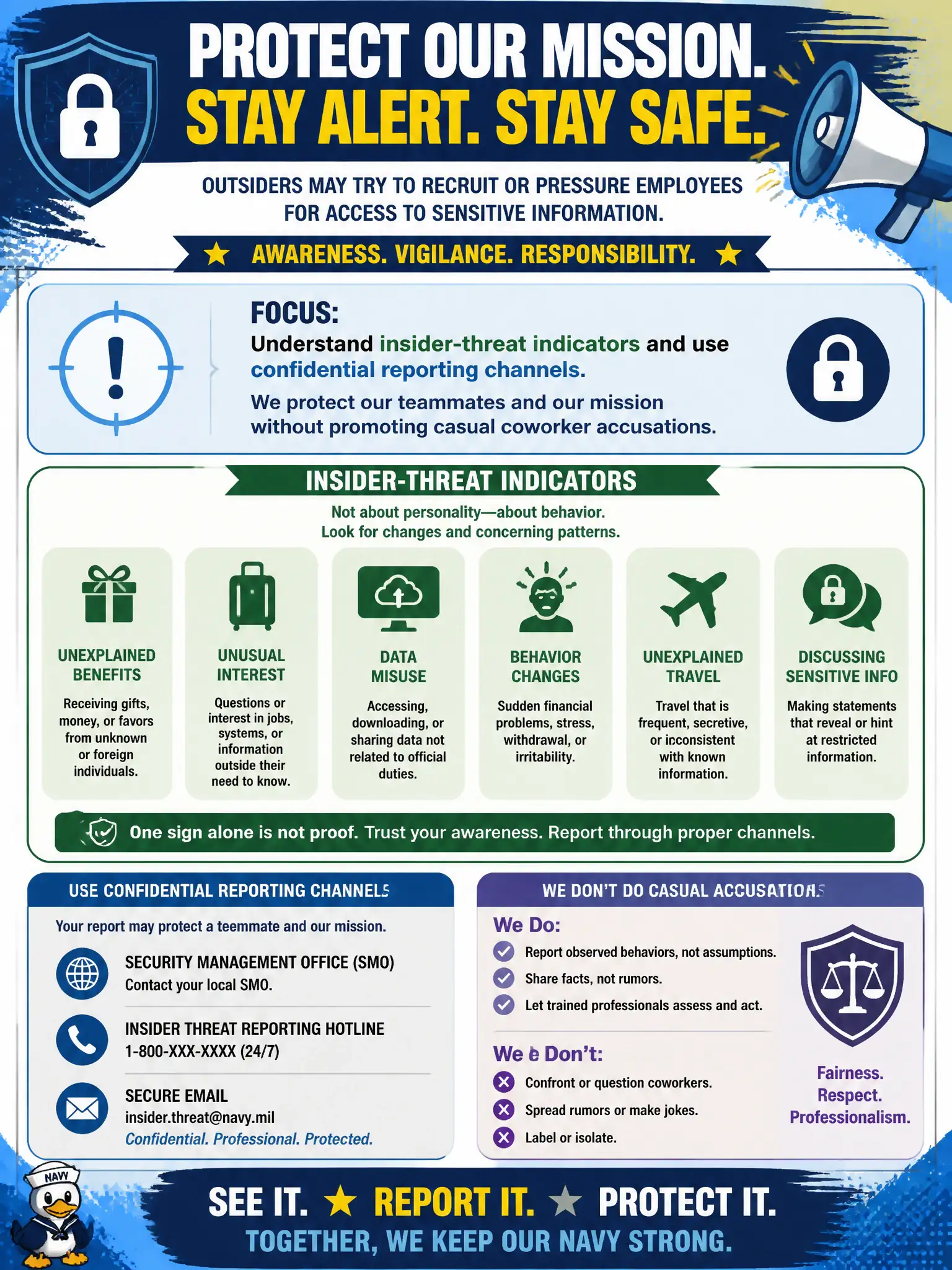
Insider-threat awareness for municipal staff should teach indicators—unusual access, recruitment or pressure attempts, unexplained data movement—and confidential reporting channels, without promoting casual coworker accusations or vigilante investigations. HR’s goal during awareness month is vigilance with due process: staff learn what to notice and where to report quietly so specialists can assess risk to resident data and privileged systems.
Publicly naming coworkers on chat channels whenever someone seems stressed creates a hostile culture, privacy harm, and false positives that chill legitimate reporting. Ignoring recruitment or pressure scenarios because 'insiders are never a municipal risk' denies reality; cities hold valuable resident data and privileged access attractive to coercion. Encouraging staff to break into colleagues’ desks to 'verify loyalty' after hours is unlawful, unsafe, and antithetical to professional insider-threat programs.
Exam caveat: Insider-threat training on SY0-701 emphasizes indicators and proper reporting—not public shaming, denial that municipalities face insider risk, or unauthorized searches.
Operational check: provide a confidential hotline or portal, train managers on intake without gossip, coordinate with HR and legal on investigations, and include scenarios about external recruitment or coercion alongside technical indicators—always directing action to official channels rather than peer confrontation.