
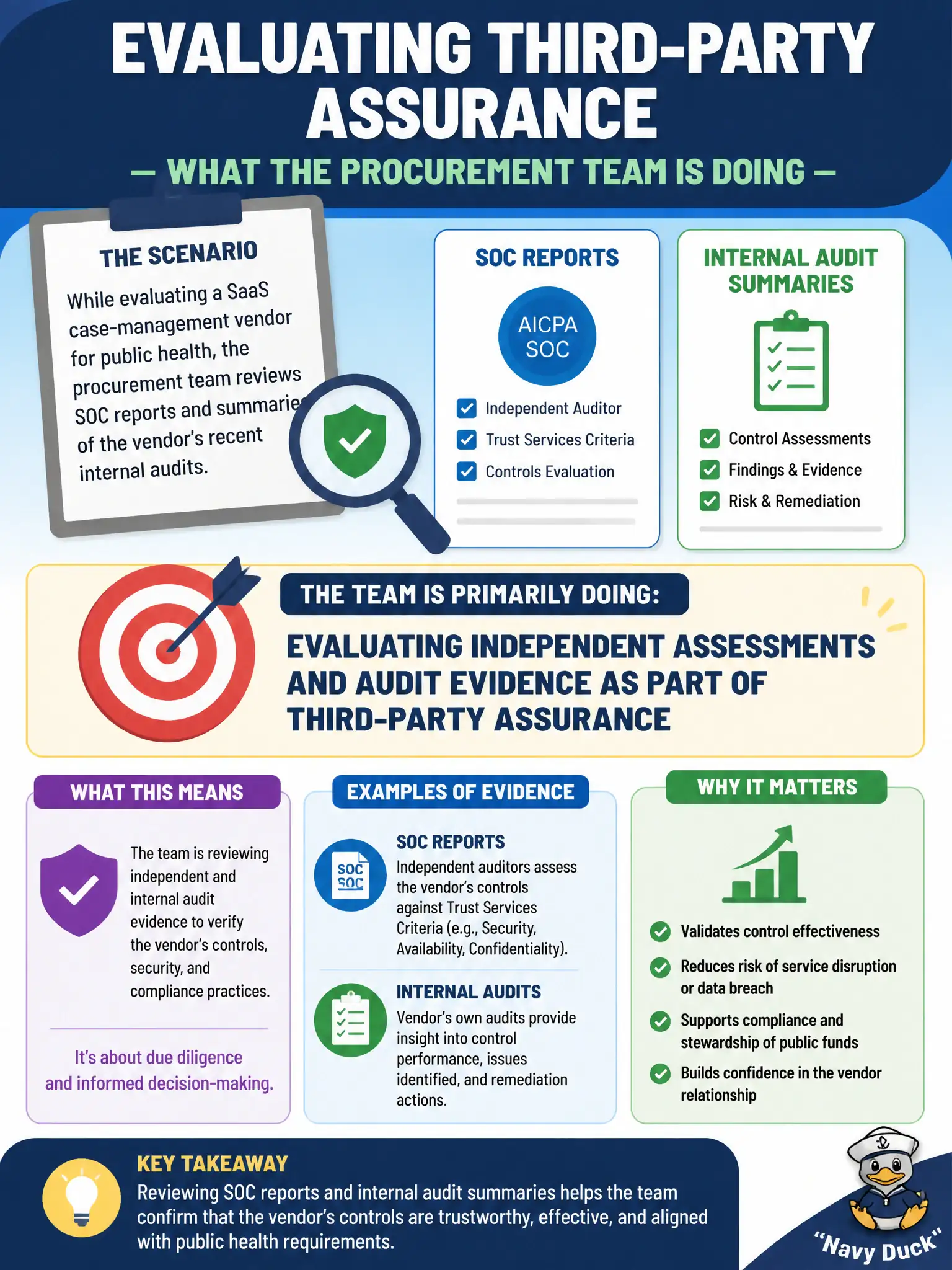
While evaluating a SaaS case-management vendor for public health, the procurement team reviews SOC reports and summaries of the vendor's recent internal audits. What is the team primarily doing?
Select an answer to reveal the explanation.
Short Explanation
SOC reports and internal-audit evidence are the vendor's report cards from outside (and inside) graders. Reading them during selection is how you grade the grader before you hand over case data.
Full Explanation
Evaluating independent assessments and audit evidence is a core third-party assurance activity during vendor selection. Reviewing SOC reports and summaries of recent internal audits for a SaaS case-management vendor used by public health lets the procurement team judge control design and operating effectiveness using outside and internal assurance artifacts rather than branding alone. That review informs residual risk and contract conditions before sensitive case data is entrusted to the vendor. Skipping due diligence because the logo looks professional substitutes aesthetics for assurance. Professional branding is not evidence of control effectiveness over health case data. Replacing all county controls with the vendor's marketing FAQ abandons shared-responsibility thinking. Marketing FAQs are not a control framework and cannot replace county governance, identity, or data-handling requirements. Accepting residual risk by shredding the SOC reports unread discards the very evidence the assessment needs. Unexamined reports provide no assurance and undermine informed acceptance or negotiation. Exam caveat: Third-party risk assessment includes reviewing independent assessments and audit evidence such as SOC reports. Questions that show teams reading those artifacts are about assurance evaluation, not logo trust or ignoring reports. Operational check: Map SOC report scope and exceptions to the public-health use case, document findings in the vendor risk file, and require remediation or compensating contract terms before go-live.