
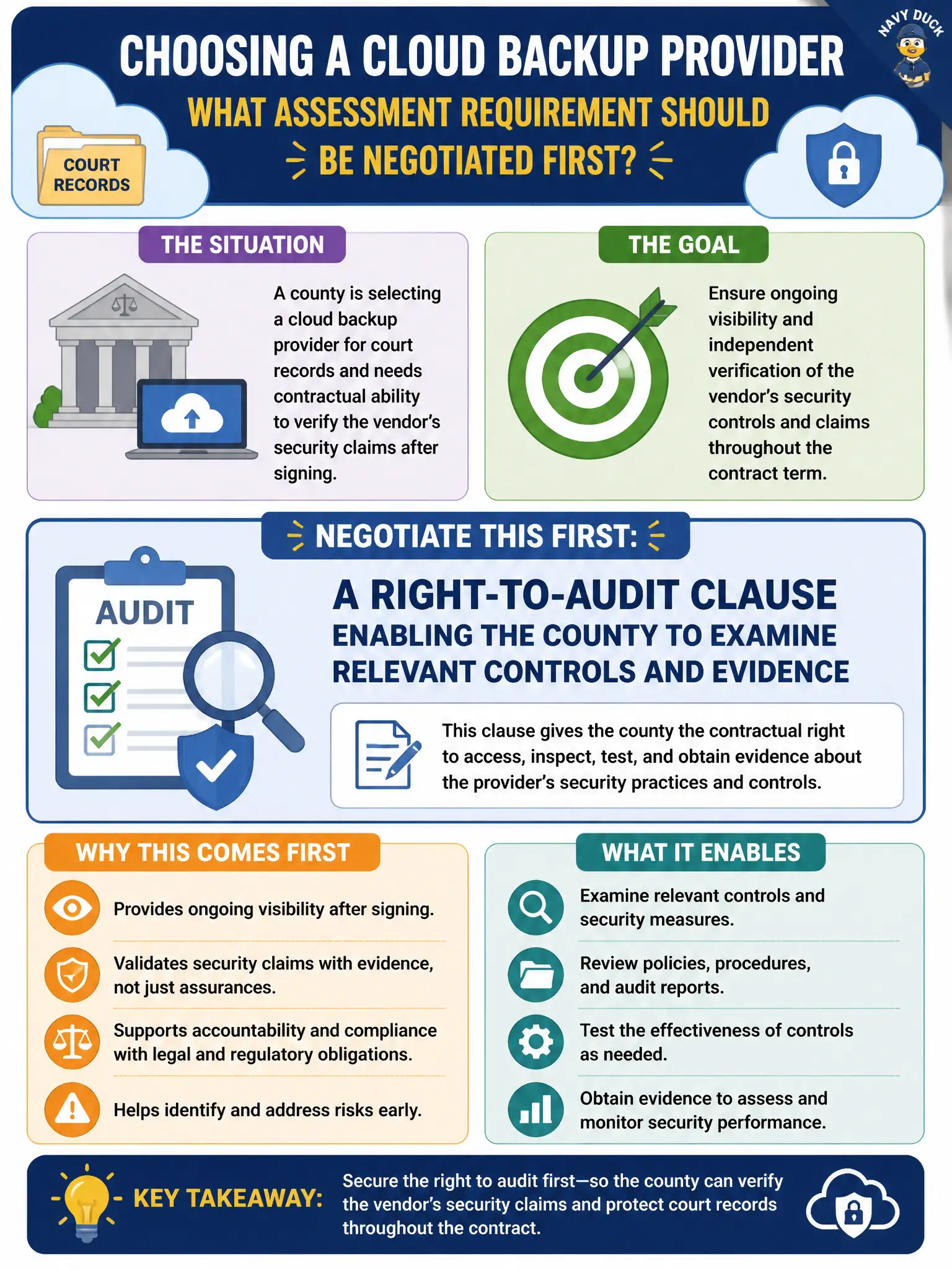
A county is selecting a cloud backup provider for court records and needs contractual ability to verify the vendor's security claims after signing. Which assessment requirement should be negotiated first?
Select an answer to reveal the explanation.
Short Explanation
Trust, but verify—in writing. A right-to-audit clause is the county's ticket to check the backup vendor's locks later, not just smile at a glossy slide during the sales pitch.
Full Explanation
Third-party risk assessment for a cloud backup provider holding court records should include contractual right-to-audit provisions so the county can examine relevant security controls, processes, and evidence after signing—not only during a sales cycle. A right-to-audit clause preserves verification rights across the relationship life cycle, which is essential when custody of sensitive judicial information sits with an external provider. A clause that forbids any security questions forever would block assessment rather than enable it. Such language is the opposite of what a customer needs for ongoing assurance over court-record backups. A marketing slide that asserts compliance without evidence is promotional material, not a contractual assessment requirement. Slides cannot be negotiated as enforceable verification rights and often lack auditable detail. A verbal promise from a salesperson with no contract language is unenforceable when personnel change or disputes arise. Assurance for court records must live in the agreement, not in undocumented sales assurances. Exam caveat: Right-to-audit is a standard contractual control for vendor assessment. Prefer written audit rights over marketing claims, verbal promises, or clauses that prohibit security inquiry. Operational check: Negotiate and retain right-to-audit language before award, define scope and notice periods, and schedule periodic evidence reviews so backup-provider claims for court data remain verifiable after signature.