
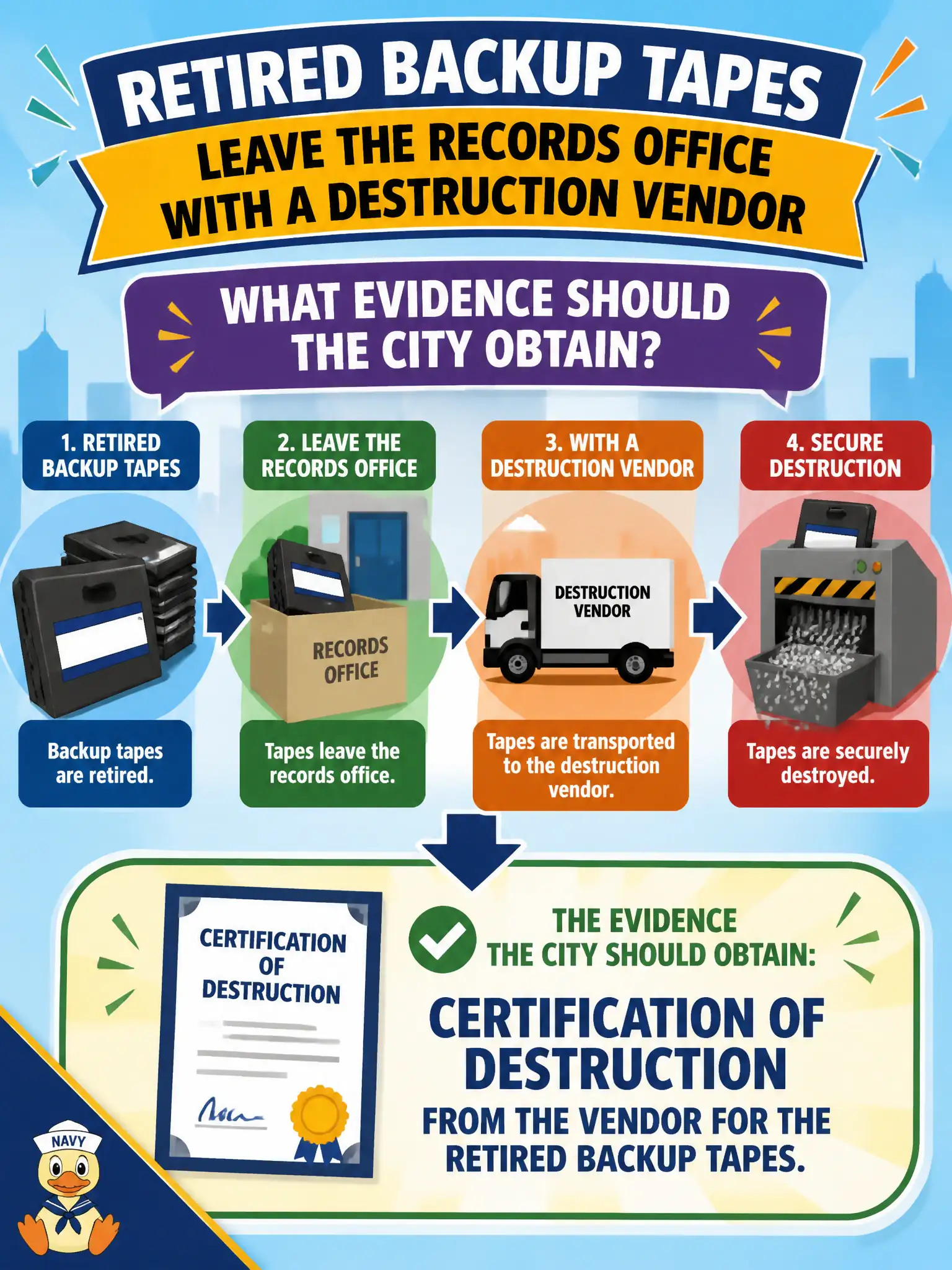
Retired backup tapes leave the records office with a destruction vendor. What evidence should the city obtain?
Select an answer to reveal the explanation.
Short Explanation
When tapes leave for destruction, get a certificate that says they were actually destroyed—not a wink, an emoji, or a shrug from an unnamed driver. Paper trails beat 'trust me' for retired backups.
Full Explanation
When retired backup tapes leave municipal custody for destruction, the organization needs durable documentary evidence that destruction actually occurred under controlled conditions. A certification of destruction from the vendor closes the chain of custody: media identifiers or serials, date, destruction method, facility, and authorizing party. That record matters for audits, privacy obligations, insurance reviews, and investigations if tapes later allegedly reappear in secondary markets. Informal gestures and hallway assurances do not substitute for certification retained with the asset disposition file. A friendly email emoji confirming the job is probably done is not evidentiary and cannot prove which cartridges were destroyed. Verbal assurance from an unnamed driver with no documentation cannot be verified, retained, or reconciled to a shipping manifest. Claiming no evidence is needed because tapes are obsolete ignores that obsolete media can still hold readable citizen backups and still require custody controls through final destruction. Exam caveat: disposal evidence questions favor formal certification of destruction over informal confirmation or claims that old media needs no controls. Operational check: inventory tapes before pickup, seal and track transport, require serialized certificates from the destruction vendor, reconcile certificates to the shipping manifest item by item, and store the records for the retention period legal counsel specifies.