
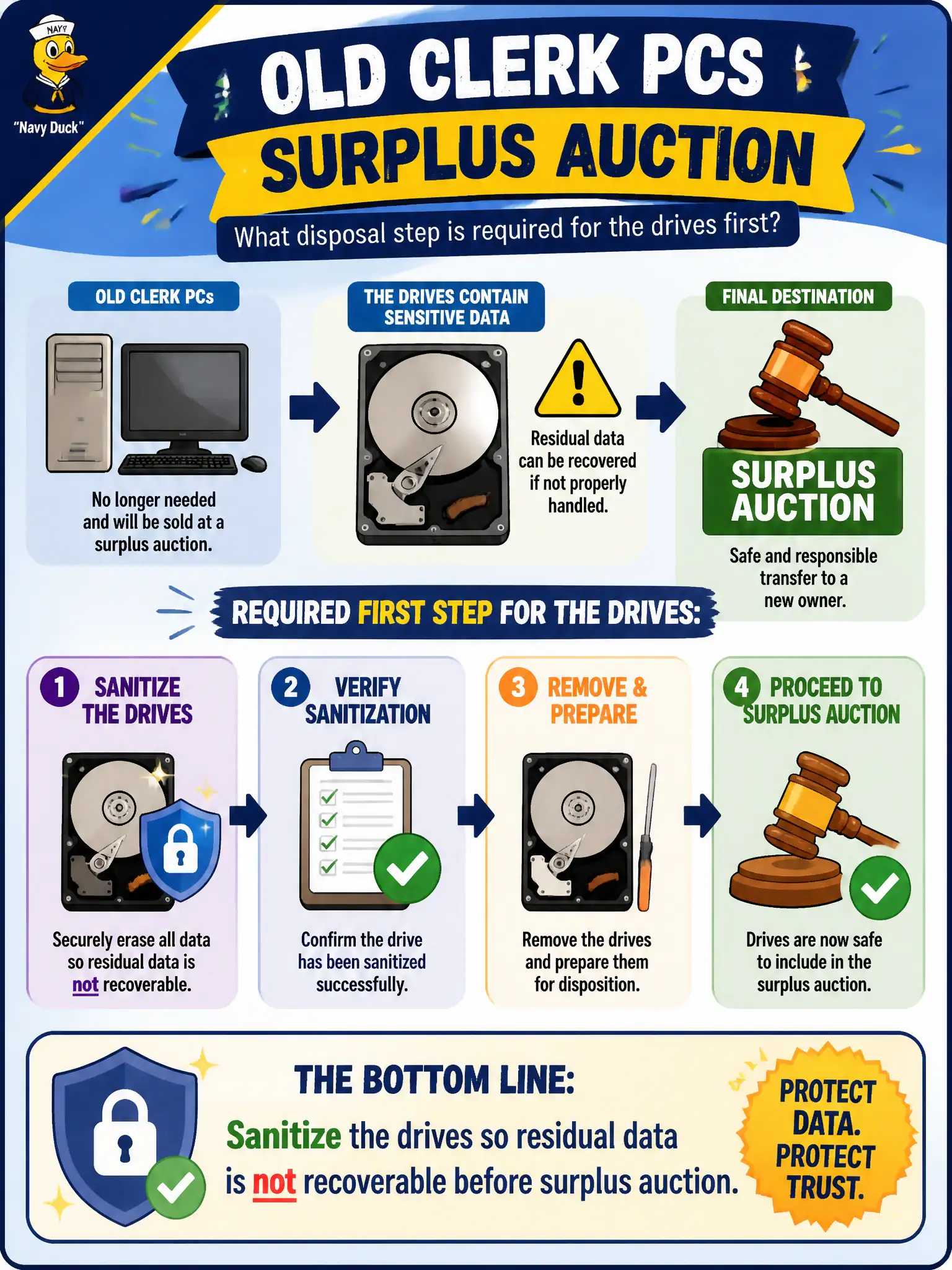
Old clerk PCs will be sold at a surplus auction. What disposal step is required for the drives first?
Select an answer to reveal the explanation.
Short Explanation
Before those clerk PCs hit the surplus auction, wipe the drives for real. Selling disks still full of citizen data—or sticking a 'wiped' sticker on an untouched drive—is how privacy incidents write themselves.
Full Explanation
Surplus auction of clerk PCs is a media sanitization event, not merely a furniture sale. Drives that held citizen data, tax details, or case notes must be sanitized so residual information is not recoverable by the next buyer—using approved clear, purge, or destroy methods matched to media type and data classification. Skipping sanitization turns a routine surplus process into an uncontrolled data disclosure with a public auction receipt attached. Chain-of-custody records should show who sanitized what and when before assets leave municipal control. Auctioning PCs with disks intact and full citizen data still readable is a direct confidentiality failure that can trigger breach notification and loss of public trust. Only removing external keyboards or cables leaves the actual storage unmodified and fully readable with ordinary tools. Labeling machines wiped without performing any sanitization process creates false assurance that auditors, insurers, and incident responders will not accept when media is later examined. Exam caveat: sanitization must be a performed, documented process—cosmetic labels and peripheral removal are not substitutes for media handling controls. Operational check: apply the city’s media sanitization standard before surplus, record method and verifier for each drive, sample-validate that target data is unrecoverable, and withhold auction release until sanitization evidence is filed with asset management.